Bernalillo County commissioners narrowly agreed late Tuesday to adopt the Santolina Master Plan – the largest plan of its kind ever considered by the county – after months of contentious hearings.
The plan establishes zoning and other regulations intended to guide development on 22 square miles atop the West Mesa, near 118th and Interstate 40.
The development team envisions Santolina as a “self-sustaining” community that might someday be home to 90,000 people, rivaling the size of Rio Rancho today. Supporters say approval of the master plan will make it easier to attract employers to the West Side, an area desperate for jobs.
Opponents say the development would strain the water supply and shift resources away from the heart of Albuquerque’s metropolitan area. They arrived at one meeting this year after riding tractors through Downtown, a move intended to highlight the concerns of farmers and irrigators. One woman on Tuesday raised ears of corn and held them above her head for about 20 minutes as commissioners debated and approved the master plan.
The commission voted 3-2 in favor of the master plan and new zoning for the land. In favor were Art De La Cruz, Wayne Johnson and Lonnie Talbert.
De La Cruz, whose district includes the South Valley, argued against criticism that Santolina amounts to sprawl development. He said it took him about eight minutes to drive from Downtown Albuquerque to the site.
“The reality is, that’s abutting against the city of Albuquerque,” De La Cruz said of the master plan.
Voting “no” were Maggie Hart Stebbins and Debbie O’Malley.
Hart Stebbins and O’Malley did succeed in toughening some of the conditions of approval.
The commission, for example, unanimously agreed to add a condition that says the master-plan approval doesn’t commit the county in any way to providing public financing or subsidies for the development.
Commissioners also adopted another condition requiring that the Santolina landowners provide a plan for attaining their targets for job creation. Santolina representatives say they plan to bring 75,000 jobs to the West Side, or roughly two jobs for every home within the development.

Some proposals for more stringent language failed.
A move by Hart Stebbins to limit what kinds of jobs would qualify toward the employment target failed.
Also rejected was a proposal from O’Malley, who sought to make “water reuse and recycling an integral part of the water strategy” for Santolina.
A majority of commissioners said it was more appropriate for the local water authority – a joint panel of city councilors, county commissioners and the Albuquerque mayor – to decide on water conservation measures.
The commission’s debate and action came in front of about 200 audience members, including neighborhood leaders, activists, county staff and consultants for the Santolina landowners.
Opponents of the master plan, making up perhaps half the audience or more, wore bright yellow shirts – some with the word “denied” stamped in red over Santolina.
There were some tense moments during public testimony. At one point, a pair of sheriff’s deputies flanked the speaker’s podium when a woman kept speaking after her two minutes were up. She left voluntarily.
In any case, debate over Santolina isn’t over.
The commission has a third proposal to consider – a development agreement that outlines specific requirements for the property owner, Western Albuquerque Land Holdings LLC, a Delaware company. Barclays Capital Real Estate is listed in state records as the manager of WAHL.
The agreement is scheduled for consideration June 24.
Development of Santolina still appears a long way off.
The landowners must win approval of more detailed plans before they can get a permit to start building anything, a process that may take several years. They have also said that market conditions – the demand to live and work in Santolina – will shape how quickly it’s built out, which could take 50 years.
Deputy County Manager Vince Murphy, left, with the attorney for Santolina property owners, John Salazar, fields questions from the Bernalillo County Commission at Tuesday’s meeting. (Dean Hanson/Albuquerque Journal)
“Santolina is only accommodating that growth, not generating it,” the development team said in a written statement. “Santolina will complement existing master plan communities and in-fill.”
Javier Benavidez of the SouthWest Organizing Project, an advocacy group opposed to the master plan, said opponents will fight the county’s decision in court.
“It commits us to a pattern of development we’ve seen fail around this country,” he said.
By: Dan McKay (Albuquerque Journal)
Click here to view source article.
Archives for June 2015
National Expert Concerned about Nob Hill's Restaurant-Retail Imblance
Nob Hill needs more retail, says a national expert. Pictured is Buffalo Exchange near Girard on Central Ave.
A national expert who was hired by the city to analyze Nob Hill’s struggling retail scene has suggested what some might expect — Nob Hill needs a better restaurant to retail balance. It also could use better parking, cleaner public spaces and move inviting landscaping.
The city recently hired Robert Gibbs of Gibbs Planning Group to help officials better understand national retail trends. Several Nob Hill retailers have closed in recent years, while restaurants and bars have generally gained footing.
Gibbs walked the Nob Hill commercial district and met with property owners, city staff, retailers and restaurant owners last month. His observations and recommendations, outlined in a city memo, point out that Nob Hill’s central location, historic character, active business community and proximity to employment centers and neighborhood associations are some of its strengths.
But he expressed concern with the amount of retail spaces being converted to restaurants and bars — further causing Nob Hill’s retail and restaurant mix to be out of proportion. A separate synopsis outlined by Nob Hill Main Street highlights the imbalance, too. Gibbs said Nob Hill should strive for a 40 percent restaurant/bar and 60 percent retail mix. He thinks the hiring of a retail recruiter to attract national stores to the area is a good idea.
“[Nob Hill] will continue to move unsustainably towards bars and restaurants, with associated congestion and declining property value, unless a concerted effort is undertaken to develop for retail success,” said the Nob Hill Main Street synopsis.
And more retail stores could help alleviate Nob Hill’s parking situation, Gibbs said, as eating and drinking businesses require more parking for their customers and employees.
Gibbs had several other suggestions to alleviate Nob Hill’s parking woes. He said some cities have replaced clustered parking meters, which can be confusing to use, with meters for each space. And those meters should run until 9 or 10 p.m. to account for Nob Hill’s dinner crowd. He said the city should look into creating a parking district where revenues can be reinvested back into the community, find or build a public parking lot, offer free parking on Sundays and be consistent but fair with parking enforcement. A parking district was recently proposed for the Downtown corridor by developer David Silverman, who thinks it would work in other parts of the city too.
Gibbs thinks the city could do a better job at keeping Nob Hill clean. He said he noticed trash, outdated signs, graffiti and half-torn posters along Central Avenue. The memo states a business improvement district [BID] could be created to help fund clean-up. Nob Hill Main Street is in the midst of drumming up support among property owners for a BID.
“Test one block in Nob Hill: Keep it clean and maintain vibrant landscaping for three months. If this pilot test improves business on the block, consider expanding down the corridor,” the memo states.
Gibbs said the city could also make the area more attractive to visitors by slowing down traffic along Central Avenue, installing more street lighting, widening the sidewalks and adding colorful landscaping.
City staff and Nob Hill Main Street are scheduled to give a presentation on Gibbs’ findings to the Albuquerque City Council on June 22.
By: Stephanie Guzman (Albuquerque Business First)
Click here to view source article.
County Commission to Vote on Santolina
This is part of the proposed Santolina development looking northeast from Atrisco Vista and Dennis Chavez. The intersection is near the Urban Center in the master plan.
Supporters of the Santolina Master Plan aren’t just pitching another bedroom community on the outskirts of town.
They say they envision a thriving, self-contained community with its own jobs – 75,000 of them, in fact – on the West Side, an area desperate for employers.
Opponents aren’t convinced. They see a development that would lead to more residential rooftops and an expansion of sprawl on Albuquerque’s fringe.
This argument, centering on the jobs-to-housing balance, is a key to the Santolina debate, and it should all come to a head today.
Bernalillo County commissioners this afternoon are scheduled to consider approval of the Santolina Master Plan and a proposed development agreement.
About 20 percent of the 22 square miles covered by the Santolina Master Plan would be dedicated to business parks and industrial uses. The developer’s goal is to have roughly two jobs for every home at full build-out, which could be 50 years from now.
John P. Salazar, an attorney for property owner Western Albuquerque Land Holdings LLC, said the development team will be motivated to create jobs because so much of the land is designated for that purpose and will sit undeveloped otherwise.
“The wonderful thing about Santolina,” he told county commissioners last month, “is that it’s going to provide jobs and it’s anti-sprawl.”
People could “live, work and play” in one spot, Salazar added.
But some see that as wishful thinking. You can’t just designate land on a map for industrial uses and expect it to happen, said Kelly O’Donnell, an economist initially hired by residents concerned about Santolina who now volunteers her time.
“There’s no reason to believe that developing this piece of land will be any more effective at drawing new money into the community than developing any of the other pieces of land in Bernalillo County,” she said. “This does not offer the community and the county anything different than what we’ve been offered in the past.”
Jobs critical
Almost everyone seems to agree that bringing jobs to the West Side is critical to reshaping how the city grows. Adding employers west of the Rio Grande is important because it would reduce stress on river crossings and fight against the dominant commuting pattern, in which people living on the West Side drive east to get to work.
Now, there are about 0.56 jobs per home on the West Side, according to the Mid-Region Council of Governments. East of the river, the ratio is 1.39 jobs per home.
And the Santolina developers are proposing a roughly 2-to-1 ratio in their master plan, or 75,000 jobs for 38,000 homes. It would not be built all at once, of course. Supporters say it would develop as market conditions create demand for growth there over the next 40 to 50 years.
Help recruitment
Jim Strozier, a planner for the Santolina development team, said approval of the master plan would help the recruitment of companies to the Albuquerque area.
That’s because, he said, it would provide the zoning needed for an employer and allow the property owners to seek water and sewer service from the local water authority – something they can’t do until a land-use plan is approved by the county.
“It’s a pretty simple equation as to what the site-selection people are looking for,” Strozier said in an interview. “They want a piece of property that meets their requirements and is as ready to go as we can make it.”
Furthermore, the way the master plan outlines a mix of homes, open space and industrial land will make it a more attractive area, Strozier said. Employers want services nearby, he said.
“Otherwise, you might see a lot more factories built out into the middle of nowhere,” Strozier said. “You don’t really see that. They’ve got to have a place for their people to live.”
Each master-planned community in the Albuquerque area has its own strengths and weaknesses, he said, but proximity to Interstate 40 will be a draw for Santolina.
Nathan Perez, a finance and economics consultant for Santolina, said the target of 75,000 jobs is certainly possible but would require cooperation among the county, economic development agencies and Santolina property owners.
“It is not conservative,” he said of the number, “but it’s not overly aggressive.”
‘Pie in the sky’
Opponents are skeptical. O’Donnell calls the idea of 75,000 jobs “pretty pie in the sky.”
Fred Mondragon, an international trade specialist and former state economic development secretary, said young adults want a lifestyle with interesting neighborhoods and without long commutes.
“In my opinion, they’re not going to live in a Santolina. They’re not going to live in a sprawl city,” he said. “My vote would be, I don’t think Santolina will be important in terms of attracting people who will want to work in new communities.”
He and O’Donnell said Mesa del Sol and other master-planned communities already are available if that’s what a newly recruited company is looking for.
“To my mind, there’s a very decent likelihood of a whole lot of houses going up,” O’Donnell said. “There’s no guarantee whatsoever there are going to be jobs.”
Commissioner Debbie O’Malley, who has been critical of Santolina, put it this way in a recent hearing: “It’s a promise of jobs. That’s what you’re selling. There’s no guarantee of jobs.”
Jobs-to-homes ratio
The proposed development agreement tries to provide some guarantees, though opponents say it isn’t strong enough.
The agreement would allow the county to refuse to grant residential building permits if Santolina failed to meet certain thresholds for job creation and economic development.
The 2-to-1 ratio of jobs to homes, however, wouldn’t kick in for quite some time. Instead, the requirement would be phased in.
The development would need 300 jobs when it reached its first 2,000 homes. A 1-to-1 ratio would be required at 3,500 homes.
The 2-to-1 ratio would kick in at 34,000 or more homes.
By: Dan McKay (Albuquerque Journal)
Click here to view source article.
Mayhem in Multifamily?
Rental markets are exploding in the wake of the housing crisis. Here’s how to tell if the expansion has overheated.
(Click to enlarge photo)
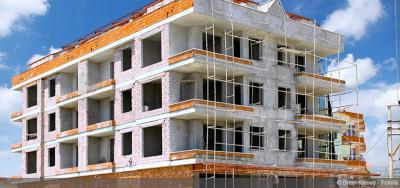
As millennials eschew home ownership in favor of renting, the demand for multifamily housing continues to grow across the country. But as construction starts and investments in this real estate category climb to their highest levels in six years, some analysts fear an impending bubble. Others, however, believe that with the ongoing shift from owning to renting, the sector will keep growing for the next five years.
At the 2015 REALTORS® Legislative Meetings & Trade Expo in Washington, D.C., Sam Chandan, founder of Chandan Economics in New York, had a warning for those who believe the expansion in multifamily to be limitless. “Investors will tell you we’re fundamentally a nation of renters now,” he said. “As house prices begin to improve… there will be a significant subset of renters in the U.S. who will say now is the right time to be a home owner.”
Still, it seems that change has yet to come. A 2014 joint report from CBRE Global Research and Consulting and CBRE Capital Markets placed the national multifamily housing market “firmly in the expansion phase of its cycle, with vacancy rates in most markets at or below historical averages and effective rents reaching record levels.” Demand for multifamily increased 1.6 percent on a year-over-year basis in the fourth quarter of 2013, CBRE concluded, with the market showing its strongest performance since 2009.
Apartment rentals are the hottest part of the multifamily sector, far outstripping interest in condo ownership, according to the February 2015 edition of Freddie Mac’s Multifamily Research Perspectives. The mortgage giant also predicts that multifamily construction starts will continue to expand through 2015 and into 2016. Despite the build-out, NAR’s Commercial Real Estate Outlook for May 2015 suggests apartment vacancy rates will remain below historical averages for some time to come, rising no higher than 4.4 percent in the next year.
Meanwhile, condominium development nationwide is a virtual nonstarter. While multifamily construction is at its highest level in the last 25 years, according to the U.S. Department of Commerce, 93 percent of that construction is in rental units. Part of this may be due to a decline in property ownership overall. According to data from the U.S. Census Bureau, less than 65 percent of U.S. households own homes today, representing the lowest home-ownership rate since 1995. Most of that decline occurred in the under 35 market, where rates stood at 35.9 percent in the fall of 2014 (compared with 43.6 percent a decade earlier).
Millennials Lead the Market
Where is multifamily hottest? Mainly where job growth is high and the foreclosure crisis is still reverberating. The top markets, according to commercial real estate services firm CBRE, include Houston; Dallas; Austin, Texas; Seattle; Denver; Atlanta; Washington, D.C.; Raleigh, N.C.; Minneapolis; Phoenix; Los Angeles; Charlotte, N.C.; Orlando, Fla.; San Jose, Calif.; and San Francisco, which together accounted for half the market’s national net absorption in 2013.
In Denver, approximately 8,000 new multifamily units are under construction and scheduled to come on board in 2015, according to Anthony Rael, chairman of the Denver Metro Association of REALTORS®’ Market Trends Committee and a relocation specialist with RE/MAX Alliance. He says rental vacancy has stood at 5 percent or less for some time now, and he attributes the market’s robustness to the wide variety of generations moving to Denver looking for affordability and the lifestyle options offered by walkable, mixed-use neighborhoods.
“The millennials are all moving here,” says Bill James, GRI, CCIM, president of James Real Estate Services Inc. in Denver. He says they’re attracted to the city’s climate, cultural and recreational offerings, and the construction of a $7 billion transit system. “Two- to 3,000 apartment units are being built within a couple of blocks of Union Station alone,” he adds.
James attributes a great deal of the new multifamily construction to the city’s job gains. With unemployment at 5 percent, Denver’s jobs picture is more positive than the national one, which may contribute to the fact that the city’s population is growing by about 47,000 people per year. But he also cautions that rising expenses could throw a wrench in the growth calculation: “Oil prices show some writing on the wall. It’s a horse race between the millennials and the economy.”
James isn’t terribly concerned about the pace of multifamily growth in Denver, especially when he compares his city to other metro areas around the country, where cap rates, or the ratio of net operating income to property asset value, are especially low. Chicago and New York City are prime examples. “Low cap rates mean high prices, which means higher risk for investors,” he explains. “Investors perceive risk in Colorado as lower because unemployment is low.”
The story is similar in Houston, which has brought in half a million new jobs in the last four to five years, mainly in the health care, construction, and oil industries, where production is booming in the Eagle Ford Shale region in south central Texas. “One thing that’s driving rental rates is increased density,” says Tim Surratt, real estate professional with Greenwood King Properties Inc. in Houston. He says the fastest moving units in the city are those in walkable neighborhoods, and most of those are either new construction or repurposed buildings.
Home Ownership Isn’t Everything
With so many displaced families reeling from recent foreclosures in the city, multifamily demand is high in Las Vegas, where Petra Latch, principal of appraisal company Criterion Group, points to massive growth in multifamily in one of the markets hardest hit by the Great Recession. “We’ve gone so low and have had such a drastic pendulum swing in our market the past five years,” she says. “There’s been a backlash… People are less excited these days about home ownership.”
Latch points out that today’s young adults came of age in an economy where they couldn’t get jobs, couldn’t qualify for mortgages, or just didn’t want to assume the financial risk of being unable to sell property in down markets. “Millennials realize how illiquid real estate really is.” She adds that rentals are scarcer today due to residential patterns established during the housing boom. “A lot of rental supply was lost to condo conversion during the high market.”
In Las Vegas, the Class A apartment market is strongest, Latch says, and a lot of new construction centers around “concierge-style” living where apartment buildings have movie theaters, dog grooming areas, and plug-in stations for electric cars. But the big sticking point for builders is the city’s budget woes. “Government services have been cut, so it takes a long time to get new construction approved,” she notes. “On average, it takes nine to 12 months for permitting and final mapping.”
Take the Long View
Ron DeVries, vice president of Appraisal Research Counselors in Chicago, says the multifamily market in the Windy City “is hotter than it has ever been.” He notes that 17 multifamily buildings are under construction in downtown Chicago alone. DeVries says the city will see about 3,000 new units in 2015 and another 6,000 in 2016. Normally, Chicago renters snap up about 2,000 new units a year, but now, he says, “the market has been absorbing a lot of these units on the demand side.” However, he anticipates an imbalance in the market in the near future.
“If you’re looking to get in and out, it will be a problem,” he warns potential multifamily buyers and investors. “But if you can take a longer view, investing in multifamily rental properties isn’t an issue.”
Meanwhile, as in other metro areas around the country, the condo market is all but dead save for high-end, luxury buildings. “In the last boom cycle, the market was dominated by condo projects,” he says. Now that many of the condos built during the boom times are still vacant, “condos are over-supplied.”
However, downtown Chicago’s multifamily boom could start cooling as well. DeVries expects that as rents continue to rise, more renters will shift into the buyer market, which could bring a halt to multifamily’s burgeoning construction as well as low vacancy rates.
“The returns investors are getting have declined because pricing is getting so high, relative to income,” DeVries explains. “They’re starting to look at suburban deals now, particularly the North Shore.”
Rapidly Shifting Values
The constantly changing market makes accurate valuation tricky in multifamily rentals. A lot of construction is underway, but not enough product has been delivered and sold to provide solid comps. Complicating things further is intense competition, which is driving up prices, resulting in cap rates under 5 percent in some areas, as well as purchases completed before properties are even built.
Rapidly rising values make it hard for appraisals to match sales prices in some places. “We have to warn buyers that properties are not necessarily going to appraise at the sales price,” Houston-based Surratt says. But then, he’s also seeing a large influx of cash buyers, which makes appraisal problems less urgent.
So long as demand keeps pace with supply in most markets, as it has been, a multifamily bubble won’t materialize. As Freddie Mac’s Multifamily Research Perspectives white paper noted in September 2014, “For a majority of the markets, high demand paired with the dearth of construction during the Great Recession means that new supply will continue to be absorbed as it enters the market and rents will continue to rise.”
Demographic trends point in this same direction. Freddie Mac estimates that an estimated 3.9 million potential young-adult households failed to form during the downturn, as Millennials moved in with parents in a weak job market, meaning a substantial pent-up demand for entry-level housing remains. In fact, the U.S. Commerce Department notes that even while rates of home ownership are the lowest they’ve been in 25 years, household formation in the first quarter of 2015 increased by 1.5 million year-over-year. Generation Y is finally moving out…and up.
Of course, markets are always changing, and multifamily investors ought to be looking for indications of what’s to come in their local areas. In the case of multifamily, bubbles are likely to be localized rather than national in scope. For example, Eric P. Haims at Jerome Haims Realty Inc. in New York says he’s already seeing “over-building” in apartments in the Big Apple.
Surratt cautions the same in his area. “We expect it to level off soon in Houston,” he says. “Land prices have gotten really high, which should put the brakes on price growth.” Being in touch with what’s going on in your local market may be the best defense against potential bubbles in multifamily.
By: Deborah Huso (REALTORMag)
Click here to view source article.