• Skip to primary navigation
  • Skip to main content

CARNM

Commercial Association of REALTORS® - CARNM New Mexico

  • Property Search
    • Search Properties
      • For Sale
      • For Lease
      • For Sale or Lease
      • Start Your Search
    • Location & Type
      • Albuquerque
      • Rio Rancho
      • Las Cruces
      • Santa Fe
      • Industry Types
  • Members
    • New Member
      • About Us
      • Getting Started in Commercial
      • Join CARNM
      • Orientation
    • Resources
      • Find A Broker
      • Code of Ethics
      • Governing Documents
      • NMAR Forms
      • CARNM Forms
      • RPAC
      • Needs & Wants
      • CARNM Directory
      • REALTOR® Benefits
      • Foreign Broker Violation
    • Designations
      • CCIM
      • IREM
      • SIOR
    • Issues/Concerns
      • FAQ
      • Ombuds Process
      • Professional Standards
      • Issues/Concerns
      • Foreign Broker Violation
  • About
    • About
      • About Us
      • Join CARNM
      • Sponsors
      • Contact Us
    • People
      • 2026 Board Members
      • Past Presidents
      • REALTORS® of the Year
      • President’s Award Recipients
      • Founder’s Award Recipients
    • Issues/Concerns
      • FAQ
      • Ombuds Process
      • Professional Standards
      • Issues/Concerns
      • Foreign Broker Violation
  • Education
    • Courses
      • Register
      • All Education
    • Resources
      • NMREC Licensing
      • Code of Ethics
      • NAR Educational Opportunities
      • CCIM Education
      • IREM Education
      • SIOR Educuation
  • News & Events
    • News
      • All News
      • Market Trends
    • Events
      • All Events Calendar
      • Education
      • CCIM Events
      • LIN Marketing Meeting
      • Thank Yous
  • CARNM Login
  • Show Search
Hide Search

Archives for July 2015

Millennial Effect? Home Ownership Rate Down Across U.S., Including ABQ Metro

July 31, 2015 by mcarristo

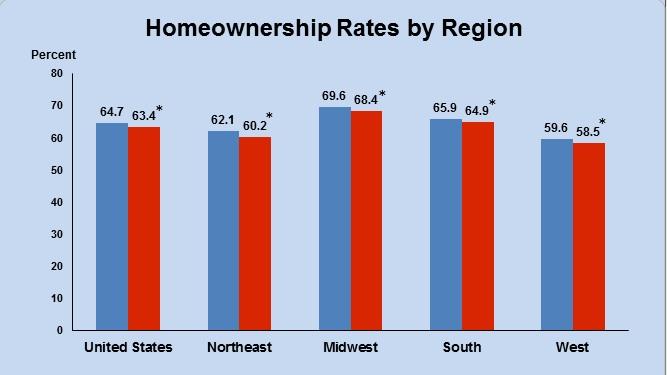
The home ownership rate in second quarter of 2014 to second quarter 2015.

The number of people nationally who owned homes in the second quarter of this year dropped to levels last seen in 1967, according to data released earlier this week by the U.S. Census Bureau.

America’s home ownership rate in the second quarter of this year was at a low of 63.4 percent, down from 63.7 percent the first quarter of this year and lower than the same time last year. It’s also lower than the 50-year average home ownership rate of 65.3 percent.

To compare to boom times, the highest home ownership rate was 69.2 percent in the last quarter of 2004.

Albuquerque metro area’s home ownership rate was also down, from 63.8 percent in the first quarter to 60.5 percent the second quarter. Between 2005 and 2015, Albuquerque’s highest home ownership rate was in the fourth quarter of 2007 at 72.7 percent.

The Midwest has the highest number of people who own homes, with a home ownership rate at 68.4 percent. The West had the lowest at 58.5 percent. All regions except the West, which remained the same, experienced a dip in home ownership rates from the first to second quarter. New Mexico’s home ownership rate is currently 63.5 percent.

Home sales have picked up nationwide, including Albuquerque, but the problem is that not enough first-time home buyers have opted to participate in the housing market. Considering today’s millennials have high amounts of student debt and experience stagnant wage increases, it’s often not possible for them to save up enough money for a down payment on a house.

And with still-tight lending practices, potential home owners can’t take advantage of today’s low interest rates.

Which is perhaps why so many millennials are opting to rent. The data showed the national rental vacancy rate fell from 7.1 percent earlier this year to 6.8 percent in the second quarter. Renter-occupied housing units have also grown by 2 million units over the past year, the data showed.

Albuquerque’s rental vacancy rate went a different way and actually increased, from 7.3 percent to 7.7 percent quarter to quarter this year.

By: Stephanie Guzman (Albuquerque Business First)

Click here to view source article.

Filed Under: All News

2015 Q2 Commercial Real Estate Market Survey

July 31, 2015 by mcarristo


The REALTORS® Commercial Real Estate Market Survey measures quarterly activity in the commercial real estate markets. The survey collects data from commercial REALTORS®. The survey is designed to provide an overview of market performance, sales and rental transactions, along with current economic challenges and future expectations.
2015.Q2 Survey Highlights

  • Sixty percent of commercial REALTORS® closed a sale.
  • Sales volume rose 9 percent from a year ago.
  • Sales prices increased 7 percent year-over-year.
  • Cap rates averaged 7.5 percent during Q2.2015
  • The average estimated transaction value increased from $1.7 million in Q1.2015 to $2.0 million in Q2.2015.
  • Fifty-four percent of members completed a lease transaction
  • Leasing volume advanced 5 percent from previous quarter.
  • Leasing rates increased 3 percent over previous quarter.
  • Inventory shortage topped the list of current challenges, followed by buyer-seller pricing gap and local economies.

By: George Ratiu, et al. (National Association of REALTORS®)
Click here to view source article.
Click here to view PDF of Commercial Real Estate Market Trends: Q2.2015.

Filed Under: All News

Top Ten Issues Affecting Commercial Real Estate

July 31, 2015 by mcarristo

1. Demographic Shifts
2. Excess Capital Supply
3. Rising Interest Rates
4. Global Instability and Currency Devaluation
5. Urbanization
6. Energy
7. The Gap Between Rich and Poor
8. Infrastructure
9. Real Estate Technology and Crowdfunding
10. The Changing Retail Model

Descriptions of each of the 2015-16 Top Ten Issues:

1. Demographic Shifts: Two key groups – large numbers of retiring “Baby Boomers” (born between 1946 –1964), and the next large population wave, the Millennials (born between 1980 – 2000) — will have the greatest impact on real estate through the lifestyles they choose in coming years. This casts a spotlight on housing in all its forms: for seniors, the homes in which they choose to age-in-place, downsized homes, senior communities or assisted living; for Millennials, the decision to buy or postpone buying, and location most often being driven by amenities, such as urban walkable communities. The real estate and service sectors targeting each group are adapting, too – medical facilities, retail, office and entertainment venues, to name a few; as well as infrastructure and distribution. Overall, demographic shifts will drive decisions across virtually all real estate sectors this year and for the foreseeable future.

2. Excess Capital Supply: Funds continue to flow from outside the U.S. to purchase U.S. real estate. The supply is driven by economies that have high savings rates, a shortage of mature financial markets and few safe assets. The investment rate is approaching record highs, presenting the potential for pressure on investments in the future. While investment in major cities continues, some non-gateway and edge cities are also experiencing higher levels of investment. Multifamily continues to be very attractive, but investment is not limited to commercial property — residential investment is on the rise, as another form of the secure, transparent asset class that makes U.S. real estate particularly attractive to investors across the globe.

3. Rising Interest Rates: Interest rates have been at near-historic lows – and the general view is that they will stay that way, for a while longer. But savvy investors and homebuyers alike are preparing for rising rates. When it happens, it will devalue future cash flows, thereby devaluing assets. An interest rate rise could spur short-term commercial development and slow home sales. Rising rates will cause higher mortgage payments, thereby decreasing homebuyers’ choices. But if Millennials jump in and buy before interest rates rise too far, it could create a second wind for the residential market.

4. Global Instability and Currency Devaluation: The U.S. dollar remains strong – but the global economy is being affected by currency devaluation in many other countries. Investment from non-U.S. sources helps fuel the U.S. real estate market, but event risk should be considered — “hot spots” of conflict are continually in the news, as is cyber security — and the global economy is psychologically linked. Investors and consumers alike should take such factors into consideration as they make real estate decisions.

5. Urbanization: Urban population growth is a global phenomenon. An increasing desire to reside in “live-work-play” and “walkable” communities is not limited to young professionals; older generations are also drawn to such locations, which affects housing choice for all age groups. Shopping malls must adapt; many have skewed to one of two successful models – luxury or discount offerings. Urban vertical shopping configurations are gaining traction. Some suburbs are feeling residential pressure, with home resale not easy when younger families don’t want the kinds of homes that are in plentiful supply from a past generation of suburbanites. The past few years have also seen a rise in corporate relocations to cities from the suburbs as a strategy to attract younger, urban professionals.

6. Energy: Oil price drops this year due to increases in non-U.S. oil production have negatively impacted large and small U.S. producers. Workforce reductions, and the associated decrease in residents’ buying power — while primarily occurring among workers in oil exploration and production – impacts the greater community, from retail to housing to professional services. Last year’s “boom towns” are now the opposite; the length of this duration is unclear. As a result, alternative energy forms are becoming more attractive. Investors are rethinking their energy investment plans, but the high demand for energy in Japan may change the dynamics.

7. The Gap Between Rich and Poor: because income inequality is widening worldwide, this issue deserves a close look relative to real estate. On the commercial side, it drives new opportunities to serve diverse markets with discounted retail offerings, while at the same time, contributing to a rise in luxury retailers. There are also development opportunities in high-density multi-family and affordable housing, and in “placemaking”– which can transform a vacant lot or an undesirable neighborhood into an appealing urban “destination” to serve diverse populations. Yet the gap has arguably impacted purchasing power, diminishing housing choices and home ownership — and contributing to the delay in new household formation among Millennials and certain immigrant groups. The shift from home ownership to renting, and a decline in local small business ownership, contributes to fewer jobs and a lack of investment in communities, increasing the potential for the social unrest, we are seeing in cities and towns throughout the world.

8. Infrastructure: The condition and development of U.S. infrastructure lags behind that of a number of other countries. Aging roads, bridges, and power/gas/water lines no longer satisfy the needs of a highly connected populace, let alone businesses and world economies. Communities and cities do not have the available capital to invest in infrastructure. Public/private partnerships may be the answer. However, in the short term, adaptive reuse is often constrained. This impacts existing buildings and entire neighborhoods, where energy or water infrastructure cannot be readily improved. Development, too, can be limited because existing streets and bridges cannot accommodate increased traffic flow if denser housing or mixed-use development are built. The situation is further complicated by citizens unwilling to live in locations where the distance is too great to travel to work or shopping on crowded roads in disrepair.

9. Real Estate Technology and Crowdfunding: Real estate is one of the most dynamic sectors for technology innovation, positioning the real estate industry for disruption. While venture capital has poured into real estate technology startups, crowdfunding could increase opportunity for smaller investors as well. Diverse audiences, including investors and lenders benefit from new technology, as it speeds information gathering and expedites transactions. Technology has also dramatically changed the way real estate professionals do business.

10. The Changing Retail Model: The retail sector faces continued challenges. Merchandise offerings are subject to the preferences of demographic groups in transition. The sector is skewered by decreasing consumer purchasing power, often hampered by aging infrastructure, subject to steep declines in spending if an adverse event (think terrorist attack or cyber security breach) occurs. And yesterday’s best location may be today’s or tomorrow’s worst as urbanization draws more households into cities. On the bright side, despite steady increases in online shopping, there is still a role for physical presence, where shoppers can browse and try products. Retailers that incorporate e-commerce elements, including fast delivery options, are well positioned, at least in the short term. There is continued pressure on existing properties to keep occupancy strong and adapt logistics. Store sizes — particularly within live/work/play, walkable, and transit oriented developments — are shrinking, but many of the attractive amenities of such “urban” shopping districts are now being incorporated into suburban shopping areas.

By: The Counselors of Real Estate

Click here to view source source article.

Filed Under: All News

Albuquerque Gains Construction Jobs; Others Lose Big

July 30, 2015 by mcarristo

A new report ranks 358 metros in construction employment.

Construction employment declined in 127 metro areas from June 2014 to June 2015. Santa Fe and Las Cruces had two of the biggest drops out of the 358 metros ranked by the Associated General Contractors of America.

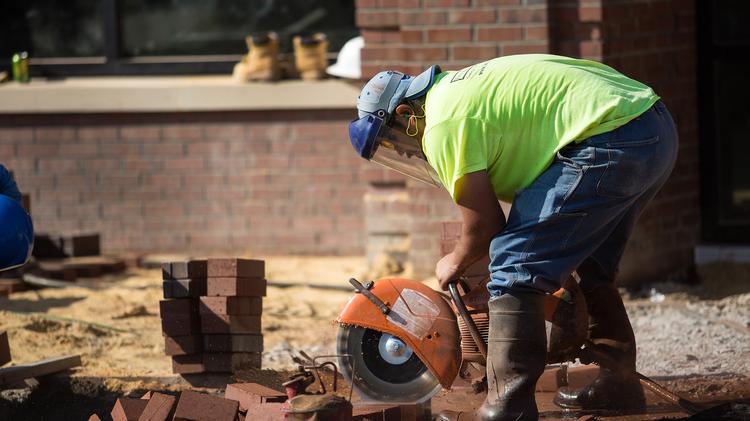
Albuquerque gained some construction jobs during the time period — moving from 20,300 to 21,600, a gain of 1,300 jobs, or a 6 percent increase. The increase was enough to rank the Duke City at No. 71 out of the 358 metros.

Santa Fe and Las Cruces didn’t fare as well. Las Cruces lost 500 construction jobs during the one-year time period, from 3,500 to 3,000, a 14 percent drop and a ranking of No. 356. Santa Fe was dead last of all the metros in the report, losing 600 construction jobs, from 2,700 to 2,100, a 22 percent drop and a ranking of No. 358.

The Associated General Contractors of America ranking comes from an analysis of federal employment data.

Association officials said that the declines come as the U.S. Congress struggles to enact legislation to extend federal transportation investments beyond a July 31 expiration of the current program.

“It is hard for construction firms to invest in new employees if they don’t know what business conditions will be like for the rest of the year,” said Ken Simonson, the association’s chief economist. “Many transportation construction firms will be reluctant to expand their headcount until Washington puts in places a long-term highway and transit funding measure.”

By: Damon Scott (Albuquerque Business First)

Click here to view source article.

Filed Under: All News

  • Page 1
  • Page 2
  • Page 3
  • Interim pages omitted …
  • Page 8
  • Go to Next Page »
  • Search Property
  • Join CARNM
  • CARNM Login
  • NMAR Forms
  • All News
  • All Events
  • Education
  • Contact Us
  • About Us
  • FAQ
  • Issues/Concerns
6739 Academy Road NE, Ste 310
Albuquerque, NM 87109
admin@carnm.realtor(505) 503-7807

© 2026, Content: © 2021 Commercial Association of REALTORS® New Mexico. All rights reserved. Website by CARRISTO