The 2013 CARW Golf Outing, presented by BMO Harris Bank, is pleased to announce this year’s sponsors! A special thank you to all that support this great event.
Archives for 2017
Is Albuquerque The Next Trendy City?
Is Albuquerque primed to be the next Austin? Our Gnational Gnomad and travel expert Meagan Wristen of Mommy Travels ventured out to Albuquerque to discover the answer.
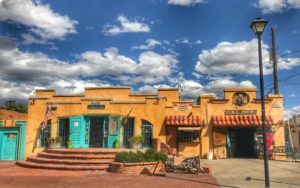
It has been almost two decades since I stepped foot in Albuquerque, New Mexico. I decided to take a trip here after reading Mayor Richard Berry’s public letter to Amazon on Twitter back in September. He passionately tried to sway the company to open a second headquarters in his city. This did not sound like the Albuquerque I remembered, so I set off to see this transformation in person.
As the plane descended into the desert, I thought this is exactly how I remember it… dry, hot, and brown. But I tried to keep an open mind as I headed to Hotel Andaluz, an adorable boutique hotel in downtown. As we drove, the Uber driver pointed out various locations where Breaking Bad had been filmed. In the years since my last visit, Albuquerque, home to Albuquerque Studios, has turned into a thriving film industry. There are many tours offered around the area to see where popular shows and movies were filmed.
Foodies Will Not Run Out of Options

Once settled into my hotel, I set out in search of New Mexico cuisine. The one thing I had no issue recalling was the fantastic food, often flavored with freshly roasted green chiles. Here are a handful of the best restaurants in Albuquerque dishing up New Mexican goodness!
- El Pinto – Plan to have dinner out on their gorgeous patio decked out with flowers. If you cannot fit it in for dinner, head there for yoga and brunch on a Sunday morning. Every Sunday, they host “Yogaritas” where you can do yoga alongside a pot-bellied pig named Tequila Barbie and then enjoy a margarita when you are done.
- Sadie’s – After 60+ years in business, Sadie’s is still considered by many locals to be the best New Mexican restaurant in town. I must say that nineteen years later the food was even better than I remembered.
- Barelas – Have breakfast here during your stay. I recommend trying the chilaquiles Christmas style, which means half green chile sauce and half red chile sauce. If you are feeling adventurous, try the chicharones (apparently Barack Obama tried them when he dined here).
Other restaurants I recommend in Albuquerque are Tia B’s Waffleria for breakfast, The Grove Cafe for lunch, and Mas Tapas Y Vino for dinner. Tia B’s Waffleria will have a line out the door, but it is worth the wait for one of their incredible savory or sweet waffle creations. The Grove Cafe offers organic, locally grown ingredients, and their soups and salads are outstanding. Mas Tapas Y Vino is located inside Hotel Andaluz and also sources their ingredients locally. They have one of the most creative cocktail menus in Albuquerque with options like the Dr. Greenthumb, made with house green chile vodka, chartreuse, lime juice, cilantro, mint, and ginger simple syrup.
A Paradise for Outdoor Enthusiasts

Having properly stuffed my face I was ready to do something active. I rented a bike and set off. Albuquerque has 600+ miles of bike trails in and around their city. If biking is not physical enough for you, venture out to the Sandia Mountains. The Sandia Tramway will take you to top where you can mountain bike, hike, ski, or snowboard. Just think, from late fall to early spring you could ski in the morning and in the afternoon head back to town and golf.
Beer Enthusiasts Are Not Left Behind
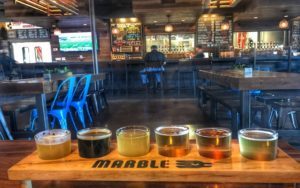
After biking about town, I had worked up quite a thirst and decided to try a couple of the local breweries. The last time I was in Albuquerque I am pretty sure there were no breweries; now Albuquerque has a flourishing craft brewery scene. In fact, Travelocity named Albuquerque as the one of the top 10 beer cities in the United States. I recommend stopping in at Marble Brewing and trying their Pilsner for a beer with a nice citrus twang. Other breweries worth checking out include Nexxus Brewery and Restaurant and La Cumbre Brewing Company.
Shop for Turquoise
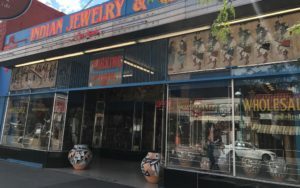
Let’s start with the shopping scene. After all these years, Albuquerque is still THE place to find one-of-a-kind turquoise jewelry. I highly recommend going to Skip Maisel’s Indian Jewelry store in downtown. Skip Maisel’s has affordable prices and can tell you about the Indian artist that created each piece. I bought a massive turquoise and silver ring for less than $200!
Another place to shop is Old Town. Take a step back in time at Historic Old Town founded in 1706 and home to an 18th-century church, San Felipe de Neri. The area is made up of charming Pueblo-Spanish style adobes, many of which are now shops with all types of merchandise. They even have sellers set up on blankets selling a variety of goods. While in Old Town take a break from shopping long enough to enjoy a margarita at the High Noon Saloon and have one of the staff members tell you about the building which they say is haunted!
Visit a Lavender Farm
My second favorite stop is the lavender farm. Albuquerque has the most charming lavender farm I’ve ever seen, Los Poblanos Historic Inn and Organic Farm. All the buildings inside and out look like they came straight out of a magazine cover. The farm is gorgeous and smells like heaven. You can stroll around the property, and have breakfast or dinner at their field-to-fork restaurant featuring all locally sourced products including their lavender honey. Afterwards shop in their gift shop. Be sure to check out their lavender oil distillery and enjoy a lavender latte!
I have to admit the city of Albuquerque has done an incredible job. They have managed to preserve all that was great and build upon it. One thing is for sure, I will not wait another 19 years to go back! I’ve already made plans to go back next September for Somos, a festival that celebrates all Albuquerque has to offer including art, food, beer, music and more.
By: Meagan Wristen (Travelocity)
Click here to view source article.
Brewing Up A New Use For Old Buildings
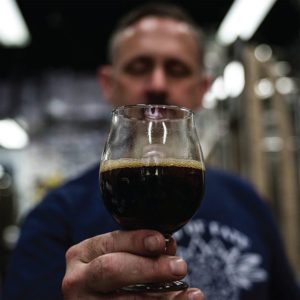
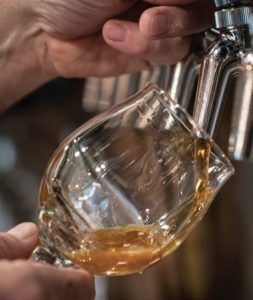
The domestic beer industry is booming, but not just to the benefit of the large corporations that produce the vast majority of beer in the United States. The craft brewing trade has changed the status quo, and the financial benefits are trickling out, not down. It’s spurring the rejuvenation of neighborhoods often in decay, or at least decline. A microbrewery with a taproom, or a smaller brewing operation in a brewpub can quickly become the community center for revitalized urban infill, as well as bringing small towns back to life.
Colliers International did a recent Spotlight Report to “better gauge the impact the craft beer industry has been having on commercial real estate in recent years.” They took a deep look at 29 markets scattered across the United States and measured the square footage of growth. In South Carolina, they reported in 2016, “33.6 percent of the total square footage currently occupied by breweries and brewpubs has opened since 2013.” Many more are in the planning stages.
The microbrewing movement began in the U.K. during the 1970s. It migrated to the United States in the 80s, and originally designated as breweries producing less than 15,000 barrels of beer annually. The craft beer industry started in basements and garages, but grew with the emerging demand for European old-style beers with an emphasis on quality, not quantity. The Brewers Association, a nonprofit U.S. trade group with over 9,300 members, describes craft breweries as “small, independent and traditional.” Beer just began to taste a whole lot better.
In 1810, there were 120 breweries in the United States (according to BeerInfo.com). In 1873, the first year of records kept by the Brewers Association, there were 4,131, largely in cities and towns throughout the eastern and midwestern parts of the country. These were mostly small breweries that would have supplied the taverns and beer halls in their community. There was no practical means of refrigerating the beer for extended transportation. As production efficiencies improved, and railroad ice cars increased distribution ranges, fewer breweries could make more beer. By 1910, the number of breweries dropped to 1,568.
And then, Prohibition. From 1920 to 1932 the number of breweries operating in the United States was zero. When Prohibition (finally!) ended, only a fraction of the breweries survived. In 1933, the number was 331. That number distilled further, to 124 in 1986. Enter, the microbreweries and brewpubs, and the number jumps to 1,149 in 1996, growing to 1,460 in 2006.
Then craft brewers did the hitherto unthinkable, and started selling their beer in cans. Now anyone can take their favorite beer in a backpack, and outdoor enthusiasts helped fuel the industry to 5,301 total breweries in the United States in 2016, broken down as: 3,123 microbreweries; 1,916 brewpubs; 186 regional craft breweries; 51 large non-craft; and 16 “other” non-craft breweries. The craft beer industry has grown to 12.3 percent of total production by volume, but has garnered 21.9 percent of sales. By contrast, in 1983 America’s top six breweries controlled 92 percent of beer production. In 2016, the craft brewing industry contributed
In 2016, the craft brewing industry contributed $67.8 billion to the economy and created over 456,000 jobs. Now, the craft brewing industry is having a rippling impact on local economies, as it finds its niche in abandoned neighborhoods and struggling towns from Portland, Maine, to Portland, Ore., — and many places in between.
“Blood, Sweat & Beer” is a 2015 feature documentary by Chip Hiden and Alexis Irvin which examines the explosive growth of the craft beer industry and focuses on two craft breweries and how they impact their communities. After two years of traveling throughout the United States visiting existing and start-up craft breweries, Hiden told All About Beer Magazine, “A brewery can inspire a real sense of community in a place that otherwise might not have it. People like to have them in their town; they like to spend that beer money with people they know.”
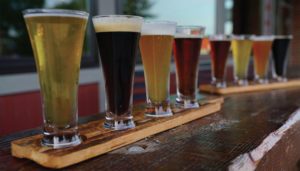
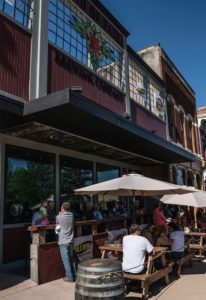
One of the breweries in the documentary is a start-up in an old steel mill town in Allegheny County, Pa., called Braddock. Andrew Carnegie built his first mill there in 1890, and the town quickly grew to over 20,000. Today, after the collapse of the steel industry in the 1970s, Braddock has a population of 2,153. Two 24-year-old locals, Asa Foster and Matt Katase, had just graduated from nearby Carnegie Mellon University in Pittsburgh, but came back to Braddock with a plan for revitalizing the largely boarded up and abandoned town.
“The perception for a long time was that if I go to Braddock, I’m going to get shot,” Foster says. “What we’re trying to do is make the most welcoming experience possible and have people come here and feel good about Braddock.” With over 12,000 people following their Facebook page, they seem to have accomplished their mission. And if the craft beer industry can turn around a rust-belt town, it can have an impact anywhere.
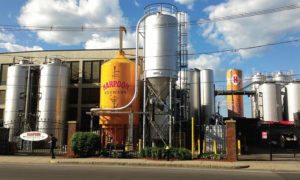
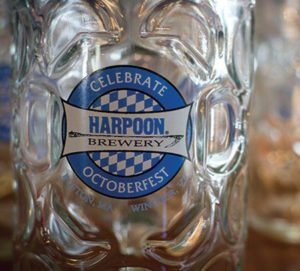
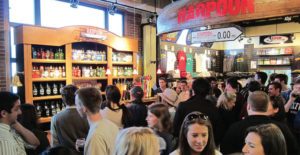
Large cities have had neighborhoods that were trending downward in many quality of life aspects, but brewpubs and taprooms have reversed the fortunes of many communities. Three college buddies with a passion for good beer after traveling in Europe were disappointed when they returned to their local pubs in Boston. They formed the Harpoon Brewery in 1986 in Boston, and found an empty warehouse on the waterfront to begin brewing beer. The craft beer industry was in its infancy then, but Harpoon nurtured its products and developed a strong following, and in 2000 bought the former Catamount Brewery in Windsor, Vt. By 2013, Harpoon had become the twelfth-largest craft brewery in the United States, and 19th-largest overall. In 2014, the company offered a stock ownership program and became employee owned. Their events and festivals have become legendary.
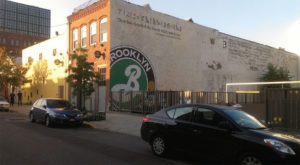
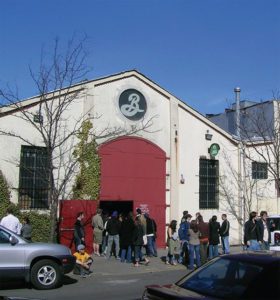
Similar stories have taken place in Brooklyn’s Williamsburg section, where Brooklyn Brewery operates out of an old matzo factory. Los Angeles has the Angel City Brewery in its downtown Arts District that used to be a warehouse for a New Jersey cable manufacturer, which provided the cables for the Brooklyn and Golden Gate bridges, as well as the Vincent Thomas Bridge which spans Los Angeles harbor. Kansas City had its brewing history rekindled when Boulevard Brewing Company started making beer in an old laundry building for the Santé Fe Railroad. And Cleveland’s Ohio City neighborhood benefitted tremendously when Great Lakes Brewing Company renovated several Victorian era buildings that had housed hotels, a burlesque house, a seed company, a livery stable and the Market Tavern, where Elliot Ness of “The Untouchables” fame purportedly left some bullet holes in the wall.
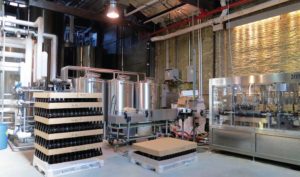
Craft breweries don’t need a big city to prosper, but they do need a pretty good-sized building to brew. The processing equipment, ingredients and product storage, packaging lines, all require significant space; and old abandoned warehouses and factories fit the need well. The Wedge Brewery has a facility in Asheville, N.C., that used to be the largest tannery in the country. When Magnolia Brewing outgrew its basement brewery in San Francisco’s Haight-Ashbury district, it opened a second brewery and BBQ restaurant called the Smokestack in the post-industrial neighborhood of Dogpatch. The building was originally a factory of the American Can Company, which produced the first beer can, and became one of the largest can manufacturing facilities in the county. The 1930s-style renovation is a work of artisans.
“A brewery can bring new life to a vacant industrial building or retail shopping center and can help boost leasing demand,” Colliers reports. “Locate a brewery in a walk-able neighborhood, and it can become an instant draw for existing and potential residents. Landlords are taking note of craft beer as a growth industry, which will create an increased demand for their properties.” The report lists several reasons for repurposing antiquated buildings in industrial areas and small towns, such as purchase price and availability, necessary infrastructure, brand development, and the possibility of tax incentives from revitalization programs.
There’s even a brewery that’s been restored after being dormant from 1972 to 1995. The Potosi Brewery (Potosi, Wis.) was built in 1852 and became a regional brand, but couldn’t compete with the mega-brewers. The craft beer craze made the building worth restoring. It was listed on the National Register of Historic Places, and now serves as the site of the National Brewery Museum and the Potosi Brewing Company Transportation Museum, which make this southwestern Wisconsin farm town (population 688) a tourist destination.
Mark Garthwaite, executive director of the Wisconsin Brewers Guild, sees the economic impact throughout the state. “There are numerous examples where areas in dire need of economic development have been given a boost by the presence of a brewery. They draw people and then new businesses start popping up in the area as well. It’s remarkable to see how rapidly it occurs and in communities both large and small all across Wisconsin.”
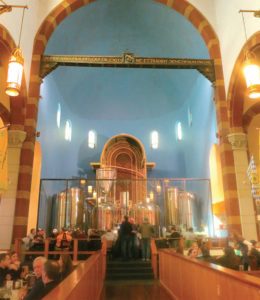
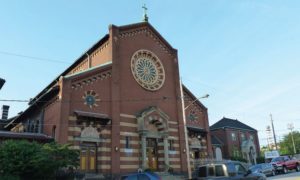
Brewpubs tend to require less space than microbreweries with taprooms (smaller production and no can or bottle lines), so they can be fitted in a greater variety of smaller buildings. Some of the buildings have been restored to nothing short of gob smacking. The Church Brew Works in Pittsburgh arguably tops the list. Drinking great beer while looking through stained glass windows under a cathedral ceiling makes one think of the saying “Beer is proof that God loves us and wants us to be happy.”
Atwater Brewery has a similar brewpub in an old church in Grosse Point Park, Mich. Across the state is the Brewery Vivant, in a 1915 funeral home in Grand Rapids, which was the first LEED certified microbrewery.
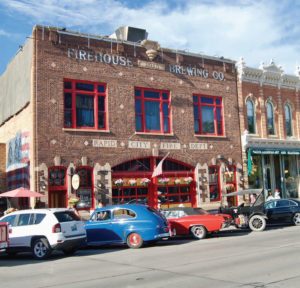
Government buildings have also become stunning brewpubs, with firehouses in Rapid City, S.D., and Tacoma, Wash., a jailhouse in Hampton, Ga., as well as a post office in Willimantic, Conn. There’s a taproom in an old bank in Hendricks, Minn., a brewpub in one of the original service stations for Highway 66 in Albuquerque, N.M., the list goes on and on…
But the craft beer industry has done more than repurpose old buildings; it has revitalized communities, sometimes bringing back districts in urban rust-belts, and other times giving new life to small towns. Downtown areas are witnessing the gentrification of neighborhoods built by masons, long before the advent of suburbs and strip malls. Microbreweries and brewpubs often serve as hubs for community gathering in distressed areas, as the peripheral effects are felt in retail, service and housing demand. Jobs are created for brewers, packagers, drivers, beer tenders, cooks, wait staff and all the cleaning and service contractors required to keep the casks and taps flowing. The surrounding houses get fixed up and the vacancies go down. New lights appear.
New Belgium Brewing moved out of a couple’s basement and into an abandoned railroad freight warehouse in the Old Town neighborhood of Fort Collins, Colo., in 1992. They became the anchor for the neighborhood’s revitalization; and with Fat Tire as their flagship beer have grown to the next generation of craft brewers. They’ve built a state of the art, employee-owned brewery complex outside of Fort Collins, and have expanded into San Francisco and Asheville, N.C., both regional hubs for craft breweries. They now have over 800 employees (owners) and will invest $175 million into their facility on a brow-nfield in Asheville’s River Arts District.
“At New Belgium, we built both our breweries on brown-fields so we first had to rehabilitate the space,” said New Belgium Brewing’s communications director, Bryan Simpson. “In Fort Collins, we’re north of our vibrant Old Town by about a half mile on what used to be sugar beet production fields. There is a pretty rough patch between New Belgium and Old Town, but it is now seeing a great revitalization as the River District. We’ve got mixed-use development coming in; a book press, high-end pie shop and distillery have popped up, and we’re now connected with Old Town in a much more meaningful way. This part of town is having a renaissance in part due to New Belgium’s presence out this way.”
According to Bart Watson, chief economist with the Brewers Association, “With 80 percent of 21-plus adults living within 10 miles of a brewery, we’ve certainly seen many of the more than 5,800 breweries in the United States play a role in their neighborhood or town’s economy. One of the best parts of breweries as manufacturing businesses is that they can go into spaces that are zoned for industry and yet still bring foot traffic to those areas, playing a role in revitalization.”
Colliers agrees with the rosy forecast. “The craft beer industry will continue to be a growth industry both in market share and within the commercial real estate arena as a result of its engaged and growing consumer base.”
Think about that. Local is becoming the new micro-global.
By: Kurt Buss (NAR On Common Ground)
Click here to view source article.
REALTORS® Help Cities Plan for Walkability
With grant support from the NATIONAL ASSOCIATION OF REALTORS®, six local REALTOR® associations have partnered with their local governments to sponsor “WalkShops.”