Housing on both the ownership and rental sides is in a reset mode.
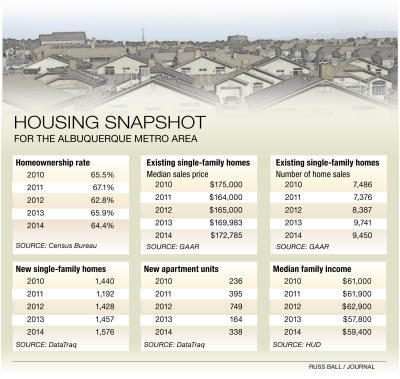
The most telling sign of a reset has been the plunge in the homeownership rate, which dropped in the Albuquerque metro area from a high of 70.5 percent in 2007 to 64.4 percent in 2014, according to the Census Bureau.

Nationwide, it dropped from a high of 69 percent in 2004 to 64.5 percent last year.
The plunge in the homeownership rate is obviously the result of the Great Recession, which was rooted in the lax mortgage lending that enabled the housing bubble of the mid-2000s and the collapse that followed.
“We’re suffering from post-traumatic stress syndrome in housing,” said Chris Herbert of the Joint Center for Housing Studies at Harvard University, which recently released a report titled “The State of the Nation’s Housing 2015.”
(Russ Ball/Journal)
The reset in housing is also driven by what could become a seismic shift in the age groups that drive housing demand.
The baby boomers, the huge population bubble born in 1946-64, are at an age where they’re becoming niche players in the housing market. The millennials, another huge population bubble born from 1985-2004, are a sleeping giant when it comes to housing demand.
In between the boomers and millennials are Gen-Xers born from 1965-84, which were low-birthrate years. The Harvard report singles out Gen-Xers as the demographic left holding the bag when housing collapsed.
Because they were in their prime home-buying years at the time, Gen-X homeowners were most likely to have little or no equity when the recession hit and home prices dropped. They were in the cross hairs of the foreclosure crisis that escalated nationwide in 2007 and in the metro in 2009.
As a result, the homeownership rate for 35-49-year-olds is currently about 5 percentage points lower than it was for the same age group 20 years ago. Their reduced participation in homebuying is a big reason why the so-called “move-up” market is still weak in most places.
“They watched the downturn of the recession and learned,” said John Garcia, executive vice president of the HBA, the homebuilders’ association in the metro. “They’re going to be cautious, more conservative.”
The reduced participation by Gen-Xers in homeownership “should point to pent-up demand,” said Janice McCrary, executive vice president of the Greater Albuquerque Association of Realtors, or GAAR.
Other dynamics negatively affecting homeownership include the steady erosion in household incomes – HUD’s current median income for the Albuquerque metro is lower than it was five years ago – and more rigorous mortgage lending standards, according to the Harvard report.
The income erosion has led to an increase in households classified as “cost-burdened by housing,” meaning they spend 30 percent or more of their net income on a mortgage or rent plus related costs, such as utilities, according to last year’s state of the nation’s housing report.
In the Albuquerque metro, the 2014 report said 36.4 percent of households were cost-burdened by housing, slightly higher than the national average of 35.3 percent.
Brian McCarthy of Abrazo Homes noted that boomer retirements or reduced roles in the workplace “will expand professional upward mobility for wage growth of the Gen-Xers and millennials.”
While the metro’s homeownership rate has fallen in step with the rest of the country, the local apartment market has not seen the corresponding increases in occupancy and rental rates experienced in much of the rest of the country.
Albuquerque’s apartment occupancy rate was 93.7 percent in the first quarter, compared to an average rate of 95.5 percent nationwide, said Jay Parsons of Carrollton, Texas-based MPF Research. The metro’s rate has lingered around 94 percent for the past couple of years.
The average monthly rent in Albuquerque was $740 in the first quarter, increasing year over year by the biggest margin in three years at 2.8 percent, he said. Nationwide, the average monthly rent was $1,186, a year-over-year increase of 4.6 percent.
“All in all, Albuquerque is more steady and slow than what we’re seeing across the country in terms of occupancy, rents, supply and demand,” Parsons said. “It’s not necessarily weak numbers, but not as strong as we’re seeing nationally.”
What really sets Albuquerque apart from most other metros is the lack of significant new apartment construction.
“Apartment construction is a big story nationwide,” Parsons said. “We’re building at a level not seen in 25 years.”
Over the past 10 years, DataTraq reports that permits were issued for only 4,494 multifamily housing units in the metro. The biggest single project involved 280 units. For comparison, 6,613 units were built in 1994-97, which was the last apartment construction boom.
Both here and nationwide, new apartment construction is undertaken in one of two ways. Projects either use federal low-income housing tax credits, which result in income restrictions for tenants, or are designed and built for the top, so-called “luxury,” end of the market.
Due to rising land and construction costs, it’s almost impossible to build to the middle of the market anymore. The rationale is that the supply of mid-priced apartments will recharge as existing properties get old and thus command more moderate rents.
Apartment owners and managers in Albuquerque are closely watching both local job growth and emerging trends in the apartment business, said Kelle Senyé of the Apartment Association of New Mexico.
“I think we’re cautiously optimistic,” she said. “I don’t think we’ll rush into new construction. When the time comes, we’ll be more strategic about it.”
The apartment market may be flat in terms of occupancy due to competition from single-family rental homes, which make up more than a third of rental housing at the national level.
The inventory of single-family rental homes grew during the bust when investors paid bargain prices for homes in some form of distress, such as in foreclosure or repossessed by the mortgage lender. These investment purchases propped up the market during the darkest days of the bust.
Single-family rentals appear to be registering higher rent growth than, on average, the for-sale market is seeing price growth, said Joe Gilmore, a partner in Coldwell Banker Legacy.
The market for existing single-family homes, as tracked by the Greater Albuquerque Association of Realtors, appears to be slowly returning to what might be called normal.
“This is a reset, not a rebound,” said GAAR President Paul Wilson.
Here’s a look back at how the annual median price for a single-family home, both detached and attached, has gone up and down from 1999, when it was $126,500, to 2014, when it was $172,785. Median means half of the homes were sold for a higher price and half for a lower price.
• In the pre-bubble years of 2000-03, the price increased by a very modest 1.8 percent a year.
• The 2004-07 bubble registered price increases of 10.4 percent a year, a rate of appreciation never seen before in the metro.
• The 2008-11 bust saw the price drop by 3.7 percent a year, a four-year slide that once again had never been seen before in the metro.
• The 2012-15 recovery has eked out gains of 1.8 percent a year, which is the same rate of appreciation as the pre-bubble years.
Today’s housing market, with all its variables, is evocative of the late 1970s and early ’80s when boomers were coming into their own during uncertain economic times, noted both Janice McCrary and Paul Wilson of the Greater Albuquerque Association of Realtors.
Homebuilding was in a major lull at the time, held down by mortgage interest rates that Fannie Mae records show topped 18 percent in the fall of 1981. The national unemployment rate topped 10 percent in 1982-83, higher than it got during the Great Recession.
Dubbed the “Me Generation” by noted author Tom Wolfe, the boomers had strength in numbers and, as a whole, were redefining the rather restrained consumerism of their parents into something closer to conspicuous consumption.
For all their rebellious noise, however, they tended to embrace their parents’ ideal of a home in the suburbs.
Echoing sentiments expressed in pro-growth forums, the HBA’s Garcia and Brian McCarthy of Abrazo Homes believe the Albuquerque metro has great potential to be a boomer retirement destination.
By: Richard Metcalf (Albuquerque Journal)
Click here to view source article.
Store Moves Could Boost Mall, Leave Retail Gaps Elsewhere
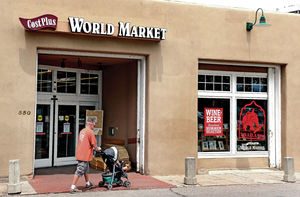
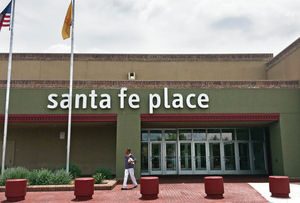
Santa Fe Place mall, on the city’s south side, underwent a major overhaul and a name change a decade ago, but has struggled since then to keep tenants in its storefronts, both large and small. The mall is now trying to lure two major retailers, Cost Plus World Market and Bed, Bath & Beyond, and plans a renovation project to accomodate them. Clyde Mueller/The New Mexican
The Santa Fe Place mall, which has struggled in recent years to keep its storefronts full following a massive overhaul and name change a decade ago, is pursuing two new major retail tenants already located in the city: Cost Plus World Market and Bed, Bath & Beyond.
The move, which is not a done deal, would be good news for the mall — which underwent an interior face-lift just last summer and plans another improvement project that’s tied to the proposed new anchor tenants. But the change would leave another gaping hole at the Sanbusco Market Center in downtown Santa Fe. Cost Plus World Market opened a 14,700-square-foot store at Sanbusco in 2000 and has been one of the biggest tenants at the center, which has faced financial difficulties in the last couple of years, following the loss in 2011 of a Borders bookstore in its largest retail space.
The relocation effort also would leave a hole at Cerrillos Marketplace on Cerrillos Road, where Bed, Bath & Beyond has been located since 2002. Bed, Bath and Beyond purchased the Cost Plus chain in 2012, and the two businesses would be adjacent tenants at the mall.
Darrell Dyer, general manager at the local Cost Plus store, confirmed Friday that a move is anticipated, but he said nothing has been finalized.
“The word on the street, so to speak, is that yeah, we’re going to be moving to Santa Fe Place mall toward the end of the year,” Dyer said Friday. “But I haven’t gotten anything, like a lease is signed, and we’re not putting up any signs or anything like that until our corporate office says it’s a done deal.”
Efforts to reach a corporate executive were unsuccessful Friday.
The general manager at Santa Fe’s Bed, Bath & Beyond store did not return a message seeking comment, but an employee who answered the phone at the store said a move is anticipated.
The mall plans to remodel the northeast portion of the building that formerly housed the UA North movie theater to accommodate the two new tenants, according to city documents.
“The two businesses will be side by side,” Dan Esquibel, a senior land-use planner, wrote in a memo to the Santa Fe Planning Commission, which approved a request Thursday for a sign variance to allow the mall to install signs bigger than the 80-square-foot maximum.
Dawn Harmon, the mall’s general manager, would not confirm that the two businesses were moving to the mall and told The New Mexican that plans were very preliminary. She said the sign variance from the Planning Commission is just one step in a long process.
“There are a lot of other things that need to fall into place,” she said.
The 570,299-square-foot Santa Fe Place mall sits on 57 acres at Rodeo and Cerrillos roads and includes more than 3,000 parking spaces. It is owned by an investment trust and managed by the Spinoso Real Estate Group. While struggling to keep tenants in it smaller retail spaces, the mall also has seen the loss of two movie theaters in the last decade. Regal Entertainment Group closed its 850-seat United Artists South theater in 2007, just two years after the mall changed hands and spent millions of dollars renovating and trying to create a new brand. The north theater’s closing followed in 2011.
A Mervyn’s department store, which had been a mall anchor for years, closed in 2008, leaving the large retail space mostly vacant until 2012, when Sports Authority moved in.
The mall’s owners announced the redevelopment last summer of its food court, as well as other improvements, including free WiFi service.
But according to JenkinsGavin Design and Development, a Santa Fe-based development management firm, the effort to revamp the shopping center isn’t over yet.
The remodel of the old movie theater, the firm wrote in a statement to the city Planning Commission, is “a critical step toward the much needed revitalization of the Santa Fe Place mall.”
Images presented by JenkinsGavin on Thursday also showed the mall wants to create more of an outdoor setting.
“From what we saw, the parklets and open space and making that whole area just more attractive, it’s a better plan,” said Vince Kadlubek, a Planning Commission member. “It’s a more 21st-century plan.”
In its application for the sign variance, JenkinsGavin Design wrote that “adequate signage is necessary in order for the mall renovation and addition to move forward.”
“Clearly recognizable and visible building signs are a critical element in attracting customers to any retail store,” the firm wrote in its application letter. “The Tenants need to ensure that they can adequately advertise their stores via signs that are proportionate to the building and clearly visible from Rodeo Road.”
Kadlubek said Santa Fe’s south side has been hoping “for a long time” that the mall, which used to be called Villa Linda Mall, would find a new identity.
“This seems like a good step,” he said.
“I’m excited to see any sort of activity at the Santa Fe Place mall that shows some amount of positive growth,” Kadlubek said. “It’s exciting to see that there’s a new ownership group that is willing to reinvent that property, and then it’s exciting to see that there are tenants who are responding to that new ownership group’s direction.”
By: Daniel J Chacón (Santa Fe New Mexican)
Click here to view source article.
By: Daniel J Chacón (Santa Fe New Mexican)
Click here to view source article.
County May Buy Old Hospital for $1.9M
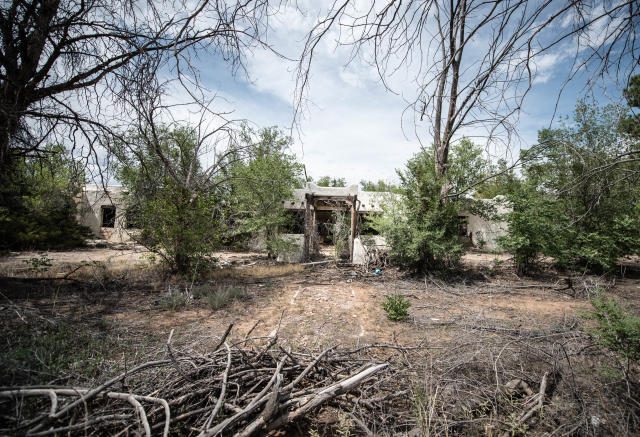
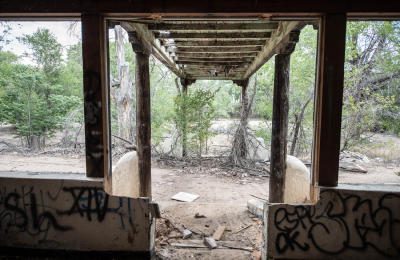
Pictured are the remains of an old building located near 6903 Edith Blvd that the city is interested in buying.
Albuquerque, New Mexico. (Albuquerque Journal)
Online videos describe it as an old insane asylum – haunted by the victims of botched surgeries and other accidents.
Teenagers like to explore the place at night, neighbors say.
Now Bernalillo County wants to buy it.
County commissioners agreed unanimously last week to authorize negotiations for 17 acres in the North Valley – once home to the Sandia Ranch hospital – for about $1.9 million.
The plan is to demolish the buildings, or what’s left of them, and make the land available for use by the Parks and Recreation Department. An aquatic center, agricultural demonstration site or something similar are among the possibilities.
“I think it’s a site we should acquire, clean it up and make it a resource for the community,” Commissioner Debbie O’Malley said in an interview.
The property certainly has some mystery to it.
At least two videos posted to YouTube carry footage of a dilapidated, graffiti-covered building – with captions that describe the Sandia Ranch hospital as an abandoned insane asylum. In one video, scenes of mental patients being operated on are interspersed with photos of the building, as Pink Floyd’s “Comfortably Numb” plays in the background.

Pictured are the remains of an old building located near 6903 Edith Blvd that the city is interested in buying.
Albuquerque, New Mexico (Albuquerque Journal)
A third video includes the “insane asylum” on a list of haunted properties in New Mexico. The videos are posted under screen names that don’t make it clear who took the footage.
The property is on Edith just north of Osuna. From the road, it looks like an overgrown lot.
“The teenagers kind of view it as a spooky place,” said R.J. Marney, president of El Camino Real Neighborhood Association.
Chris Christy, who has lived down the street for 40 years, said she doesn’t think the property is haunted, just run-down.
The county, she said, would “make a much better neighbor.”
Marney said the neighborhood’s goal is simply to make sure that whatever happens to the property is compatible with the neighborhood, which lies along a section of Edith Boulevard that was once El Camino Real, or the “Royal Road,” which connected New Mexico to the outside world.
06.29.2015/Roberto E. Rosales
Pictured are the remains of an old building located near 6903 Edith Blvd that the city is interested in buying.
Albuquerque, New Mexico(Albuquerque Journal)
“We don’t want to see any heavy commercial or industrial uses in the neighborhood,” Marney said. “We’d like to see the historical value of the neighborhood preserved.”
The county identified the owner of the property as David Gonzales. He didn’t return a telephone call seeking comment.
Final approval of the purchase is expected to come back to the County Commission later this summer, perhaps in August.
The county appraised the property at roughly $1.7 million, and Gonzales has submitted his own evaluation contending that it’s worth $2.7 million.
But the two sides have agreed on $1.9 million. The county would pay the $121,000 demolition cost as part of the $1.9 million agreement.
“The commission has to decide if they agree it would be a good thing for the community,” O’Malley said. “The property has been problematic. I think neighbors see it as blighted.”
She said she would like to see a community process to help plan use of the property.
“Large parcels like this aren’t easy to come by,” she said.
Christy said the property was once a sanitarium for people with tuberculosis, then a sanitarium for people with mental illness and later a retirement home.
But is it haunted?
“I think this has just become a ratty little place,” Christy said.
By: Dan McKay (Albuquerque Journal)
Click here to view source article.
Who Will Be the Airbnb of Office Space?
TRD looks at the startups jostling for control of a potentially huge market.

Friday’s revelation that Airbnb is now worth over $25 billion was received with particular delight by a certain crop of commercial real estate tech startups.
Firms like PivotDesk, ShareDesk and LiquidSpace, which function as online marketplaces for short-term office rentals, see their residential counterpart as both a benchmark and a promise. These firms are trying to become the Airbnb of the office market, and with the firm’s new valuation, their ceiling seems to have risen substantially.
“I have no doubt that if we execute efficiently we can be as big as Airbnb is,” said David Mandell, CEO of PivotDesk. Avison Young’s CEO Mark Rose, who has invested in rival LiquidSpace, said: “We at Avison Young believe LiquidSpace could be as big as Open Table or Airbnb.” And Timothy Draper, a venture investor who is backing ShareDesk, replied “Yes!” when asked if the firm could emulate Airbnb’s success.
These entrepreneurs could be aiming even higher than Airbnb, given that the office market is far larger than temporary housing or hospitality. “We’re talking about the fifth-largest market in existence,” said Kia Rahmani, CEO and founder of ShareDesk. “And if you consider the fact at any given time the usage rate (for offices) is hovering between 45 and 50 percent, there’s a lot of value that’s locked up.”
A High Ceiling
Unlike shared office space provider WeWork , office rental marketplaces don’t lease and then sublet office space, but merely allow others to list it on their platforms. And while they benefit from the boom in coworking spaces like Regus or WeWork, which make up a chunk of their listings, they also offer landlords and companies the chance to rent out more traditional space on a short-term basis. Their ultimate goal is to eventually make all unused office and conference space available online at any time.

“Our ceiling is not the short-term rental market but a multiple of it,” said LiquidSpace founder Mark Gilbreath. “The appetite for flexibility, and for speed and ease of transaction go far beyond just the customers that have been transacting short-term office rentals.”
He pointed to Uber, which he said now serves three times as many customers in San Francisco as taxis traditionally have, as an example of a company that takes over a market and expands it. “You’ll see something very similar to Uber” in the office rental market, he added.
This is crunch time for players in the short-term office rental space, as many believe that the bulk of the spoils will eventually go to the alpha dog.
“I think history will tell you that consumers gravitate toward a single brand, so I think it will be dominated by a single player,” said Tod Francis, a managing director at Shasta Ventures, which invested in LiquidSpace. Generally, online marketplaces become more valuable the more users they have — people use Uber, Airbnb or Amazon because these sites offer the widest selection of cars, listings or goods. Economists call this the network effect, and its logic also applies to office marketplaces.
So which firm will muscle its way to the top? Here’s a look at the early contenders with a significant presence here in New York.
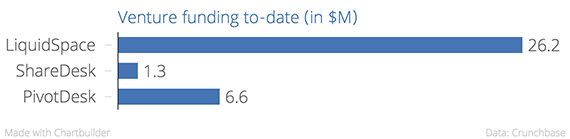
LiquidSpace Founded in 2010 by veteran tech entrepreneur Mark Gilbreath, LiquidSpace is the most well-funded short-term office rental marketplace by far. In October, the Palo Alto-based firm raised $14 million in a Series C round, according to Crunchbase, bringing its total venture funding to $26.2 million. Its backers include Avison Young, ROTH Capital Partners and Linkedin co-founder Reid Hoffman.
LiquidSpace allows landlords and tenants to list space on an hourly, daily or monthly basis.Transactions happen online and LiquidSpace takes a 10 percent cut of monthly rents, with differing rates for daily and hourly leases. While coworking spaces feature prominently — WeWork is a partner — the firm also lists a range of more traditional offices and conference centers, with partners such as Marriott.
“There will be a point in time when LiquidSpace could compete against the traditional providers- including Avison Young,” said Avison Young’s Rose. “But we would rather be ahead of the curve and have ownership in what could be transformative change.”
ShareDesk
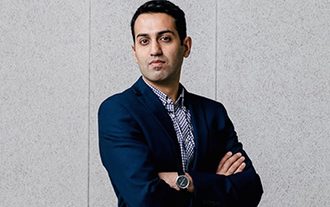
(Click to enlarge photo. Kia Rahmani)
This San Francisco-based startup’s business model is essentially the same as LiquidSpace’s. Founded in 2012 by Kia Rahmani and Javier Jimenez and backed by $1.3 million in seed capital, ShareDesk claims to have 3,000 current listings, compared to LiquidSpace’s 6,000. The firm charges a flat fee of 20 percent for all transactions completed on the site.
But ShareDesk has a much more global platform – with listings in 70 countries, compared to LiquidSpace’s four – and is trying to differentiate itself by focusing more on the landlords and leaseholders that list space.
“We are very focused on the experience, that’s part of the reason why Airbnb has been successful,” Rahmani said. The firm recently launched Optix, a platform that allows those listing space on the site to manage short-term leases and engage with tenants.
PivotDesk
“Do you want random people come into your office on a daily basis or do you want to find a company you can trust?” — PivotDesk CEO David Mandell
While LiquidSpace and ShareDesk allow any user to book office space, Boulder-based PivotDesk acts more as a matchmaker bringing together small firms to share space and build a relationship.
A startup that has signed an office lease with future growth in mind could list excess space on PivotDesk. Other startups can then contact the company and arrange phone calls or visits. The idea is to pair firms with compatible mindsets and business models that will share space for at least a few months. All leases are monthly. “The big difference is we approach our solution from the space holder’s perspective,” said PivotDesk’s founder David Mandell. “Do you want random people to come into your office on a daily basis or do you want to find a company you can trust?”
Because PivotDesk caters to long-term leaseholders, it has little use for the short-term coworking spaces and conference centers that make up much of ShareDesk’s and LiquidSpace’s business. Instead, it’s trying to work within the traditional office market and make it more effective. The firm has had success with investors, raising a total of $6.6 in three rounds since its 2012 launch.
“There’s no reason there should be any commercial office space transaction without someone like us involved,” Mandell said.
Room to Grow
“The market is earlier in its development because consumers have just gotten used to short-term office space rentals, whereas in the home space it was already a habit that was formed.” — Shasta Ventures’ Tod Francis
While PivotDesk, ShareDesk and LiquidSpace currently have the largest presence in New York, there are a number of other startups in the mix. London-based Zipcube, for example, has a handful of office listings in the Big Apple, and other, similar startups are reportedly in the works around the globe. Meanwhile, the Tel Aviv-based startup Splacer, launched by architects Adi Biran and Lihi Gerstner, offers event spaces in Israel and New York on a short-term basis and just raised $1.4 million in seed funding. Breather, a firm that rents out private rooms, is often grouped in the same category and has raised $7.5 million. But it lists its own spaces, making it more similar to WeWork than to pure marketplaces like ShareDesk.
So far, short-term office rental sites are tiny compared to Airbnb, which has more than 1.4 million rooms listed, according to the Wall Street Journal – 230 times LiquidSpace’s total. Still, entrepreneurs argue that the sector is poised to grow dramatically. Because these startups don’t need to lease, renovate and build space, they can scale up far more quickly than coworking platforms like WeWork. At least in theory.
In practice, the sector still needs to overcome some cultural hurdles before it can reach its full potential, experts say. Unlike vacation rentals, short-term office rentals are still a strange proposition for many.
“The market is earlier in its development because consumers have just gotten used to short-term office space rentals, whereas in the home space it was already a habit that was formed,” said Shasta’s Tod Francis. And referring to similar startups that failed in the past, he added: “We never thought it would be easy.”
By: Konrad Putzier (The Real Deal)
Click here to view source article.