• Skip to primary navigation
  • Skip to main content

CARNM

Commercial Association of REALTORS® - CARNM New Mexico

  • Property Search
    • Search Properties
      • For Sale
      • For Lease
      • For Sale or Lease
      • Start Your Search
    • Location & Type
      • Albuquerque
      • Rio Rancho
      • Las Cruces
      • Santa Fe
      • Industry Types
  • Members
    • New Member
      • About Us
      • Getting Started in Commercial
      • Join CARNM
      • Orientation
    • Resources
      • Find A Broker
      • Code of Ethics
      • Governing Documents
      • NMAR Forms
      • CARNM Forms
      • RPAC
      • Needs & Wants
      • CARNM Directory
      • REALTOR® Benefits
      • Foreign Broker Violation
    • Designations
      • CCIM
      • IREM
      • SIOR
    • Issues/Concerns
      • FAQ
      • Ombuds Process
      • Professional Standards
      • Issues/Concerns
      • Foreign Broker Violation
  • About
    • About
      • About Us
      • Join CARNM
      • Sponsors
      • Contact Us
    • People
      • 2026 Board Members
      • Past Presidents
      • REALTORS® of the Year
      • President’s Award Recipients
      • Founder’s Award Recipients
    • Issues/Concerns
      • FAQ
      • Ombuds Process
      • Professional Standards
      • Issues/Concerns
      • Foreign Broker Violation
  • Education
    • Courses
      • Register
      • All Education
    • Resources
      • NMREC Licensing
      • Code of Ethics
      • NAR Educational Opportunities
      • CCIM Education
      • IREM Education
      • SIOR Educuation
  • News & Events
    • News
      • All News
      • Market Trends
    • Events
      • All Events Calendar
      • Education
      • CCIM Events
      • LIN Marketing Meeting
      • Thank Yous
  • CARNM Login
  • Show Search
Hide Search

Archives for July 2016

July 2016 Commercial Market Trends

July 31, 2016 by mcarristo

View a New Mexico Market Trends Summary Report, which includes July 2016 Commercial Market Trends. This report includes the total number of listings, asking lease rates, asking sales prices, days on the market and total square feet available.

Disclaimer: All statistics have been gathered from user-loaded listings and user-reported transactions. We have not verified accuracy and make no guarantees. By using the information, the user acknowledges that the data may contain errors or other nonconformities. Brokers should diligently and independently verify the specifics of the information you are using.


Filed Under: Market Trends

CCIM Deal of the Year – Submit by Aug 9th!

July 30, 2016 by CARNM

The 2016 Deal of the Year Award will be presented at 
the CCIM New Mexico Celebration!
The “Deal of the Year” Award is designed to recognize commercial real estate deals that were marketed through a CCIM New Mexico Deal Making Session between August 2015 and July 2016. 
Take advantage of this opportunity to recognize excellence! Interested in applying? Complete the application form along with the original deal making package that was presented at a CCIM New Mexico Deal Making Session. The winner will be announced at the 2016 CCIM New Mexico Celebration on September 15, 2016 from 5:00 – 8:00 p.m. at the Albuquerque Marriott Uptown. 

Please send the form to:
CCIM New Mexico
6739 Academy Road NE, Suite 310
Albuquerque, New Mexico 87109
Fax Applications Not Accepted
CCIMadmin@carnm.realtor
505-503-7807
The 2016 Deal of the Year Award will be presented at
the CCIM New Mexico Celebration!

Filed Under: All News

New Loan Fund to Help Central Businesses Cope with ART Project

July 27, 2016 by CARNM

Help for Central Businesses

Loan to aid businesses through ART construction.

Courtesy City of Albuquerque Passengers would buy their tickets at kiosks before boarding the Albuquerque Rapid Transit bus, as shown in this rendering of a Downtown bus station at Second and Copper NW.
ALBUQUERQUE, N.M. — A new loan fund has been set up to support small businesses along Central Avenue that will be affected by the Albuquerque Rapid Transit project.
The McCune Charitable Foundation of Santa Fe has provided initial seed funding, but the foundation has a policy of not revealing specific amounts. A spokeswoman said it is less than $100,000.
The Co-op Capital Fund will be a “flexible loan instrument” that will provide a range of financial support, including forgivable loans to help businesses overcome challenges, as well as low-and zero-interest loans to improve their storefronts or make other upgrades.
The city hopes to leverage the grant and create a larger fund by raising about $2 million from the private sector, financial institutions and others with a goal of launching the services in the early fall.
The city is “being very intentional” as it proceeds with ART, a nine-mile network that will mean more customers for Central businesses and fewer parking problems for shoppers, said Gary Oppedahl, Albuquerque’s economic development director.
“We want to make sure we don’t lose any businesses … along the way,” he said.
While some large employers along Central favor the project, the New Mexico Restaurant Association and a number of small businesses say construction and traffic problems will scare customers away, forcing businesses to close. Opponents are in federal court this week in a bid to stop the project.
ART will feature bus-only lanes and bus stations in the middle of Central Avenue. The goal is to provide faster, more reliable bus service in the heart of the city and attract redevelopment along the old Route 66.
The Co-op Capital Fund will be administered by the independent Small Business Resource Collaborative, which includes non-profit business development groups and local business advocates.
Money will be available to locally-owned businesses that have under $2 million in revenue with a front entrance on Central.
The city’s approach to helping Central restaurants and shops is based on best practices from other areas that have undertaken similar projects, Oppedahl said.
By: ABQJournal News Staff (Albuquerque Journal)
Click here to view source article.

Filed Under: All News

CARNM Commercial Source: New Mexico Householders

July 24, 2016 by CARNM

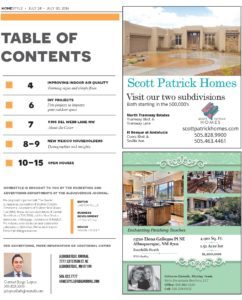
Homestyle-7.24.16-RPR-Demographics_Page_1 Homestyle-7.24.16-RPR-Demographics_Page_2
Insight on New Mexico Households and Householders
Demographic segmentation helps us understand the lifestyles and life stages of consumers in a market. Data provider Esri classifies U.S. residential neighborhoods into 67 unique market segments based on socioeconomic and demographic characteristics. Updated annually, the mapping software provider uses geographic information systems to connect people with maps, data and apps. Most householders fall into five segments: Down the Road, Exurbanites, Up and Coming Families, In Style and The Great Outdoors.
Down the Road
Down the Road is the most dominant segment in New Mexico. Nearly eight percent of households in NM are in this segment, while just over one percent of the U.S. households are in this segment. It is a mix of low-density, semi-rural neighborhoods in large metropolitan areas; half are located in the South, with the rest chiefly in the West and Midwest. These are younger, diverse communities, with the highest proportion of American Indians of any segment. These family-oriented consumers value their traditions. Workers are in service, retail trade, manufacturing and construction industries, with higher proportions in agriculture and mining, compared to the U.S. in general. This market has higher unemployment, much lower median household income and home value, and a fifth of households with income below poverty level. These are family-oriented, outgoing consumers; they place importance on preserving time honored customs. They put a premium on convenience rather than health and nutrition.
Exurbanites
Exurbanites are the second-most dominant segment in New Mexico. Nearly four percent of NM falls into this category, with two percent seen nationwide. Residents are approaching retirement but showing few signs of slowing down. They are active in their communities, generous in their donations, and seasoned travelers. They take advantage of their proximity to large metropolitan centers to support the arts, but prefer a more expansive home style in less crowded neighborhoods. This segment includes established neighborhoods (most built between 1970 and 1990) found in the suburban periphery of large metropolitan markets. This is a larger market of empty nesters, married couples without children, who are college educated and are beginning to retire from the
This segment includes established neighborhoods (most built between 1970 and 1990) found in the suburban periphery of large metropolitan markets. This is a larger market of empty nesters, married couples without children, who are college educated and are beginning to retire from the work-force. Consumers are more interested in quality than cost. They take pride in their homes and foster a sense of personal style. Gardening and home improvement are priorities, but they also use a number of services, from home care and maintenance to personal care. up and coming families Up and Coming Families are the third most dominant segment in New Mexico. Nearly four percent of NM falls into this category, with over two percent seen nationwide. Up and Coming Families is a market in transition- residents are younger, more mobile and ethnically diverse than the previous generation. These new families in new housing subdivisions are one of the fastest-growing markets in the country. They are willing to pay for affordable housing with longer commute times. This hard-working market is full of careful shoppers who are aware of prices and are willing to shop around for the best deals. This segment is predominantly young families still feathering the nest and establishing their style. They are open to influence by others’ opinions. Since they are busy with work and family, they use home and landscaping services to save time. in style In Style is the fourth most dominant segment in New Mexico. Nearly four percent of NM falls into this category, with over two percent seen nationwide. In
Up and Coming Families
Up and Coming Families are the third most dominant segment in New Mexico. Nearly four percent of NM falls into this category, with over two percent seen nationwide. Up and Coming Families is a market in transition- residents are younger, more mobile and ethnically diverse than the previous generation. These new families in new housing subdivisions are one of the fastest-growing markets in the country. They are willing to pay for affordable housing with longer commute times. This hard-working market is full of careful shoppers who are aware of prices and are willing to shop around for the best deals. This segment is predominantly young families still feathering the nest and establishing their style. They are open to influence by others’ opinions. Since they are busy with work and family, they use home and landscaping services to save time. in style In Style is the fourth most dominant segment in New Mexico. Nearly four percent of NM falls into this category, with over two percent seen nationwide.
In Style
In Style is the fourth most dominant segment in New Mexico. Nearly four percent of NM falls into this category, with over two percent seen nationwide. In Style denizens embrace an urban lifestyle that includes support of the arts, travel and extensive reading. Mostly professional couples or single households without children, they have the time to focus on their homes and their interests. The population is slightly older and already planning for their retirement. This is an affluent market with income supplemented by investments and substantial net worth. Mostly city dwellers of large metropolitan areas, they are connected and knowledgeable. Attentive to price, they use coupons, especially mobile coupons. Homes are an integral part of their style; they invest in home remodeling/maintenance, DIY or contractors, and also hire housekeepers. They are financially active, from a variety of investments to supporting charities and causes. the great outdoors The Great Outdoors are the fifth most dominant segment in New Mexico. Under four percent of NM falls into this category, with over 1.5 percent seen nationwide. Neighborhoods in The Great Outdoors segment are found in pastoral settings throughout the United States. Consumers are educated empty nesters living an active but modest lifestyle. Their focus
The Great Outdoors The Great Outdoors are the fifth most dominant segment in New Mexico. Under four percent of NM falls into this category, with over 1.5 percent seen nationwide. Neighborhoods in The Great Outdoors segment are found in pastoral settings throughout the United States. Consumers are educated empty nesters living an active but modest lifestyle. Their focus
The Great Outdoors are the fifth most dominant segment in New Mexico. Under four percent of NM falls into this category, with over 1.5 percent seen nationwide. Neighborhoods in The Great Outdoors segment are found in pastoral settings throughout the United States. Consumers are educated empty nesters living an active but modest lifestyle. Their focus is land; they are more likely to invest in real estate or a vacation home than stocks. They are active gardeners and partial to homegrown and home-cooked meals. Consistent with areas with rustic appeal, the housing inventory features over seventy-five percent single-family homes and over fifteen percent are mobile homes. A significant inventory of seasonal housing is available. Residents live in small towns and rural communities throughout the West, South and Northeast regions of the country. Typical of neighborhoods with older residents, income from retirement and Social Security is common, but residents also derive income from
Consistent with areas with rustic appeal, the housing inventory features over seventy-five percent single-family homes and over fifteen percent are mobile homes. A significant inventory of seasonal housing is available. Residents live in small towns and rural communities throughout the West, South and Northeast regions of the country. Typical of neighborhoods with older residents, income from retirement and Social Security is common, but residents also derive income from self-employment and investments. Residents are very do-it-yourself oriented and cost conscious. Many service their own autos, work on home improvement and remodeling projects, and maintain their own yards. Copyright 2016 Realtors Property Resource® LLC. All Rights Reserved. Information is not guaranteed. Equal Housing Opportunity. Technology is not central in their lives.
By: Homestyle Magazine (Albuquerque Journal)
Click here to view source article.

Filed Under: All News

  • Page 1
  • Page 2
  • Page 3
  • Page 4
  • Go to Next Page »
  • Search Property
  • Join CARNM
  • CARNM Login
  • NMAR Forms
  • All News
  • All Events
  • Education
  • Contact Us
  • About Us
  • FAQ
  • Issues/Concerns
6739 Academy Road NE, Ste 310
Albuquerque, NM 87109
admin@carnm.realtor(505) 503-7807

© 2026, Content: © 2021 Commercial Association of REALTORS® New Mexico. All rights reserved. Website by CARRISTO