SANTA FE – City officials here are touting an announcement by the U.S. Census Bureau that gave Santa Fe a high ranking in the percentage of jobs created by new startups, part of the agency’s first-ever Annual Survey of Entrepreneurs.
The Census Bureau, based on 2014 numbers, ranked cities on jobs creation from start-up firms as percentage of total employment in the metro area. The bureau said 3.7 percent of Santa Fe’s jobs came from new companies, putting the City Different tied for the 13th highest percentage among 366 metro areas in the U.S. Tied with Santa Fe were Rapid City, S.D, Carson City, Nev. and Dover, Del.
Number one on the list was Midland, Texas.
Among other New Mexico cities, Las Cruces was ranked 101st Albuquerque was 159th and Farmington was 354th.
Mayor Javier M. Gonzales said in a news release, “These measures prove that our focus on building an entrepreneurial economy is working and that maintaining our leadership as a global center for the arts and artists pays dividends. It’s a reason to stay the course, and to continue increasing our investments in our artists and in our startup economy whenever we have the opportunity to do so.”
City Hall attributed the high start-up ranking to efforts and programs like the Santa Fe Business Incubator, a startup accelerator; MIX and bizMIX, designed to bring potential entrepreneurs together and provide funding and other help for startups ; Startup Santa Fe, and MAKE Santa Fe.
Andrea Romero, executive director for MIX, said, “High-impact accelerators like bizMIX inject both seed money and invaluable mentorship, so especially in a small city like ours they can have a major impact in job creation.”
She said bizMIX has creating more than 70 jobs at 11 companies in just a few years.”
Creative Santa Fe Executive Director Cyndi Conn said, “Nowhere in the world does art, culture, technology and industry come together the way it does here, and we should be doing everything we can to take advantage of that intersection.”
By: Mark Oswald (Albuquerque Journal)
Click here to view source article.
Archives for September 2016
Projects Advance Native Economic Diversification
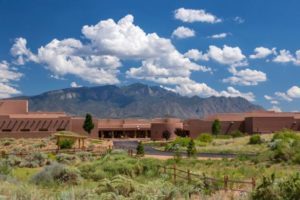
Casinos might be the bread and butter of business enterprises operated by Native American tribes and pueblos in New Mexico, but diversification is clearly on the radar as a vehicle for Indian nations to expand employment and future economic development.
To most observers, gaming establishments are the most visible and, to be sure, likely the most lucrative of many tribes’ businesses. They have added hotels to their casinos, including upscale resorts with spas, such as Sandia Resort & Casino and the Hyatt Regency Tamaya Resort and Spa, as well as recreational activities like golf and fishing, and venues for concerts.
Others have turned their economic development corporations into top government contractors and service providers, and some have active farming and ranching operations.
Creating the right mix of businesses to generate future growth has drawn the interest of companies outside Indian Country. REDW, a large certified public accounting and business consulting firm, is providing training so tribes, which represent about 40 percent of REDW’s business, can manage their own accounting, legal, financial, health and management systems.
As grateful as the tribes are for casinos, they know it’s a fickle business, subject to the health of a broader economy and with loads of competition. Savvy tribal leaders say diversification is about preparing for whatever competition heads their way so their economic future isn’t something left to chance.
Santa Ana
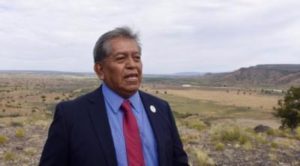
“You can’t rely on just one thing,” said Myron Armijo, governor of the Pueblo of Santa Ana, a 900-member tribe. “It’s never a safe bet to put all of your eggs in one basket,” he said of the first Indian casino to operate in New Mexico, which opened its doors in 1993.
But no one’s writing off the impact of the casino line of business, where one-fourth of The Star Casino workforce are Santa Ana members. “You still want to have the kind of property where people want to return to … you want to make sure your slot floor is very current,” said Armijo, who declined to reveal how much money the pueblo’s various business entities generated last year.
One recent investment was the former King Ranch, 100 square miles the pueblo acquired earlier this summer for something close to $33 million. The pueblo wants to preserve important cultural lands and has no business enterprise planned there.
But the pueblo is making casino cash work for them in other sectors. “How and when to expand? How to diversify? These are questions most tribes are asking,” he points out.
Gambling money, he said, has allowed tribes to secure the kinds of human resources and expertise that before they couldn’t afford. The casinos have provided a base and revenue to branch out. Santa Ana Pueblo’s net win for the second quarter was $21.6 million, according to the state Gaming Control Board. It was the third-ranked of the 14 New Mexico Indian-owned casinos, outdistanced only by Sandia Pueblo at $41.9 million and Isleta Pueblo at $24.3 million.

Armijo said profits from the casino, hotel, and golf courses have truly been game-changers. and the largest sources of revenue, allowing the pueblo to plow profits into developing basic infrastructure, funding a government center, schools, community centers and health care clinics, and provide seed money for members to launch businesses.
Now, the pueblo is looking to diversify further with WindRidge@Tamaya, an $8.8 million project with architecture and landscaping evocative of the pueblo on the south side of heavily traveled N.M. 550, just east of N.M. 528.
The 10-acre commercial project, which will soon break ground, is the first phase of 44 acres slated for development. It will be anchored by Central New Mexico’s first Big R store, whose products are geared toward farmers and outdoor enthusiasts. Also scheduled as tenants are a “double drive-up” Blake’s Lotaburger, and a Warrior car wash and gas station.

Target customers are visitors to the hotel and casinos, as well as locals. “We’re very much tied into the growth of Rio Rancho and Bernalillo,” said Armijo. “Five years down the road, we hope to see a thriving business district.”
The new tenants will give employment preference to tribal members, but also hire folks from local communities, as well as purchasing goods and services, said Armijo. He said future development could include call centers, a health clinic, restaurants, more retail, a bank and other users of office space.
The pueblo also owns Southern Sandoval Investments, the pueblo’s real estate and business-development arm, owns and operates Warrior Fuel gas station and smoke shop, and leases space to local businesses in its office building at 51 Jemez Canyon Dam Rd. opposite The Star Casino.
Indispensable to economic diversification is workforce development. Kevin Montoya, who was raised in the pueblo, began working on construction crews, a good training ground for his current career. He’s now the director of two tribally owned businesses: Santa Ana Golf Club Inc. and SSI. Thanks to on-the-job experience with the tribe since 2010 and classes at Central New Mexico Community College, Montoya has gained valuable experience in construction management, water and wastewater issues, utility development, financing, digital media design and marketing.

Ohkay Owingeh
Like Santa Ana, Ohkay Owingeh, formerly San Juan Pueblo, has diversified well beyond its casino and hotel. Its development company, Tsay Corp., made the decision to focus on federal contracting after gaming fell off a decade ago and this business has now grown to the point where it contributed 75 percent of the tribe’s $120 million in revenue last year, according to Ron Lovato, Tsay Corp.’s CEO.
Founded in 1994, Tsay focuses on federal contracting. It does work all over the country, including with Los Alamos National Lab, in areas such as construction and building maintenance. About 500 of its 1,200 employees are in northern New Mexico and the rest are scattered across the U.S.
“LANL gave us a shot when we had no track record,” said Lovato. “We’ve been able to leverage this business relationship nationwide.”
He said there are 3,000 enrolled members, with 2,000 living in New Mexico. In addition to the casino, the Ohkay Owingeh also own and lease several office buildings off the reservation in Rio Rancho, said Lovato.
“We’ve achieved remarkable success in facilities support services” with different federal agencies and military bases, he said of the business, which employs tribal and non-tribal members working in New Mexico, the Southeast and the Pacific Northwest. The growth in business has funded reservation home-building and remodeling, road paving, and construction of a new senior citizens center and school, said Lovato. Recently, Tsay Corp. was awarded a $7.6 million multiyear contract to provide grounds maintenance at Fort Buchanan in Puerto Rico. “Our business goals and expectations go far beyond the geography of New Mexico,” said Lovato.
Human capital
The goal of developing human capital is not lost on many of the tribes’ business partners.
Sharing its expertise with Native American tribal enterprises is REDW, which provides training that helps tribes get better at running their businesses themselves. And helping to lead the charge to self-sufficiency is one of New Mexico’s most notable sports figures – professional golfer Notah Begay.
Notah Begay, left, has teamed with accounting firm REDW to build the firm’s business in Indian Country. Begay is seen a left with REDW principals Lisa Wilcox and James Montoya.REDW, one of the Southwest’s 10 largest certified public accounting and business consulting firms, has launched a partnership with Begay as brand ambassador to Indian Country. “REDW is the national leader in providing accounting and financial reporting services to tribes and their enterprises,” said Begay, who is one-half Navajo, one-quarter San Felipe and one-quarter Isleta – and the first full-blooded Native American ever to play on the PGA Tour.
Begay, who has a degree in economics from Stanford University, said he and REDW are committed to increasing financial literacy in tribal communities in an effort to build business opportunities and financial success. “The firm’s experience positions them to serve the constantly changing priorities and requirements of tribal governments. This joint venture allows me to work harder on behalf of tribes due to REDW’s tremendous portfolio of services,” Begay said.
Chris Tyhurst, a principal and national practice leader for REDW’s tribal services division out of Phoenix, said the firm has worked for 20 years doing internal audits for tribes in casinos in areas like human resource consulting – as well as developing tribal investment software, administering trusts for minors and helping tribes run their own hospitals. “We want to empower their on-site teams to be more accomplished in these tasks and build their businesses,” Tyhurst said.
By: Steve Sinovic (Albuquerque Journal)
Click here to view source article.
Keeping Santa Teresa Port Running Smoothly
New Mexico’s exports to Mexico appear to be headed for a record year. The vast majority of that southbound commerce moves through the Port of Santa Teresa, headed by U.S. Customs and Border Protection Port Director Ray Provencio.
U.S. Customs and Border Protection (CBP) Santa Teresa Port Director Ray Provencio speaks during an interview in his office in Santa Teresa, N.M., Wednesday Aug. 31, 2016. (Andres Leighton/For the Albuquerque Journal)Provencio, who has roots in southern New Mexico, took the port reins in 2013. He has overseen a near doubling in commercial traffic through the crossing and has developed close ties with the business community in Santa Teresa’s fast-growing industrial area.
Exports to Mexico jumped 17.4 percent in the first half of 2016, to $890 million from $758 million during the same period a year ago, according to the U.S. Commerce Department. Sales to Mexico have been climbing steadily for the past six years and reached an all-time high of $1.68 billion in 2015.
Inaugurated in 1997, the Santa Teresa port of entry is open to 8 a.m. to 8 p.m. daily, with a southbound lane open till midnight five nights a week, thanks to a “reimbursable service” agreement in which Dell pays overtime and other costs to CBP. Dell manufactures its computers at the huge Foxconn plant in San Jeronimo across the border for just-in-time delivery to consumers in the U.S.
Provencio is also working on an innovative pilot program – not yet launched – in which CBP officers will work in Mexico at the Foxconn site to clear merchandise for import to the U.S. before it crosses the border.
Provencio is an 18-year veteran of CBP and its predecessor, the U.S. Customs Service. He has worked at ports across West Texas, at the CBP training academy in Georgia and in administrative roles in D.C. Originally from El Paso, his family grows pecans in Anthony, N.M., and he considers southern New Mexico home.
He spoke with the Journal about the growth in commercial traffic, the significance of the pilot program and about working closely with the business community.
Here are excerpts from the Journal interview.
Can you tell me where traffic figures are headed?
I remember when I came in, we’d process anywhere from 250 to 300 commercial conveyances a day. Right now. we’re currently processing up to 500 a day, which to me is significant growth. I think it’s also indicative of the plans and initiatives that the state of New Mexico and the stakeholders have implemented here in the region.
Is traffic simply shifting from El Paso, or is it new traffic created by the development in Santa Teresa?
I think it’s a little bit of both. El Paso is pretty much landlocked. A lot of their infrastructure was built way before CBP was even created in 2003 (and they) are restricted in their growth because of the city around them. The difference out here is that we have the ability to expand.
There is a vision in the state of New Mexico and the stakeholders, which attracts new business, new growth. I think the challenge out here is there is a high demand and a limited supply; the warehousing is at capacity. And I think that is what right now may limit exponential growth.
Is the infrastructure at the port of entry at Santa Teresa enough now to accommodate the pace of commercial growth?
We’re handling our workload right now. As far as projected growth, I think we should be OK. I’m looking at the next three to five years.
We’ve also got to understand that this port of entry is one of 329 in the grand scheme of things. Everyone is having to address an increased workload. We’re having to be more fiscally responsible, improving efficiencies. We’re not the quickest at getting what we need. I think it’s great that Congress appropriated funding for an additional 2,000-plus frontline personnel and we’re doing our best to on-board them.
You’ve got to understand we don’t want to be part of the problem. We want to be part of the solution. Any additional minute waiting in line, that can be an impact to the gross domestic product. For every officer that we add on primary (inspection) after a 30-minute wait or so, we contribute 33 jobs into the U.S. Our contribution to the gross domestic product in the U.S. is huge and I think Congress recognized that when they gave us the additional staff.
Dell has been paying to keep the southbound lanes open until midnight five days a week under CBP’s Reimbursable Services Program and has said other companies could take advantage of those hours. Are other companies using that time frame?
The majority of commercial operators are from Dell or the Foxconn facility. We haven’t really seen too significant of a use from other carriers or other exporters, but others are using it.
And those kinds of agreements can be put in place not only by a company, but also by another entity – the state, for example?
It could be by the state or by an organization.
Is there critical mass yet for additional hours at the port?
I think what is interesting about this (reimbursable services) program is it gives the agency an answer now for a request from stakeholders. Every port of entry is receiving continuous requests for additional services. Can’t you do this? Can’t you do that? In the past, this port has always received a lot of requests for additional hours. “We need a 24-hour commercial facility.” Now we have a mechanism. We can’t always keep up with that demand but, if they are interested, they can submit their application and we can review it.
I spoke with a logistics services provider in Santa Teresa about the port staying open later or 24 hours, but the provider expressed security concerns. On the Mexican side, there isn’t much out there and you don’t see a police presence. What would your concerns be if you did start opening later?
A lot of the feedback from stakeholders was similar (to that logistics services provider).
I do know on the other side that it is about a 12.6-mile highway from the edge of Juárez to here. There have been people expressing concern regarding the lighting and other security issues. However, I can tell you, once they get to our facility, it is very safe.
Can you give an update on the pilot program to bring CBP inspections into the Foxconn plant in Mexico?
The concept is, we have trade going south and it has to be inspected by Mexican customs, and you have trade going north and it has to be inspected by CBP. Why not combine those processes, so there is a one-stop shop? Mexican customs and CBP doing a simultaneous review to promote efficiency. We are still in the preliminary stages of the pilot. There still is some infrastructure that needs to be built. A road, some office space. It has been more of working out the higher-level agreements. It was a big change. We are going to have officers working in Mexico dressed the same way I am now.
You mean with your weapon?
Meaning with firearms. While we have authority in the U.S. to carry our firearm anywhere we are conducting our duties, this is an extension. It required Mexico to change their legislation and they did.
Will that be a game-changer for this port of entry?
I think it’s already a game-changer in that it gives recognition to this area of the importance of the port of Santa Teresa and how much we contribute to the U.S. Depending on the success of the pi lot, it might mean we change the way we’re doing business. We also may realize that not every idea is a good idea.
You seem to be frequently engaged with the industrial base in Santa Teresa. Why?
If you notice, we’re at every stakeholder meeting here. We have an open-door policy for any of the business community or stakeholders who have concerns. We want to address them appropriately and quickly. I said it earlier, but we definitely don’t want to be part of the problem. If there is a way for us to be doing our job better, we will.
It’s a twofold mission. People tend to think of us, “Oh they’re just holding the line there at the border.” Well, we also have a responsibility to our economic security. People tend to forget we also have to foster legitimate trade and travel, and part of that is ensuring the free-flowing goods across the border while maintaining the security of the U.S. and the people we’re charged to protect.
I’ve seen a lot of news releases lately about drug busts at Santa Teresa. What have you seen in terms of an increase in illegal traffic?
There is always going to be somebody trying to get through or identify a vulnerability that could further illicit activity. I think our officers and agents out there do a good job in making sure we interdict those and identify problems before they enter the U.S. As far as an overall increase, what I can tell you is that I believe that we are being pretty effective. Do I think we could be better? There is always room for improvement.
How do you stay ahead of the creative ways people try to smuggle?
Border Patrol uses the analogy of the cat and mouse. I like to say the needle in the haystack. We realize that 99 percent of the people coming across are law-abiding and are not coming to engage in illicit activity. But we have to be good about identifying that 1 percent and we can’t have a bad day. We can’t make a mistake. We have to keep up to date on the latest intelligence, the latest trends, the latest concealment techniques. Our officers are highly trained. They go through a rigorous academy. They have ongoing job training. They (the smugglers) adapt. We adapt.
Anything you would like to add that I didn’t ask about?
I’d like to compliment the state. It was great coming here because they have all sorts of plans. They have a binational plan, they have a local engagement plan, everything kind of mirrors up. It’s great to come to a place where you can kind of see the vision of the state of New Mexico, and be a little bit more proactive and less reactive to the problems.
By: Lauren Villagran (Albuquerque Journal – Las Cruces Bureau)
Click here to view source article.
Stakes are Too High to Rush County Oil/Gas Ordinance
In response to the SandRidge Energy request to allow oil and gas drilling on two acres in Rio Rancho Estates last year, Sandoval County and Rio Rancho are working to enact oil and gas ordinances.
The county has published a “bare bones” draft ordinance. It has had two public meetings and received many comments from the public and from the oil and gas industry.
An updated draft is proposed to go to the planning and zoning commission next month. That’s too fast. Most participants, including people from the oil and gas industry have urged the county to slow the process down and get it right.
The proposed SandRidge site was on two acres in Rio Rancho Estates, part of the 55,000 acres in Sandoval County AMREP leased out for the purpose of exploring for, developing, producing and marketing oil and gas.
These 55,000 acres sit atop the Albuquerque Basin Aquifer, the sole source of water for most residents in southern Sandoval County and an important source of water in Bernalillo County.
Although the SandRidge request was withdrawn, there will be future requests to drill because the financial stakes are high. AMREP was paid approximately $1 million upfront for this oil and gas lease, and will receive 14 percent of the proceeds from produced oil or gas.
When the next wells find producible oil or gas, and when the price of oil and gas rises, an oilfield of 1,000-2,000 wells could spring up in the Rio Rancho area. Such a large well field would have large impacts beyond the Rio Rancho area.
Sandoval County has enlisted the help of New Mexico Tech to provide guidance on the geological and water resource issues of oil and gas drilling. However, the presence of a large oilfield will have impacts on many other issues including, but not limited to, the effects on:
• Air pollution
• Water use and pollution
• Tourism
• Traffic
• Real estate values
• Property taxes
• Law enforcement and fire response resources
• County budget
• Financial impacts of possible county liability
• Impact of a large number of outside workers coming into the area.
Before Sandoval County proceeds further with ordinance development, the county should undertake an impact analysis of oil and gas operations in the Albuquerque Basin. The county needs to be thoroughly educated about the choices that need to be made to protect the public’s health, safety and welfare, the environment and the public pocket book.
This analysis will help in producing a better oil and gas ordinance and a complete comprehensive plan (the overall master plan for Sandoval County). Currently, the words oil or gas are not even mentioned in Sandoval County’s Comprehensive Plan.
During what needs to be a very deliberative process of developing oil and gas ordinances, which requires investing in economic, water and other impact studies, the county needs to pass a moratorium, with a time limit, on any new oil and gas drilling applications .
The Sandoval County Oil and Gas Ordinance is being built under the precautionary principle, which in essence states: If there is a chance of harm being done either to people or the environment from an activity and there is not enough scientific consensus or research, then policymakers should err on the side of caution and preclude the activity or heavily regulate it.
It makes sense to slow down and err on the side of caution.
By: Alan Friedman (Rio Rancho Observer)
Click here to view source article.
Note from Rio Rancho Observer:
Alan Friedman is a retired chemist, a director of the Anasazi Trails Water Co-operative in Placitas and a working member of Sandoval Citizens for a Good Oil and Gas Ordinance.
Guest columns and letters are published as submitted, without fact-checking or corrections. They represent the belief/opinion of the author. Publishing these viewpoints does not represent an endorsement by the Observer or any member of our staff. Our prevailing aim is to facilitate a spirited but rational and respectful community dialogue on the array of issues and challenges we face collectively. Toward that end, we welcome submissions from all perspectives.
• Financial impacts of possible county liability
• Impact of a large number of outside workers coming into the area.
Before Sandoval County proceeds further with ordinance development, the county should undertake an impact analysis of oil and gas operations in the Albuquerque Basin. The county needs to be thoroughly educated about the choices that need to be made to protect the public’s health, safety and welfare, the environment and the public pocket book.
This analysis will help in producing a better oil and gas ordinance and a complete comprehensive plan (the overall master plan for Sandoval County). Currently, the words oil or gas are not even mentioned in Sandoval County’s Comprehensive Plan.
During what needs to be a very deliberative process of developing oil and gas ordinances, which requires investing in economic, water and other impact studies, the county needs to pass a moratorium, with a time limit, on any new oil and gas drilling applications .
The Sandoval County Oil and Gas Ordinance is being built under the precautionary principle, which in essence states: If there is a chance of harm being done either to people or the environment from an activity and there is not enough scientific consensus or research, then policymakers should err on the side of caution and preclude the activity or heavily regulate it.
It makes sense to slow down and err on the side of caution.
By: Alan Friedman (Rio Rancho Observer)
Click here to view source article.
Note from Rio Rancho Observer:
Alan Friedman is a retired chemist, a director of the Anasazi Trails Water Co-operative in Placitas and a working member of Sandoval Citizens for a Good Oil and Gas Ordinance.
Guest columns and letters are published as submitted, without fact-checking or corrections. They represent the belief/opinion of the author. Publishing these viewpoints does not represent an endorsement by the Observer or any member of our staff. Our prevailing aim is to facilitate a spirited but rational and respectful community dialogue on the array of issues and challenges we face collectively. Toward that end, we welcome submissions from all perspectives.


