• Skip to primary navigation
  • Skip to main content

CARNM

Commercial Association of REALTORS® - CARNM New Mexico

  • Property Search
    • Search Properties
      • For Sale
      • For Lease
      • For Sale or Lease
      • Start Your Search
    • Location & Type
      • Albuquerque
      • Rio Rancho
      • Las Cruces
      • Santa Fe
      • Industry Types
  • Members
    • New Member
      • About Us
      • Getting Started in Commercial
      • Join CARNM
      • Orientation
    • Resources
      • Find A Broker
      • Code of Ethics
      • Governing Documents
      • NMAR Forms
      • CARNM Forms
      • RPAC
      • Needs & Wants
      • CARNM Directory
      • REALTOR® Benefits
      • Foreign Broker Violation
    • Designations
      • CCIM
      • IREM
      • SIOR
    • Issues/Concerns
      • FAQ
      • Ombuds Process
      • Professional Standards
      • Issues/Concerns
      • Foreign Broker Violation
  • About
    • About
      • About Us
      • Join CARNM
      • Sponsors
      • Contact Us
    • People
      • 2026 Board Members
      • Past Presidents
      • REALTORS® of the Year
      • President’s Award Recipients
      • Founder’s Award Recipients
    • Issues/Concerns
      • FAQ
      • Ombuds Process
      • Professional Standards
      • Issues/Concerns
      • Foreign Broker Violation
  • Education
    • Courses
      • Register
      • All Education
    • Resources
      • NMREC Licensing
      • Code of Ethics
      • NAR Educational Opportunities
      • CCIM Education
      • IREM Education
      • SIOR Educuation
  • News & Events
    • News
      • All News
      • Market Trends
    • Events
      • All Events Calendar
      • Education
      • CCIM Events
      • LIN Marketing Meeting
      • Thank Yous
  • CARNM Login
  • Show Search
Hide Search

Archives for September 2016

County Commission Denies Space on Ballot for City Referendums

September 8, 2016 by CARNM

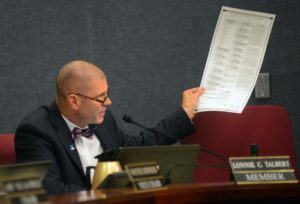
Bernalillo County Commissioner Lonnie Talbert, holds a sample ballot during the Bernalillo County Commission meeting about adding items to the ballot in the November General elections .Photographed on Thursday September 8, 2016.Adolphe Pierre-Louis/JOURNAL
Bernalillo County Commissioner Lonnie Talbert, holds a sample ballot during the Bernalillo County Commission meeting about adding items to the ballot in the November General elections .Photographed on Thursday, September 8, 2016. Adolphe Pierre-Louis/JOURNAL

Sick-leave question will not go on general election ballot.

Bernalillo County commissioners rejected a request Thursday to add two questions to the Nov. 8 general election ballot – one centering on a proposal to require employers to offer paid sick leave to workers, the other on public financing of mayoral campaigns.
Both questions would have gone only to voters within Albuquerque city limits.
County Commission Chairman Art De La Cruz, a Democrat, said the county shouldn’t get involved in the legal debate over city ballot measures. The city has its own elections in odd-numbered years, and the county’s consideration of adding city questions is merely a “courtesy,” not a requirement, he said.
“I think it’s inappropriate for us to be placed in a position to decide a city matter,” De La Cruz told an audience of about 200 gathered for the special County Commission meeting.
Only one commissioner, Debbie O’Malley, supported the motion to add the sick-leave measure to the ballot. She moved that it be added, but no one offered to second the motion.
The vote was closer on the public-financing question. De La Cruz joined Republicans Wayne Johnson and Lonnie Talbert against adding the question, which would have asked voters to authorize an increase in the amount of funding that publicly financed mayoral candidates can receive.
In favor were Democrats O’Malley and Maggie Hart Stebbins, who cast her vote over the telephone.
The debate over whether the two questions make the ballot may not be over. Supporters and opponents of the sick-leave proposal, in particular, both hinted before Thursday’s meeting that they would be willing to go to court to contest the commission’s decision if they disagreed with it.
One point of intense legal debate is whether the whole seven-page ordinance, or just a summary, must go before voters. That’s critical because there’s not enough room on the ballot for the whole text.
If there is legal action, it could happen soon: The county clerk says she must submit the ballot to state officials by 5 p.m. Tuesday.
Johnson raised questions during Wednesday’s meeting about whether it was practical to add the two questions, given how small the type would have to be to make them fit on ballots.
De La Cruz repeatedly pointed out that no city attorneys were present to explain whether there’s a minimum font size for city ballot measures, among other questions.
O’Malley, meanwhile, said the debate over the sick-leave ordinance “has become something like a political football.” But the commission’s decision isn’t on the merits of the idea, she said, only on whether it will fit on the ballot.
And it’s clear a summary of the ordinance can fit, even if small type must be used, O’Malley said.
“I don’t have very good eyesight,” she said as she examined a draft ballot with city questions, but “I can read them.”
Proponents of the Paid Sick Leave ballot initiative hold signs the Bernalillo County Commission meeting about adding items to the ballot in the November General elections .Photographed on Thursday, September 8, 2016. Adolphe Pierre-Louis/JOURNAL

Sick-leave ordinance

The sick-leave proposal is the result of a petition drive by a coalition of left-leaning groups, including OLÉ New Mexico, the SouthWest Organizing Project, El Centro de Igualdad y Derechos and others.
It would require employers in Albuquerque to allow their workers to earn paid sick time off.
Supporters gathered enough signatures to trigger an election under a provision of the City Charter, so city councilors asked the County Commission to consider adding the proposal to this year’s general-election ballot. The next regular city election isn’t scheduled until October 2017.
Supporters of the sick-leave campaign said it isn’t fair to make voters wait a year to consider their proposal, especially after they timed the gathering of signatures to make it possible to go on this year’s ballot.
People on both sides packed into the meeting chambers Thursday afternoon.
Opponents said the proposal, which would apply to even part-time and temporary workers at any business with a physical presence in Albuquerque, regardless of size, is too onerous and might force some companies out of business. But if it must be presented to voters, they said, the whole ordinance should go on the ballot so people can read it themselves.
Among those fighting the measure are business and conservative groups, including the New Mexico Restaurant Association, Greater Albuquerque Chamber of Commerce, the Rio Grande Foundation, the New Mexico Association of Commerce and Industry and NAIOP, the commercial real estate development association.
Supporters said a summary has been used for similar ballot questions and that passage of the ordinance would ensure workers don’t have to choose between their paycheck and time off to care for themselves or a loved one.

Public financing

The proposed amendment to the City Charter would have provided somewhere in the neighborhood of $630,000 to each mayoral candidate who qualified in 2017, up from about $362,000 available in the 2013 campaign.
Each candidate would get $1.75 per registered voter in Albuquerque rather than $1, as called for now. Candidates who want to accept private donations could continue to raise and spend as much as they’re able.
Supporters say the change is necessary to make public financing a reasonable option for serious candidates. Privately financed candidates have sometimes raised amounts exceeding $900,000.
City councilors still have the option of calling a special election if they want to present the question to voters in December, but an election by mail would cost about $500,000 to $700,000.
Mayoral campaigns often start in January.
By: Dan McKay (Albuquerque Journal)
Click here to view source article.

Filed Under: All News

ART Project is Now on the Clock to Finish in 16 Months

September 7, 2016 by CARNM

Albuquerque Mayor Richard Berry announced that Albuquerque Rapid Transit and signed a guaranteed maximum price contract with Bradbury Stamm for the construction of the ART project on Wednesday, September 7, 2016. (Greg Sorber/Albuquerque Journal)
Bradbury Stamm is on the clock.
Mayor Richard Berry’s administration signed an $82.6 million contract Wednesday that calls for the local construction company to finish work on Albuquerque Rapid Transit in 16 months, or by late 2017. The city is entitled to damages of $2,500 a day if the work isn’t done on time, city officials said.
Heavy demolition and disruptions along a nine-mile stretch of Central Avenue are expected to begin in mid-October as Bradbury Stamm puts hundreds of people to work building a network of bus-only lanes and bus stations between Louisiana and Coors.
Berry said he hopes the project will reach “substantial completion” by the time he leaves office. His second four-year term as mayor ends Nov. 30 next year.
He announced the signing of the construction contract during a 45-minute news conference that featured 14 speakers, including business owners, city councilors and the heads of business associations.
It was a celebration of sorts after the project survived litigation aimed at preventing the start of construction. Opponents also filled a series of public meetings earlier this year and shouted down city officials supporting the project.
Nevertheless, the decision to move forward with Albuquerque Rapid Transit won support on a 7-2 vote of the City Council earlier this year, and it’s remained a priority of the mayor.
“This is a landmark day for the city of Albuquerque,” Berry said as a few dozen workers wearing yellow and orange safety vests stood behind him at Bradbury Stamm’s headquarters in the North Valley.
“It’s not just a bus,” he said. “It’s our future.”
The $82.6 million contract with Bradbury Stamm covers the bulk of the construction work. City officials say it guarantees a maximum price, unless the city asks for extra work.
The project overall is still expected to cost about $119 million when the cost of design, buying buses and other work is added in. Most of the money comes from the federal government.
Congress has not yet granted final approval to fund a $69 million “Small Starts” grant that’s critical to the financing.
But Michael Riordan, Albuquerque’s chief operations officer, said the city has received approval from the Federal Transit Administration to begin construction and that no project at a similar stage has ever failed to receive the funding.
Cynthia Schultz, CEO of Bradbury Stamm, said she expects the project to employ the equivalent of 300 full-time workers over the next year. About 1,000 people altogether might work on it in some way, she said.
The construction contract gives Bradbury Stamm about 480 days to complete the work, or almost 16 months, though officials said they hope to finish in the 14- to 16-month range.
The city plans to issue an official “notice to proceed” that starts the clock Wednesday or today.
Supporters at Wednesday’s news conference said they expect Albuquerque Rapid Transit to spur redevelopment along the Central Avenue corridor and provide faster, more reliable service than the regular bus system. The project is designed to mimic light rail, but at a fraction of the cost.
Opponents, meanwhile, say the project will damage the car-friendly charm of what was once Route 66. They say the creation of bus-only lanes – reducing the capacity for general traffic – will create congestion and harm local businesses.
Later Wednesday, the City Council adopted a resolution calling for the city to convene a summit of merchants and property owners along the rapid-transit route to discuss parking, ridership projections and other matters. The meeting must happen by Oct. 1.
“We need to keep this dialogue open,” said Councilor Ken Sanchez, who sponsored the bill.
Riordan, meanwhile, told city councilors that the ART system might cost an extra $2.2 million a year to operate, though federal funding and other sources might offset that.
In other action
The City Council:

  • Scheduled a zoning hearing for Oct. 17 on a dispute over plans to build a garbage transfer station at Edith and Comanche NE.
  • Passed an ordinance granting the city auditor authority over the hiring and firing of employees in his or her office, a move intended to strengthen the independence of the auditor.

By: Dan McKay (Albuquerque Journal)
Click here to view soure article.

Filed Under: All News

Albuquerque's Sawmill District’s New Urbanism

September 5, 2016 by CARNM

ALBUQUERQUE, N.M. — Right now, a luxury hotel is rising in an Albuquerque neighborhood once known for its lumber operations.

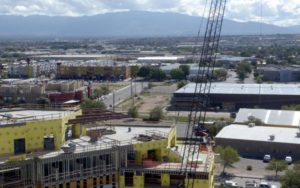
BUSINESS -- A view looking East of the Sawmill District where businessman Jim Long plans to repurposed many of the warehouse in the area on Wednesday, August 31, 2016. (Greg Sorber/Albuquerque Journal)
BUSINESS — A view looking East of the Sawmill District where businessman Jim Long plans to repurposed many of the warehouse in the area on Wednesday, August 31, 2016. (Greg Sorber/Albuquerque Journal)

Hotel Chaco, inspired by ancient pueblo culture, but designed with modern amenities, such as a spa and rooftop lounge, will bring 118 new hotel rooms to the area when it opens next spring.

Its five-story stature makes it the highest profile project happening in the Sawmill District. But it’s not the only one.

Courtesy of Heritage Hotels Resorts Heritage Hotels Resorts CEO Jim Long. jdyer@abqjournal.com Wed Aug 31, 2016

Jim Long, whose Heritage Hotels & Resorts is building Hotel Chaco and already runs neighboring Hotel Albuquerque, has much more planned for the area east of Rio Grande Boulevard, between Mountain and Interstate 40.

Long has gradually accumulated a series of nearby industrial properties that he eventually intends to redevelop – likely with multistory, mixed-use buildings featuring residential units above ground-level commercial space. But that could still be a decade away.

In the near term, which he defines as the next two to seven years, he intends to turn the existing warehouses into hubs for local art, entertainment, food and shopping. His vision – which involves providing some capital support for individuals and organizations with creative talent and ideas – is to continue transforming the neighborhood to better reflect its surrounding. Sawmill is nestled next to Old Town and a host of museums, and it has seen a spurt of residential development spearheaded by the Sawmill Community Land Trust.

Long described his idea as “new urbanism at its best.”

“You already have an incredible setting to create this remarkable place,” he said. “What the disconnect has been is … in the heart of the historic center and an urban location, you have a warehouse environment, which is an inappropriate use of that land.”

Long and his investor group have amassed about a half-dozen warehouses located around Hotel Albuquerque. The industrial users who occupied them are gradually being phased out as their leases expire.

BUSINESS -- The Paxton Lumber building at 1909 Bellamah one of the proposed repurposed developments in the Sawmill District on Wednesday, August 31, 2016. (Greg Sorber/Albuquerque Journal)
BUSINESS — The Paxton Lumber building at 1909 Bellamah one of the proposed repurposed developments in the Sawmill District on Wednesday, August 31, 2016. (Greg Sorber/Albuquerque Journal)

One of the properties, the old Paxton Lumber building that sits across Bellamah from Hotel Chaco, already has a defined future as the Sawmill Market, something described as a “25,000-square-foot food and market hall.” Expected to open in 2018, it will have a mix of businesses that could include artisanal food vendors, small-scale producers, restaurants and possibly even a cooking school. Steve Carlin, who worked on similar projects in San Francisco and Napa, will serve as an adviser.

Long said the other warehouses will serve to further celebrate what makes Albuquerque and New Mexico special through what he’s calling “curated experiences” developed by the community’s most creative individuals, groups and nonprofit organizations. The spaces could become anything from music venues to boutiques or galleries. He has hired Chris O’Donnell, who previously worked as an environmental designer for Yahoo, to help bring the project to life as the Sawmill District brand manager.

Courtesy of api() Rendering of the planned Sawmill Market. jdyer@abqjournal.com Wed Aug 31 15:56:09 -0600 2016 1472680567 FILENAME: 217656.jpg
Courtesy of api() Rendering of the planned Sawmill Market. jdyer@abqjournal.com Wed Aug 31, 2016

O’Donnell said he’s helping to identify partners who can offer intriguing experiences in areas such as art, entertainment, food, design and retail. He’s in the early stages of that process, but said he has already had conversations with a number of people.

“We are looking for incredibly interesting and original ideas, passion, work ethic, commitment and some capital,” O’Donnell said via email. “Our investor group will provide capital, marketing support, accounting support, technology support, mentors and other leadership support to ensure success of the venture.”

O’Donnell can be contacted at codonnell@hhandr.com.

Long said the investors likely won’t charge a fixed rent to the buildings’ users, but instead share in the profits they generate, something he sees as economically beneficial for all parties. Long has already started renovations at the old BlueLinx warehouse at 18th and Bellamah NW. A portion of the building will house laundry and other back-of-house operations for the nearby hotels, but the rest will likely be used to fulfill Long’s vision for a vibrant arts and cultural district.

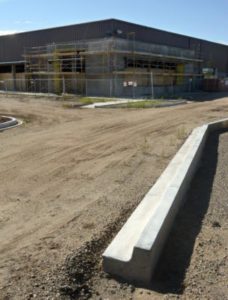
The old Blue Linx building is undergoing renovations is one of the developments in the Sawmill District on Wednesday, August 31, 2016. (Greg Sorber/Albuquerque Journal)

Long said he will apply with Bernalillo County for a $17 million industrial revenue bond for the laundry facility. The county already has approved IRBs for Hotel Chaco ($40 million) and Sawmill Market ($10 million). IRBs are privately financed, but usually mean certain tax breaks for developers.

“The opportunity here (in Sawmill) is for organizations and even individuals that have unique and creative ideas, and want to collaborate with a strong capital partner that can help execute those ideas,” Long said. “That’s the unique opportunity that exists. We’re not really seeking tenants that can pay the highest rent; we’re seeking people that have the most creative ideas.”

Flamenco dancer Marisol Encinias performs with Calvin Hazen, second from left, and Vicente Griego, left, inside Hotel Albuquerque's tablao, an intimate flamenco performance space, Saturday evening, August 27, 2016. (Marla Brose/Albuquerque Journal)
Flamenco dancer Marisol Encinias performs with Calvin Hazen, second from left, and Vicente Griego, left, inside Hotel Albuquerque’s tablao, an intimate flamenco performance space, Saturday evening, August 27, 2016. (Marla Brose/Albuquerque Journal)


It’s a model he has used already, recently forging a 10-year partnership with the National Institute of Flamenco. Long recently built a tablao – an intimate flamenco performance space – inside Hotel Albuquerque. The hotel covered most of the construction costs, creating a world-class venue that the Albuquerque institute’s leaders say was greatly needed, but would likely have always been cost-prohibitive for the institute itself.

“I think for sure the institute would never have been able to create something of this scope without somebody like Jim as a partner,” she said.The institute is now hosting shows at the tablao four nights a week. The associated ticket, food and beverage sales have meant a new income stream for the organization, which shares the proceeds with the hotel. The venue also provides Albuquerque patrons with year-round access to flamenco and has more than doubled the number of performances the institute offers annually. It has also been a boon to the flamenco artists who perform there. Marisa Magallanez, director of development for the institute, said the organization is now spending about 40 percent more contracting with artists since the tablao debuted in June.

Rendering of the planned Sawmill Market. jdyer@abqjournal.com Courtesy of API+ Aug 31, 2016
Long said, when fully developed, the Sawmill District could mean 700 new jobs.

“I’m not sure there is quite a model for this. I think we’re going to create the model,” he said. “But it starts from the premise that we have enormous creative talent and artistic talent and musical talent and other unique talents here in Albuquerque and New Mexico we need to celebrate.”

By: Jessica Dyer (Albuquerque Journal)

Click here to view source article.

Filed Under: All News

CARNM Commercial Source: The Language of Commercial Leasing by Dave Vincioni

September 4, 2016 by CARNM

The latest CARNM member written article featured in the Albuquerque Journal’s HomeStyle Magazine is written by Dave Vincioni. It details the different types of commercial leases and defines the language used in commercial transactions.

pages-from-homestyle-9-4-16-dave-vincioni-language-of-commercial-leasing
By: Dave Vincioni of Berger Briggs NM (HomeStyle Magazine by the Albuquerque Journal)

Different Commercial Leases and What They Entail

One of the most common questions we are asked by clients looking to lease a commercial property is, “what is a net, net, net lease?” As commercial brokers, we have sometimes adopted specific language and terminology to help us describe the different types of leases and lease terms we deal with daily. The details of each lease can be, and quite often are, very complicated; but it is quite easy to summarize the differences between types of leases. There are basically three different lease types that are used in commercial leasing. 

Net, Net, Net Lease/Triple Net Lease

This type of lease is most commonly used in the warehouse and retail markets. When using this lease, in addition to the base rental rate, all of the other expenses related to the property, such as property taxes, property insurance utilities, maintenance and repairs are also paid by the tenant.

Full-Service Lease

This lease type is most common in larger multi-tenant office buildings. In this type of lease, all of the expenses related to the operation of the property are included in the rental rate and paid by the landlord. These operating expenses typically include, but are not limited to, property taxes, property insurance, utilities, maintenance, repairs and janitorial services. The only expenses typically paid by the tenant in a full-service lease are expenses related to the tenant’s phone, data and internet services.

Modified Gross Lease

This type of lease is commonly used in both the commercial and residential markets. In a modified gross lease, some of the property expenses are paid by the landlord and others by the tenant. This allocation of expenses can vary significantly, but a typicalmodified gross lease will have the landlord paying the property taxes,property insurance, and the major repairs or replacements to the property and mechanical systems. The tenant will pay the utilities, janitorial, and the normal day-to-day maintenance of the property. Finally, lease rates for most commercial properties are advertised as a price per square foot, on an annual basis. For example, a 5,000 square foot office, advertised at a lease rate of $15.00 per square foot, full service lease, will cost the tenant $75,000 per year (5,000 square feet multiplied by $15 = $75,000) or $6,250 per month ($75,000 divided by 12 months = $6,250) with the landlord paying for all the operating expenses of the property.

Click here to view source article.
Click here to view source PDF.

Filed Under: All News

  • « Go to Previous Page
  • Page 1
  • Page 2
  • Page 3
  • Page 4
  • Page 5
  • Go to Next Page »
  • Search Property
  • Join CARNM
  • CARNM Login
  • NMAR Forms
  • All News
  • All Events
  • Education
  • Contact Us
  • About Us
  • FAQ
  • Issues/Concerns
6739 Academy Road NE, Ste 310
Albuquerque, NM 87109
admin@carnm.realtor(505) 503-7807

© 2026, Content: © 2021 Commercial Association of REALTORS® New Mexico. All rights reserved. Website by CARRISTO