• Skip to primary navigation
  • Skip to main content

CARNM

Commercial Association of REALTORS® - CARNM New Mexico

  • Property Search
    • Search Properties
      • For Sale
      • For Lease
      • For Sale or Lease
      • Start Your Search
    • Location & Type
      • Albuquerque
      • Rio Rancho
      • Las Cruces
      • Santa Fe
      • Industry Types
  • Members
    • New Member
      • About Us
      • Getting Started in Commercial
      • Join CARNM
      • Orientation
    • Resources
      • Find A Broker
      • Code of Ethics
      • Governing Documents
      • NMAR Forms
      • CARNM Forms
      • RPAC
      • Needs & Wants
      • CARNM Directory
      • REALTOR® Benefits
      • Foreign Broker Violation
    • Designations
      • CCIM
      • IREM
      • SIOR
    • Issues/Concerns
      • FAQ
      • Ombuds Process
      • Professional Standards
      • Issues/Concerns
      • Foreign Broker Violation
  • About
    • About
      • About Us
      • Join CARNM
      • Sponsors
      • Contact Us
    • People
      • 2026 Board Members
      • Past Presidents
      • REALTORS® of the Year
      • President’s Award Recipients
      • Founder’s Award Recipients
    • Issues/Concerns
      • FAQ
      • Ombuds Process
      • Professional Standards
      • Issues/Concerns
      • Foreign Broker Violation
  • Education
    • Courses
      • Register
      • All Education
    • Resources
      • NMREC Licensing
      • Code of Ethics
      • NAR Educational Opportunities
      • CCIM Education
      • IREM Education
      • SIOR Educuation
  • News & Events
    • News
      • All News
      • Market Trends
    • Events
      • All Events Calendar
      • Education
      • CCIM Events
      • LIN Marketing Meeting
      • Thank Yous
  • CARNM Login
  • Show Search
Hide Search

Archives for January 2020

Claim Tax Deductions for Prior Building Repairs During Renewed TPR Filing Period

January 13, 2020 by CARNM

Topics for your business to consider and steps you can take to address potential overcapitalization issues.
The 2019 tax filing season presents a great opportunity for real estate businesses to capture significant tax benefits due to potential overcapitalization of repair and maintenance expenditures from prior years.
As part of the accounting method change requests introduced by the Tangible Property Regulations (TPR) in 2014, taxpayers were able to review existing asset holdings to identify and claim expenses on overcapitalizations. While many taxpayers filed accounting method change requests to apply the TPR framework for identifying capital asset improvements and deductible repairs on a prospective basis, fewer applied the framework retrospectively to report overcapitalized repairs.

Now that the five-year waiting period has expired to file the same accounting method change request, businesses may revisit the opportunity to apply the framework to historical asset holdings. A review of your company’s existing real estate fixed assets may reveal instances of overcapitalization, where the costs may be reclassified as tax-deductible repair and maintenance expenses.
Below, we review topics for your business to consider and steps you can take to address potential overcapitalization issues and tax savings opportunities.

Tangible Property Framework

In general, expenditure events that result in an improvement to existing tangible property must be capitalized as an asset. An improvement occurs when a betterment, restoration, or adaptation to a new or different use occurs to the existing property by way of the event. The TPR provide a framework for assessing several quantitative and qualitative factors of the expenditure event against a building structure or building system unit of property.
Expenditures for events that don’t result in an improvement to existing tangible property can generally be deducted as a repair.

Examples: Replace Components, Adding Enhancements, Routine Maintenance

Examples of different expenditure events and how they should be treated follow.

  1.  Replacing Minor Quantity of Components:  Consider for example, an office building’s HVAC system that includes 10 packaged rooftop air handler units. After 10 years of ownership, the owner replaces two of the 10 air-handler units with comparable, but new units due to wear and tear of the existing units. Although all air-handler units, together, perform a critical function of the building’s HVAC system, the replacement of this minor amount won’t rise to the level of a capital improvement. The cost of replacement can be expensed as a repair.
  2.  Minor Additions or Enhancements:  In an example utilizing minor additions for office space, a 330,000 square foot warehouse building has 15,000 square feet of finished office space. The remainder of the building is unfinished space. Based on the company’s operating needs, the owner constructs an additional 1,000 square feet of finished office space with added finishes, electrical fixtures, and plumbing fixtures.  The additions to the building’s overall electrical and plumbing systems, as well as the building structure, would be deemed minor as the existing office space was only increased by 6.7%. The cost of this office expansion can be expensed as a repair.
  3. Routine Maintenance and Upkeep: Consider an example of a building whose plumbing system consists of two large boiler units. Every five years, the boilers are inspected and specific parts disassembled. A coating is applied to the tanks to help with heat dispersion, connections are tightened, and parts are resealed. The activity is reasonably expected to be performed to keep the boiler and plumbing system in normal operating condition and performed more than once in a 10-year period, so the cost of the activity can be deducted as routine maintenance.

Steps to Review Assets

Due to the time crunch for compliance with the TRP in 2014, your business may have overlooked the opportunity to identify expenses in prior years. With another chance to identify repair expenses and file method changes, considerations for an initial review are outlined below.
All facts and circumstances of the event, as well as the qualitative and quantitative impact to the underlying unit of tangible property must be considered in accordance with the TPR framework.   At the starting point, it helps to consider that older real estate asset holdings are generally correlated to a higher likelihood of overcapitalized repair issues.

Considering the Assets

The overcapitalization issue is prevalent across multiple industries, so long as real estate assets are involved. Consider how the types of buildings you operate may be impacted.
Multitenant office buildings may have frequent tenant turnovers that require improvements. Owners of multitenanted office buildings often make changes to suites based on tenant turnover and lease contingencies, as well as updates to common areas.
Owners of multifamily apartment properties are continuously making repairs and updates due to high-use and exposure, such as re-staining and resealing patios and decks, replacing siding and roof coverings, and replacing interior apartment unit components based on tenant turnover.

Gathering the Documentation

The process should start with a tax depreciation report that details asset capitalizations owned by your company. Identify assets associated with original building assets, as well as subsequent capitalizations associated with expenditure events.
If general ledgers and invoices are available for the expenditure events, they should be reviewed as they often contain information regarding the scope of work, specific quantities, and other factual information.

Scheduling Personnel Interviews

Conduct interviews with key facility and maintenance personnel involved in the expenditure events. These personnel are instrumental in providing information regarding the scope, intent, and extent of the events, as well as the impact to the underlying building structure or system.

Seek the Services of an Advisor

Correctly identifying potential overcapitalization issues can be difficult. Companies that didn’t retrospectively apply the tangible property framework and methods may benefit from a consultation with a tax professional who can help guide them through the process.
A tax professional can help with documentation review, personnel interviews, and documenting facts and circumstances of the event and the building within the framework of the regulations, helping to make determinations on the tax treatment.
Accounting method change filings can also be prepared to report overcapitalized items with your federal tax returns.
By: Jason Thompson and Jarrid McAuliff (NREI)
Click here to view source article

Filed Under: All News

Consider Fire-Resistant Barriers in Open Layouts

January 13, 2020 by CARNM

Offering users flexibility and freedom to alter a space as necessary, it’s no wonder that the popularity of open plan layouts has increased. There are multiple benefits to the creation of large open spaces, including more natural light and a more social, collaborative environment for offices due to the lack of dividing walls.
There are numerous reasons for creating an open plan building design. Those involved in the events industry, for example, will use a range of open spaces, whether it be for exhibitions or networking. In offices, a shift to flexible working patterns and a growing preference for the ability to rearrange office desks and other furniture have contributed to more open plan office environments.
Unfortunately, should a fire break out in an open plan environment, smoke and flames can spread more than in a smaller or compartmented area. The most severe risk to occupants in a fire is excessive inhalation of gas, smoke or toxic fumes, which can be reduced by containing the spread of fire and protecting evacuation routes with implementation of fire-resistant barriers into a building’s design.
Active protection — such as smoke alarms and sprinkler systems — should be used in conjunction with passive protection — like fire doors and fire curtain systems — to ensure compliance to fire regulations and offer maximum levels of safety in the event of a fire.
The issues highlighted with open plan layouts need to be addressed for a building to adhere to ICC IFC 2018 and ICC IBC 2018.

Consider Fire Curtains in Open Spaces

To prevent the spread of fire, a building must be divided into compartments, which are marked by the implementation of fire-resistant barriers, such as fire doors and curtains. Open plan spaces pose specific challenges because it’s impossible to utilise fire doors, due to the absence of walls. Where fire doors cannot be implemented, fire curtains may be installed.
The main purpose of a fire-resistant barrier, such as curtains, is to suppress the growth and development of flames and smoke within a building, to protect escape routes and help minimize the risk to human life. Open spaces and critical escape routes such as lift openings and lobbies, can utilise fire curtains to control the spread of fire, which could spread more rapidly, for example through the lift shaft.
A fire curtain is a highly robust piece of fire-resistant material which is stored discretely in a steel headbox within the ceiling. In the event of a fire, the curtain is released by a trigger from a fire alarm or local detector, causing it to fall vertically via gravity. Once deployed, it obscures the space, acting as a crucial physical barrier between the fire and the escape routes.
Unlike fire doors, curtains can be installed in several different locations where there is a lack of walls, and can be used to replace a non-load bearing wall and fire rated glazing. In open plan layouts, the installation of a fire curtain enables a building to still meet the relevant regulations.
There is a growing global demand for the ability to see through a fire barrier. Therefore, where a fire curtain is installed in place of a door, a vision panel could be extremely beneficial. In an emergency, first responders are required to evacuate individuals from a building, therefore, fire curtains with a vision panel are likely to be a huge aid to first responders.
Adding a windowlike panel into the curtain means that once a fire curtain is deployed, first responders are able to identify flames and smoke, and the associated risks, on the other side, which could potentially save time in an evacuation.

Fire Curtain Certification and Integrity

With the help of certification and testing, a fire barrier is designed to withstand the heat and effects of a fire for a specific length of time. The required duration of resistance is specified to enable an effective evacuation with enough time to make the necessary checks of the building, in order to minimise the risk to human life.
NFPA 80 is an important standard, providing comprehensive guidance on specification and installation. Aimed at specifiers, manufacturers, installers and facilities managers, the standard covers key aspects, such as a proficient installation and ongoing maintenance of the fire barrier, which must be achieved to illustrate competence and quality.
For the fire curtain industry UL10D is the key testing certification to look for in terms of compliance and product integrity. The level of integrity used to describe a product illustrates its fire resistance level. With fire resistance and integrity of components used in building construction facing increased scrutiny, there is a higher degree of focus on the integrity of every product when exposed to fire.
This certification provides assurance to end users and building occupiers that the product has been subject to and passed through third-party testing against a set of rigorous criteria.
The benefits of having a vision panel in fire-resistant barriers are clear. However, where they appear in curtains there must be no compromise on compliance, quality and the product’s resistance level.
Choosing products that are certified and have undergone thorough testing, provides assurance to specifiers and facilities managers that the fire protection measures in place are of the highest standard to preserve human life.
By: Pete Hall (Buildings)
Click here to view source article
Filed Under: All News

Apartment Outlook 2020: Riding the Zenith

January 10, 2020 by CARNM

Flush with capital and boosted by solid fundamentals, multifamily real estate rolls into the new decade with an optimism that seems almost too good to last.

The $253 million, Bauhaus-inspired, 47-story Arthaus, now under construction by Dranoff Properties, will reset the Philadelphia skyline with 108 luxury condo units ranging in size from 1,600 to 5,500 square feet.
Carl Dranoff is like the M. Night Shyamalan of multifamily real estate development. Rooted in Philadelphia since receiving his MBA from Harvard in 1972, Dranoff has succeeded through multiple economic cycles by adopting a maverick mentality and a cut-no-corners approach to developing high-end, placemaking properties across the City of Brotherly Love. With a zig-when-they-zag strategy for finding emerging investment opportunities, Dranoff follows a personal credo that “if you follow the pack, you’ll always be behind the curve.”
So when Dranoff unloaded his six-property luxury apartment portfolio to Denver-based Aimco in April 2018 for $445 million, market watchers took notice. On the surface, Dranoff’s subsequent move into for-sale, high-rise condominium development has had all the marks of the developer’s iconoclastic market timing. Even as investor demand for multifamily has continued to boost asset valuations in Philadelphia and nationally, Dranoff has tapped into a parallel (and unmet) demand for luxury condos from buyers discontented with the single-family home market supply.
“We had already started to pivot toward for-sale product at the time of the portfolio disposition to Aimco,” says Dranoff, who prior to that deal had opened the 82-unit, 22-story One Riverside tower in May 2017 and sold all but two units (including the $7 million penthouse) within nine months. “One Riverside was the first major condo project in Philadelphia for over 10 years and was an enormous success with a sales velocity unlike anything the city has ever seen. There was unmet demand, and we feel there still is.”
Across the spectrum of multifamily developers and owners fortunate enough to have likewise operated through multiple investment cycles, few have yet to follow Dranoff’s lead into luxury condos. Instead, riding the crest of one of the longest waves of cap rate compression in recent memory and buoyed by intense demand for rental housing, veteran apartment players are benefiting from a wider pedigree of investors and lenders dumping capital into multifamily as they chase yield in a cycle to rival all others in its longevity and brawn.
At the beginning of September, the Federal Housing Finance Agency announced new loan purchase caps, allowing Fannie Mae and Freddie Mac to spend a combined $200 billion on multifamily through the end of 2020, and 2020 multifamily loan originations forecasted by the Mortgage Bankers Association are expected to hit a record $390 billion. With rent growth expected to continue, construction starts expected to remain healthy, and the 10-year Treasury yield hovering below 2%, institutional investors, sovereign wealth, banks, life companies, and high-net worth individual, family, and country club investors are all driving dollars into multifamily, positioning 2020 to be nothing short of fabulous.
“There is simply no shortage of capital and equity in the multifamily space,” says D.J. Effler, executive vice president in the Columbus, Ohio, office of commercial and multifamily mortgage banking firm Bellwether Enterprise. “Commercial real estate in general has become a much more discovered asset class and a bigger part of portfolios, and multifamily is the easiest to understand and has the best liquidity. Everyone from high net worth to the family
office and private equity are allocating larger percentages as they search for yield because they are so yield starved in other investment alternatives.”
Effler, who has been the top producer at Bellwether Enterprise for the past five years, says he expects the general acquisition and disposition market to continue to focus on one-off or smaller two- to three-property deals, but doesn’t count out larger portfolio transactions in 2020 as investors get creative in a seller’s market. “I do have clients with very hungry equity partners who are looking to put money to work, and portfolios are a way to do that quickly, often with some additional value built into the deal for the buyer.”
The 212-unit Bell Pasadena community purchased in 2018 by Bell Partners builds the firm’s portfolio strength in Southern California, one of 14 core markets for the Greensboro, N.C.-based operator and investor.

Vanishing Value-Add

Count Jon Bell among those witnessing robust competition for assets. The CEO for Greensboro, N.C.–based Bell Partners says his firm fell short of its 2019 goal to purchase $1 billion in assets, primarily due to competition and scarcity of deal flow in the 14 markets Bell Partners has identified as core investment geographies. “We’ll fall a little shy of the goal and probably get closer to $850 million in 2019 acquisitions,” Bell says. “It’s hard to find good assets. We’re patient buyers, but there is a lot of capital out there chasing deals.”
One of multifamily’s biggest apartment renovators since forming in 1976, Bell Partners has also found itself largely on the value-add sidelines as investors chasing yield have pushed pricing on renovation properties to near replacement value. “We are seeing global capital flow into the renovation space, capital willing to buy 20-year old assets and pay the same cap rate as something that’s just two years old but doesn’t have a value-add story to it,” Bell says. “It has been perplexing, and while we will continue to do renovations, we have pivoted in the current market to be a seller and instead upgrade the overall age and quality of our portfolio.”
Robert Bollhoffer is a managing principal and director of acquisitions at San Francisco and Chicago-based 29th Street Capital and says private equity is chasing value-add for internal rates of return that might not be tenable as valuations max out relative to core replacement product. “The reason they’re chasing renovations is that they have been very successful at it. We’re averaging 30-plus IRR, and that is incredible,” Bollhoffer says. “The problem in that, all of the risk is not being assessed in pricing. We are selling deals now where the more meat on the bone I leave, the lower cap rate I get, and I see 1970s-era value-add moving for a low 4 cap, when you can probably still buy core-plus at a 5.”
Effler agrees and says he sees deals where a seller has renovated only 20% of the units but has priced the asset as if the entire property has already been repositioned. “The value-add game has been played out, and opportunities have been picked over to where the only thing you might be able to find is a sleepy management story or a family-owned asset that was always run at 100% occupancy,” Effler says. “The point is that when it comes to value-priced, value-add deal flow, you really need to stumble upon something where someone screwed up somewhere or go into the really gritty C-class stuff that comes with all kinds of other risks.”

Defensive Posturing

Premium pricing for apartment communities regardless of class or age reflects a lack of supply from new construction that is likely to continue across 2020. While multifamily starts and permits remain healthy (roughly 378,000 unit starts are expected in 2019, according to the National Association of Home Builders, with permits for 2020 and beyond gaining 8.2% on the year to 552,000), market watchers feel there simply isn’t enough supply to satisfy demand.
Three years ago, the Cleveland-based NRP Group initiated an aggressive growth strategy bringing the builder into high-barrier markets like Atlanta, New York City, and Washington, D.C. Across 2019, the firm closed on 17 separate transactions of new construction starts with just over 4,300 units representing 24% growth over 2018 and about $800 million in total development costs.
“We expect development in 2020 to accelerate even more, with 27 starts representing over 6,200 units of all new multifamily construction,” says Ken Outcalt, a principal and president of development for The NRP Group. As a merchant builder
of both affordable and market-rate apartments, The NRP Group is seeing healthy starts across all asset classes. With historic drops in interest rates, low-income housing tax credit investors are searching in earnest for 4% credit deals, enabling the developer to dial up tax-exempt bond deals in Texas, North Carolina, and New York.
And while dispositions for The NRP Group have been solid given the market hunger for multi-family assets, Outcalt says a shift in investor DNA has brought more joint-venture equity partners in on the firm’s market-rate developments, with a corresponding shift toward longer-term holds. “Wherever we can we are trying to hang on to stabilized assets, and in 2019 we had more refinancing for long-term holds versus outright sales, which is different for us,” Outcalt says. “Our equity partners now are almost all large institutional investors as we’ve made a conscious effort to shift away from using highly leveraged mezzanine debt and equity to take a longer-term view on our holds.”
The NRP Group isn’t the only marquee multi-family brand holding on to assets and renters. At Bell Partners, renewal growth activity has been meaningfully higher than new leasing as the owner-operator assumes defensive posturing against future market slowdowns. “We are later in the cycle, and you need to grind out incremental performance. We are grinders, and keeping the back door closed has been an effective strategy in that regard,” Bell says. “A lot of companies are still highly focused on the transaction and less focused on the operations, but that’s only been effective because of cap rate compression and the tailwind of the millennial renter generation.”

More with Less

Indeed, a deeper maturation of millennials into the job market coupled with persistent affordability issues in single-family housing is putting developers in the driver’s seat, even as they deal with labor and material prices stagnating overall growth. Las Vegas-based Fore Property closed 2019 with 25,000 units under construction, a pace that has helped vault the developer from No. 17 in the nation in 2017 to No. 15 in 2018.
“We still see great lease-up pace in our markets, and Arizona and Florida have been really booming with rent growth ranging from 6% to 9%,” says Fore vice president of operations Jim Sullivan. “Growth is a combination of factors, including a bump in baby boomers in addition to the sheer number of Gen X and millennial renters out there. The big picture is supply and demand. Yes, there are certain submarkets that have supply issues, but the total number of renters out there versus the number of units out there still has not matched up.”
And while well-capitalized veteran builders are still finding success, Effler says the larger commonality in multifamily is developers being forced to dial back volume because of costs. “Construction is extremely expensive, and very sophisticated developers that would start upward of 10 projects in a single year are scratching their heads and backing away, simply because [labor and material] costs are making it a challenge for projects to pencil.”
Back in Philly, Dranoff sympathizes with his developer colleagues still looking to pull quality rental deals out of the dirt. In June, Dranoff broke ground on ArtHaus, a 47-story, 108-condo high-rise set to top out the skyline at 528 feet. As a matter of due diligence, the company ran the numbers on working the property as a rental, to little avail. “We always consider what developments will look like as a rental property, but right now Philadelphia has Cleveland rents and New York City construction costs, and at those numbers it is very hard to make rentals work.”
Not that Dranoff is moving away from rental product entirely. One Ardmore Place on the Philadelphia Main Line and One Theater Square in Newark, N.J., remain after the disposition to Aimco and continue to provide significant cash flow as the family-owned company plots its next moves, which might involve a broader step outside of Philadelphia and its submarkets, albeit in the most selective of ways. In that vein, Dranoff identifies more with Stanley Kubrick than Shyamalan.
“Kubrick only made 12 movies, and every one of them was unusual, superior, and groundbreaking, and that’s what we try to do,” Dranoff says, “You can’t play the cycles. Markets will crash when you don’t think they are going to crash, and they will zoom when you don’t think they will zoom, but if you have the best product, in the best locations, people will find you. We want to game-change, and if I can’t do that, I probably won’t do the project.”
By: Chris Wood (MFE)
Click here to view source article

Filed Under: All News

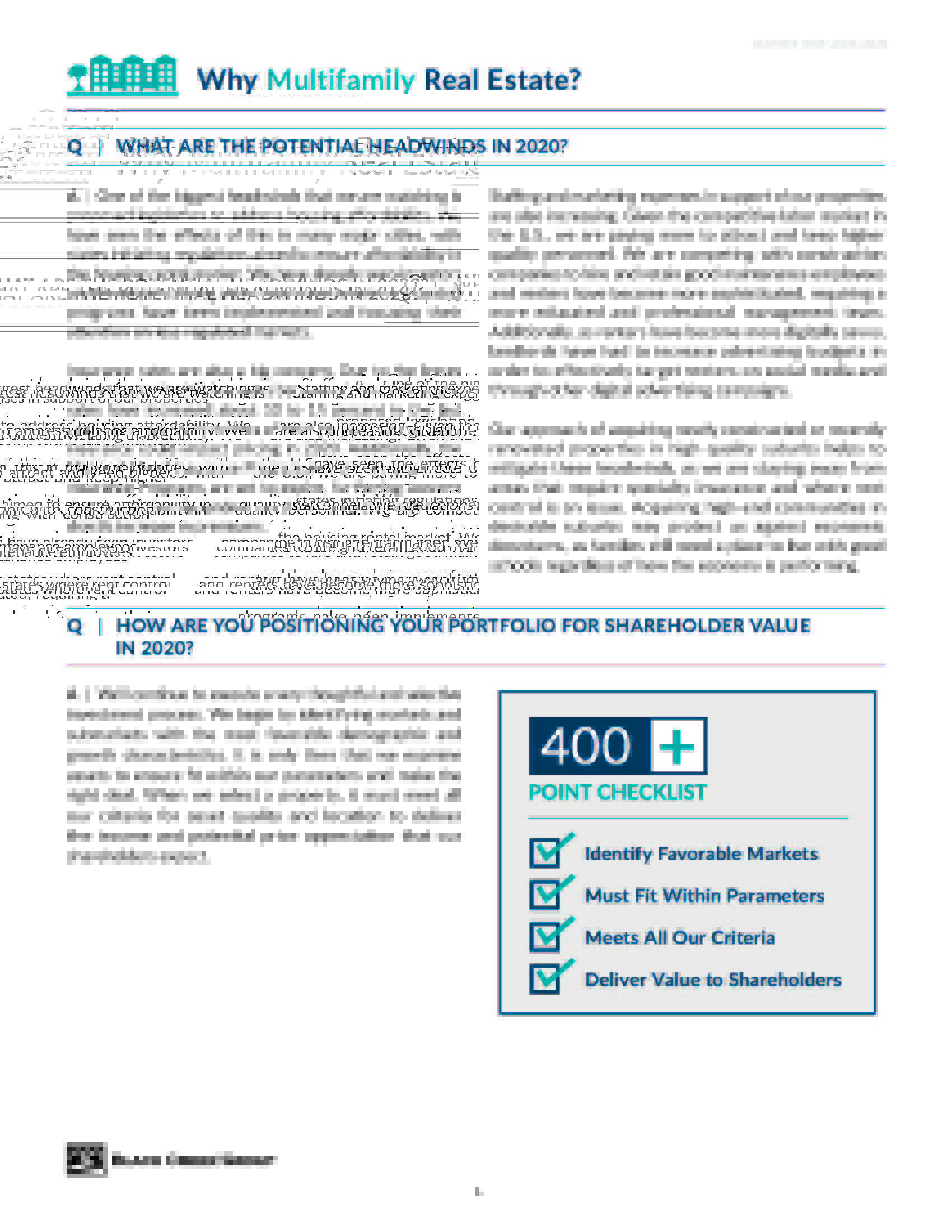
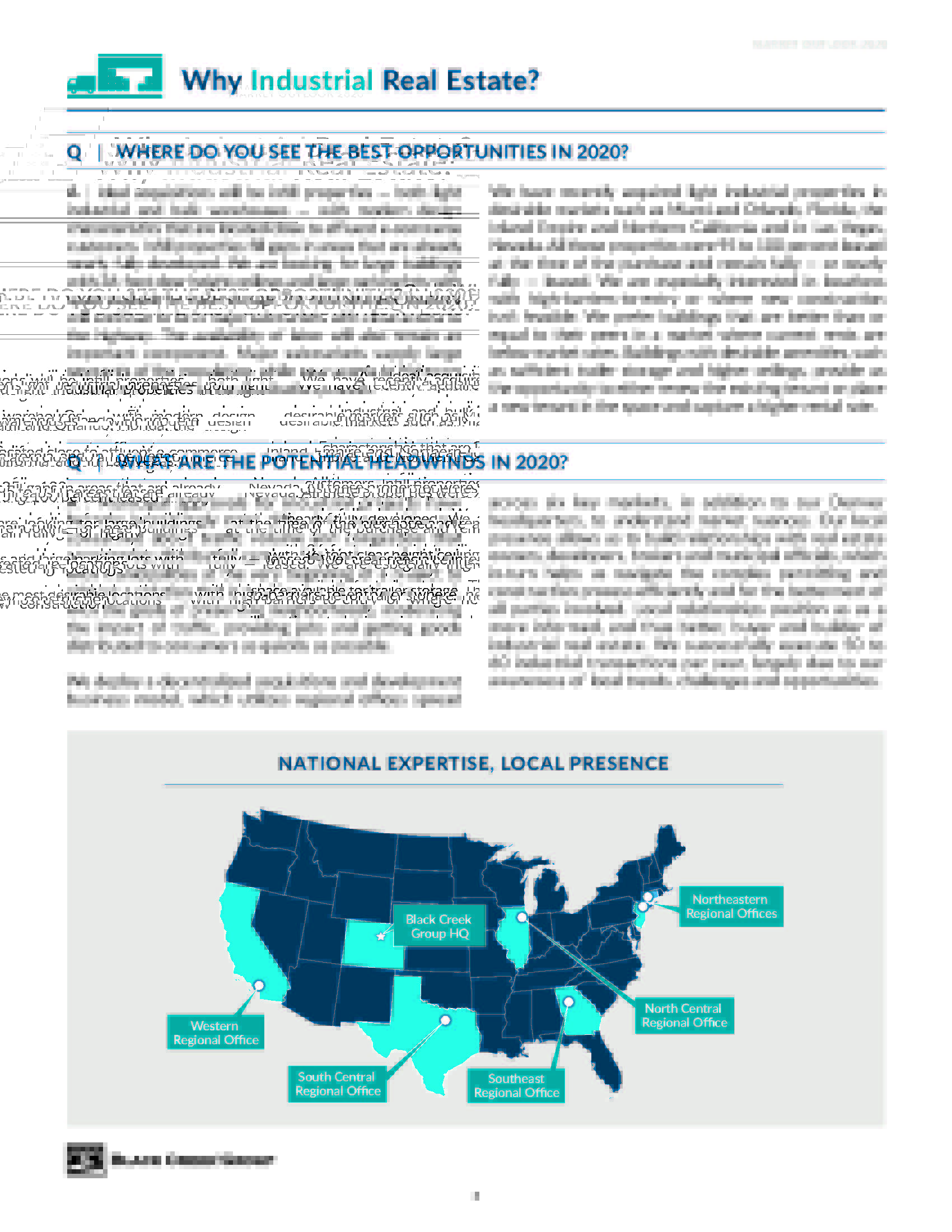
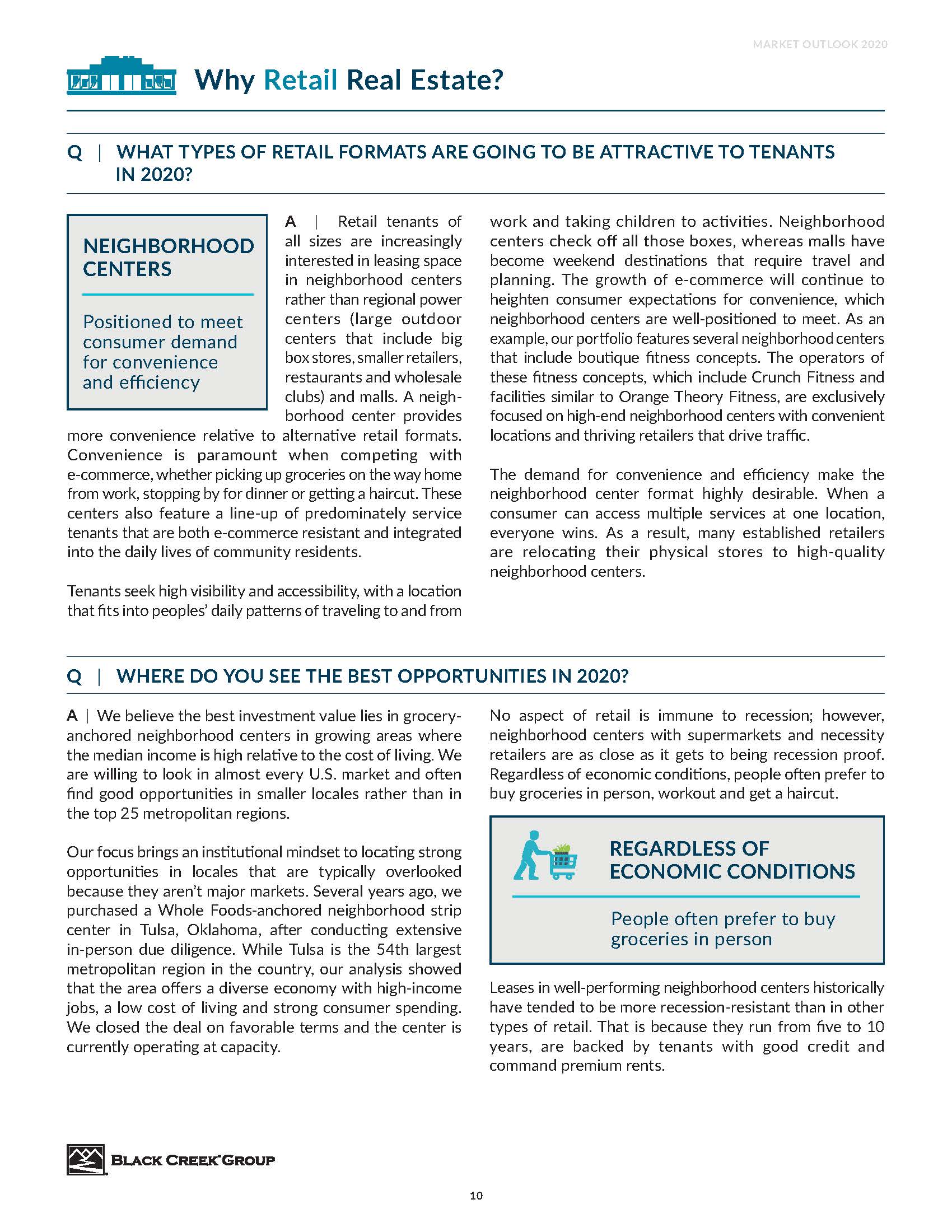
Whats in Store for Commercial Real Estate in 2020

January 9, 2020 by CARNM


By: Black Creek Group
Click here to view source article
Filed Under: All News

  • « Go to Previous Page
  • Page 1
  • Page 2
  • Page 3
  • Page 4
  • Page 5
  • Page 6
  • Interim pages omitted …
  • Page 8
  • Go to Next Page »
  • Search Property
  • Join CARNM
  • CARNM Login
  • NMAR Forms
  • All News
  • All Events
  • Education
  • Contact Us
  • About Us
  • FAQ
  • Issues/Concerns
6739 Academy Road NE, Ste 310
Albuquerque, NM 87109
admin@carnm.realtor(505) 503-7807

© 2026, Content: © 2021 Commercial Association of REALTORS® New Mexico. All rights reserved. Website by CARRISTO