• Skip to primary navigation
  • Skip to main content

CARNM

Commercial Association of REALTORS® - CARNM New Mexico

  • Property Search
    • Search Properties
      • For Sale
      • For Lease
      • For Sale or Lease
      • Start Your Search
    • Location & Type
      • Albuquerque
      • Rio Rancho
      • Las Cruces
      • Santa Fe
      • Industry Types
  • Members
    • New Member
      • About Us
      • Getting Started in Commercial
      • Join CARNM
      • Orientation
    • Resources
      • Find A Broker
      • Code of Ethics
      • Governing Documents
      • NMAR Forms
      • CARNM Forms
      • RPAC
      • Needs & Wants
      • CARNM Directory
      • REALTOR® Benefits
      • Foreign Broker Violation
    • Designations
      • CCIM
      • IREM
      • SIOR
    • Issues/Concerns
      • FAQ
      • Ombuds Process
      • Professional Standards
      • Issues/Concerns
      • Foreign Broker Violation
  • About
    • About
      • About Us
      • Join CARNM
      • Sponsors
      • Contact Us
    • People
      • 2026 Board Members
      • Past Presidents
      • REALTORS® of the Year
      • President’s Award Recipients
      • Founder’s Award Recipients
    • Issues/Concerns
      • FAQ
      • Ombuds Process
      • Professional Standards
      • Issues/Concerns
      • Foreign Broker Violation
  • Education
    • Courses
      • Register
      • All Education
    • Resources
      • NMREC Licensing
      • Code of Ethics
      • NAR Educational Opportunities
      • CCIM Education
      • IREM Education
      • SIOR Educuation
  • News & Events
    • News
      • All News
      • Market Trends
    • Events
      • All Events Calendar
      • Education
      • CCIM Events
      • LIN Marketing Meeting
      • Thank Yous
  • CARNM Login
  • Show Search
Hide Search

Archives for July 2021

Tenants Brace For Eviction Flood Following End Of CDC Eviction Moratorium, While Landlords Stress Relief Options

July 28, 2021 by CARNM

In a matter of days, the eviction moratorium imposed by the U.S. Centers for Disease Control and Prevention will be lifted, removing what is, in some parts of the country, the only thing standing between thousands of people and homelessness.
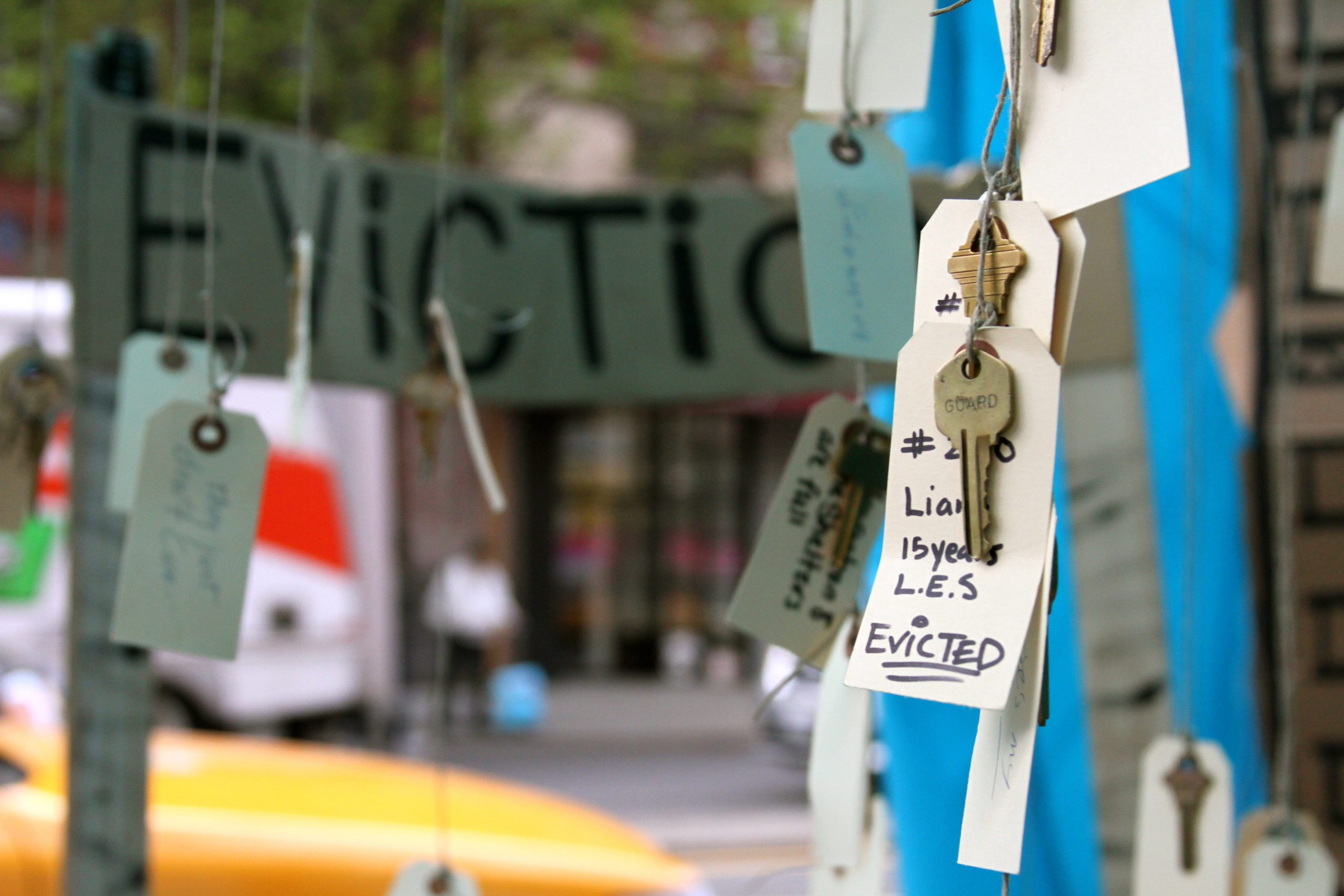
“We could actually see people immediately being put out on the street on Aug. 1 with the way that this is working,” National Housing Law Project Director of Litigation Eric Dunn told Bisnow.

While some states, such as New York, Illinois and California, have their own eviction moratoriums in place beyond the CDC’s, local and state courts in other parts of the country have allowed landlords to file for eviction ahead of time. In some cases, those judges have even ruled on filings and allowed everything but the official lockout and vacation to proceed, Dunn said.

At least some national trade groups for multifamily owners are downplaying the possibility of an eviction wave, including Institute of Real Estate Management President Chip Watts and Paula Cino, vice president of construction, development and land use policy for the National Multifamily Housing Council. Both cited the increased availability of emergency rental assistance from the most recent federal stimulus bills as incentives for landlords to hold off on evictions.

“We don’t anticipate a so-called ‘tsunami of evictions,’” Cino said. “We’ve been advising our members to continue to work with residents right up until the actual eviction occurs, and especially to be mindful of situations where residents can qualify for rental assistance but have not received the funds.”

The vast majority of tenants who owe back rent are in such a situation, as only $3B of the $46.5B in rental assistance approved by Congress has made its way to renters, Reuters reports. While states and major cities have all had to build the infrastructure necessary to distribute assistance essentially from scratch over a few months, the degrees of success they have achieved vary wildly. In some of the slowest-moving jurisdictions, the federal moratorium’s expiration could add a new level of urgency, Cino said.

Staving off eviction with emergency rental assistance comes down to more than just waiting for the money; it requires landlords, tenants or both to navigate applications and work through mediation in cases where the initial filing has already been submitted. Organizations like IREM and NMHC have spent the past few months informing their members of the availability of assistance and how to access it, with NHLP and local partners of the National Alliance to End Homelessness doing the same for at-risk tenants, representatives for each organization told Bisnow.

Perhaps the biggest reason for concern over a potential wave of evictions is the unknown number of landlords who have not engaged with any assistance programs, have no interest in mediation and are simply waiting for the soonest chance to evict a nonpaying tenant, Dunn and NAEH Vice President of Programs and Policy Steve Berg agreed.

“[Landlords primarily] seeking eviction is a concern,” Berg said. “How big a problem it’s going to be, it’s impossible to know. There’s no real precedent for this.”

Though Cino and Watts both insisted the bulk of their membership seeks to avoid eviction, corporate landlords Invitation Homes, Pretium Partners, Ventron Management and the Siegel Group have already initiated eviction filings on thousands of tenants in spite of the moratorium, the nonprofit Private Equity Stakeholder Project told a hearing of the House of Representatives Select Subcommittee on the Coronavirus Crisis on Tuesday, Reuters reports.

Meanwhile, the delta variant of the coronavirus has been driving infection numbers up all over the country and the world, raising public health alarms akin to when the CDC first enacted its moratorium.

“It does seem like a real risk, because we’re already seeing Covid cases tick up, that there will be more of an increase because of evictions,” Dunn said. “That’s just common sense.”

Though the Supreme Court’s ruling that upheld the CDC moratorium also barred the agency from extending it any further, some jurisdictions may further extend or reimpose their own moratoriums in response to the risk, Berg said. But the finite nature of the Supreme Court’s ruling has already given rise to at least one lawsuit from landlords asking the court for an emergency injunction striking down New York’s extended moratorium, and the National Apartment Association filed a lawsuit against the federal government Tuesday asking for damages landlords suffered related to the eviction moratorium, GlobeSt reports.

“The Supreme Court has already ruled that the CDC overstepped its authority in placing the moratorium in the first place,” Watts said. “If [further moratoriums] go through municipalities and states, it would eventually land back in the Supreme Court through the appeals process. So states and municipalities would have to take a hard look at how to impose that again.”

Justice Brett Kavanaugh’s majority opinion held that the law authorizing the CDC moratorium last year wasn’t clear enough to justify indefinite extensions, so it would take another act of Congress to extend or reimpose an eviction moratorium after July 31, Watts and Dunn agreed.

President Joe Biden officially asked Congress Thursday to do just that, with White House Press Secretary Jennifer Psaki saying in a statement Biden “strongly supported” extending the eviction moratorium, but the “Supreme Court has made clear that this option is no longer available.”

If a significant number of landlords do decide not to wait for more rental assistance to be handed out before evicting tenants, the potential consequences are not limited to public health. Areas with governments and courts similar to those that appealed the CDC moratorium to the Supreme Court are not likely to be sympathetic to the socioeconomic harm that evictions can have on the most vulnerable populations, Dunn said.

“One of the real concerns here is that, if we have mass evictions starting at the end of this month, they’re not going to be evenly divided along racial and ethnic lines,” Dunn said. “It’s going to be a massive, racially segregative event … [Areas that] are not doing anything about evictions don’t seem to care about racial segregation, and if they do care, it’s because they prefer to have it.”

Source: “Tenants Brace For Eviction Flood Following End Of CDC Eviction Moratorium, While Landlords Stress Relief Options“

Filed Under: All News

New Survey Paints Bright Picture for Apartment Industry

July 23, 2021 by CARNM

Rent growth has been whopping this year.

The latest quarterly survey of apartment conditions by the National Multifamily Housing Council confirms what has been clear for months: the rental markets are posting strong growth.

Ninety-two percent of the over 100 CEOs and other senior executives of apartment-related firms surveyed by NMHC in July said apartments with low vacancy rates and high rent increases were prevalent compared to 67% in April.

The survey also found that capital market conditions were improving for the asset class as well. At 45%, nearly double the number of leaders in July said it was a better time to borrow considering interest rates and non-rate terms against the 23% who felt that way three months earlier.

Sales of apartments stayed pretty much the same with 60% of the execs reporting the number of deals were up in both surveys.

The same trend held true for equity financing for apartment acquisition or development with 41% of apartment company leaders reporting in July it was more available than three months earlier compared to 42% in April.

Without a doubt, multifamily’s most significant development has been the whopping growth in rents this year.  Yardi Matrix, for instance, recently reported asking rents increased by 6.3% in June on a year-over-year basis.

“This is the largest YoY national increase in the history of our data set,” it said.

Rents increased nationally by 1.6% in June on a month-over-month basis. For the third month in a row, all 30 metros had positive month-over-month rent growth.

Rents grew an astonishing $23 in June to $1,482—another record-breaking increase. Lifestyle rents are growing at a faster pace than Renter-by-Necessity rents, something the industry has not seen since 2011 and another sign of a hot market, Yardi said.

Another important sign of health for the sector: Residents who decamped from urban markets during the pandemic are now returning in droves.

New York, Seattle (both 1.9%), Chicago and Washington, D.C. (both 1.7%) are rebounding. Recent graduates who moved in with their parents during the pandemic are beginning to form their own households in the urban cores.

One development that mars this bright picture are construction delays in current projects. 

Last month NMHC released a survey at its annual conference that showed a record 83% of multifamily developer respondents complained about this.

The main reasons cited for delays in starts were permitting, entitlement, and professional services (70%); projects not being economically feasible at this time (56%); and economic uncertainty (27%). The percentage of responses attributing delays to projects not being economically feasible at this time increased from 30% in round six to 56% this round.

Source: “New Survey Paints Bright Picture for Apartment Industry“

Filed Under: All News

Our Deep Divisions

July 23, 2021 by CARNM

There seems to be nothing new about America’s political polarization. Depending upon one’s historical perspective, this might be dated to the 1990s “Contract with America,” the 1960s Vietnam and Civil Rights movements, even deeper to the New Deal in the 1930s, or to the Reconstruction Era of the 19th century. It can be framed as an entire historical narrative, even in mythic terms, as the 1776 story versus the 1619 story, a contrast even now focusing debate in Washington D.C. and in state capitols.

It is not our intent to pick sides in this divided polity. Doing so only exacerbates the chasm. We want, first of all, to reflect on the pragmatic harm that the division is inflicting on our society, our economy, and on the real estate industry which is our professional field.

Alexis de Tocqueville wrote in Democracy in America (1835), “What is meant by ‘republic’ in the United States is the slow and quiet action of society upon itself. It is an orderly state really founded on the enlightened will of the people. It is a conciliatory government under which resolutions have time to ripen, being discussed with deliberation and executed only when mature.”1 Today, such a description is so wildly inaccurate that it sounds quaint. And yet it outlines a standard, an ideal, against which we can see how present circumstances betray social ineffectiveness that corrodes not only American values, but value in America.

In mechanics, friction is a retarding force. Overcoming resistance wastes effort and creates unwanted heat. This is an apt metaphor for the present inefficiencies impeding ‘the slow and quiet action of society upon itself.’ Political friction is holding back America’s economic productivity. We are squandering resources as we try to address problems that arise from the partisan divide, rather than problems confronting us as common issues.

Let’s take just two examples, healthcare and immigration.

Healthcare

Early 2021 Gallup polling shows 80 percent of Americans personally worrying about the availability and affordability of healthcare, a majority worrying “a great deal”. Moreover, 63 percent are dissatisfied with the current state of the healthcare available to them, 41 percent being “very dissatisfied”.2 In late November 2020, after the election, a majority of those polled (56 to 42 percent, with 2 percent having no opinion) maintained a view that it was a responsibility of the federal government to assure that all Americans have healthcare coverage.3

In the past 14 months we have seen two major successes: the Operation Warp Speed vaccine development program in 2020 and then the deployment effort in early 2021 that has now seen about 162 million (48.8 percent) fully vaccinated and about 56.3 percent of the U.S. population having received at least one dose as of July 22nd.4

And yet, when it came time for a vote on the COVID-19 relief bill in Congress, there was a virtually total party-line split. This indicates that ‘inside the Beltway’ divisions are far more hardened than the collective judgment of the American people. That is a cause for frustration, but on the broad scale may offer a glimmer of hope.

For the economy and for the real estate industry, the risk of health care vulnerability could not have been more starkly framed than it has been in the pandemic. To the degree that recovery of user-demand in commercial properties depends both upon employers, workers, and property owners/managers developing confidence in public health measures and in the general population’s ability to be secure in maintaining its wellness, the dysfunction in Washington (and across states) in pragmatically focusing on American healthcare acts as a drag on the economy and on real estate, which houses the day-to-day functioning of that economy.

Immigration

The issue of immigration has been festering for decades and, if anything, has intensified in its status as a partisan hot-button identifier for politicians. Meanwhile, according to the sequential polling data from Gallup, Americans have been achieving greater consensus. In 2002, 58 percent of those polled felt that the level of immigration should decrease, 30 percent believed that it should be sustained at the then-current level, and only 8 percent suggested an increase in immigration would be desirable.5 In point of fact, the volume of legal immigration in 2019 was 1,031,765, just 2.4 percent lower than the level in 2002.6

As of 2020, Gallup found that 36 percent of those polled favored sustaining current immigration volume, while those recommending an increase had soared to 34 percent. Those believing immigration should be curtailed had dropped by half to 28 percent.7

In April 2021 the Cato Institute released its report on immigration, “E Pluribus Unum”. Their survey of 2,600 U.S. adults found that few Americans want immigration shut down. The margin favoring continued population inflow was ten-to-one; only nine percent of the respondents advocated closing the border. A majority, 72 percent of Americans, believe that immigrants come to America to “find jobs and improve their lives.” They favor shorter waiting periods for prospective immigrants (five years or less is the period recommended by 80 percent; five years is the current average). Across the board, 53 percent of the survey respondents believe the ability to immigrate is a “basic human right”, and 55 percent support a pathway to citizenship for unauthorized immigrants if they meet certain requirements.8

On balance, even in these hyper-partisan times, the Cato survey found Americans resonating with the nation’s self-understanding as ‘a nation of immigrants.’ With all that, it has been 35 years since a major immigration bill has made its way through Congress, midway through the second Reagan administration. This year, bipartisanship on immigration has been hard to come by, although good faith efforts seem to be underway. But when the American Dream and Promise Act came up for a House vote, only nine Republicans voted “yea.” And when the Farm Workforce Modernization Act, supportive of immigrant agricultural labor, was voted on, 182 Republicans voted in opposition, with just 30 joining the Democrats in passing the bill. In the months since, neither bill has been able to get a vote on the floor of the gridlocked Senate.

Business support for immigration reform has been strong. The U.S Chamber of Commerce, the National Association of Manufacturers, and the Business Roundtable have all endorsed an approach to immigration that is encouraging of welcoming new workers, something of some urgency given current demographic trends.9, 10, 11 The pandemic did, in all truth, put some of the pressure of any labor shortfall to the side in 2020. But with the economy re-opening with some vigor in 2021 and 2022, the realities of Boomer retirements, an anemic volume of native-born labor force entrants in the present decade, and the decline in the female labor force participation rate since the late 1990s, will again be squeezing employers. This is already evident in the data and in corporate commentary.

Pre-COVID, real estate was feeling the pinch. The National Association of Home Builders has stressed how the broken immigration system has hamstrung the production of housing, delaying deliveries and driving up prices.12 Building service workers, through their union (SEIU), are calling for an immigration approach facilitating immigrants’ full participation in the economy as an immediate priority. And it should also be noted that many forms of real estate, including hotels, restaurants, personal service retailing, and medical offices, have high levels of immigrant workers in their occupancy profile.

Conclusion

So it is that we consider the present tribalism of American politics as a top issue for real estate now and in the foreseeable future. It hinders our productivity and therefore the nation’s economic strength. And the real estate industry’s well-being is a function of our economic growth. Partisanship has been distilled into more extreme positions within Washington by the vagaries of primaries, gerrymandering, and the propensity of incumbents to stick to the status quo. In fact, Congress is more divided on many issues than is the American public as a whole.

We acknowledge that there is legitimately a diverse range of political ideology in America. But there must also be a kind of Venn Diagram in which the political positions can acknowledge an area of overlap, common ground that is apparent when those outside the Beltway are queried. Even though the Red and Blue map represents truly differing perspectives and priorities, the nation is decidedly less polarized than are its elected representatives. The economy and the real estate industry would be far healthier, as would American society, if the pattern of party-line voting in the halls of Congress could be transcended in favor of something very traditional: the defining of politics as the art of compromise. •

Source: “Our Deep Divisions“

Filed Under: All News

Collecting Data On Office Communities Can Boost Profits, But Security Is Essential

July 23, 2021 by CARNM

In every sector, data leads to profit. As our lives become increasingly reliant on technology, companies are realizing the power that lies in collecting and analyzing information about how we live and work. Netflix saves $1B a year from customer retention by carrying out personalized campaigns based on consumer behavior.

As commercial real estate teams begin to focus on the customer experience rather than just a physical space, the value of data collection has caught the sector’s attention. However, data management must be taken seriously. Collecting, storing and using personal identifiable information, or PII, has to be done with consent and with the end user in mind. There have been many headline-grabbing stories of data leaks, cyber scams and personal information being used inappropriately.

This is why data privacy and information security compliance are a top priority for HqO, a software company that provides an end-to-end tenant experience platform for commercial real estate clients.

“In today’s digital-first world, data is more accessible than ever,” HqO co-founder and Senior Vice President of Technology Kevin McCarthy said. “Each integrated technology serves as a new source of data for your portfolio — data which can be used to reveal how tenants really feel about the office and how they’re engaging with your building’s amenities and programming. As you might imagine, these insights can really optimize current and future investments, create efficiencies, and attract and retain key tenants. However, the need to collect meaningful data shouldn’t be overshadowed by the need to protect said data.”

HqO recently held a webinar that explored the ways property owners and teams are collecting data and how to approach security in the office. During the webinar, McCarthy interviewed HID Global End User Business Development Manager-PACS Rick Winter and Datawatch Systems Director of Business Development Kenny Reed, who represent two companies that provide access control solutions within HqO’s partner Marketplace.

Collecting Data Through Access Control

The webinar first focused on a simple question: Why collect data on tenants and their employees as they enter a building?

“Data is being used by commercial real estate owners to efficiently operate buildings,” Reed said. “They can use it to control the HVAC. They wouldn’t want energy being used to power a building when there aren’t many people there.”

Winter said that customers have been collecting data to understand how people are engaging with office buildings throughout the coronavirus pandemic. As employees move toward a hybrid approach to work, it has become a business imperative to understand who is in the office and what building features and spaces they are engaging with.

Information from an access control system can give a business a deeper understanding of which building amenities and resources tenants and employees are using, such as conference rooms or on-site fitness centers. This data feeds back into how a business makes decisions about current and future office investments.

The panelists moved on to discuss how collecting information and allowing access using mobile devices is more secure than access cards. Whether a landlord selects a system that uses a physical access card or a mobile entry system, credentials that identify a person need to be stored in a secure manner and location.

“A mobile device is very personal to our lives today,” Winter said. “It’s been proven that a lost access card isn’t reported lost for at least 72 hours, but everyone will know immediately when you’ve lost your phone. Also, if someone leaves a company for whatever reason, the likelihood of getting a physical card back is very slim. It requires someone to go into the access control system and revoke privileges. With a mobile system, you can remove privileges from the mobile device without physically meeting that person.”

The Wrong Kind Of Data

Another key discussion during the webinar was the need to collect the right kind of data. Using sensors, mobile devices and software platforms, a business or landlord can collect endless data about members of its building community. But is it all valuable?

“Sometimes customers say, I’d really like to collect birth dates and other data from users,” McCarthy said. “We always ask, for what purpose? Almost always, the answer is, ‘I think it would be useful data to filter by.’ And our answer is, the juice isn’t worth the squeeze on this one. You’re not driving business value.”

Poor data quality is costly for a business. A Gartner study found that in 2017, poor data quality was costing businesses $15M a year. Why add unnecessary, potentially risky data to the growing mountain of information that needs to be analyzed?

“The main question with regards to PII is, what do you need?” Winter said. “There are a lot of needs and wants, but it all comes down to how it will provide any benefit. It’s great to have a bunch of information, but if you don’t use it, why have it? PII is so important and sensitive. The bottom line is whatever information you’re going to collect, you have to make sure you’re securing it properly.”

Ensuring data security doesn’t end when that data has been used. Once used, it needs to be archived securely and, if not needed, disposed of securely.

The webinar touched on a host of questions that the CRE sector should consider as property owners continue to adopt technology in the workplace. The sector is alert to the challenges; a Deloitte survey found that 56% of CRE respondents believed that the pandemic has exposed shortcomings in their digital capabilities. The sooner security risks are addressed, the better.

Source: “Collecting Data On Office Communities Can Boost Profits, But Security Is Essential“

Filed Under: All News

  • « Go to Previous Page
  • Page 1
  • Page 2
  • Page 3
  • Page 4
  • Interim pages omitted …
  • Page 8
  • Go to Next Page »
  • Search Property
  • Join CARNM
  • CARNM Login
  • NMAR Forms
  • All News
  • All Events
  • Education
  • Contact Us
  • About Us
  • FAQ
  • Issues/Concerns
6739 Academy Road NE, Ste 310
Albuquerque, NM 87109
admin@carnm.realtor(505) 503-7807

© 2026, Content: © 2021 Commercial Association of REALTORS® New Mexico. All rights reserved. Website by CARRISTO