• Skip to primary navigation
  • Skip to main content

CARNM

Commercial Association of REALTORS® - CARNM New Mexico

  • Property Search
    • Search Properties
      • For Sale
      • For Lease
      • For Sale or Lease
      • Start Your Search
    • Location & Type
      • Albuquerque
      • Rio Rancho
      • Las Cruces
      • Santa Fe
      • Industry Types
  • Members
    • New Member
      • About Us
      • Getting Started in Commercial
      • Join CARNM
      • Orientation
    • Resources
      • Find A Broker
      • Code of Ethics
      • Governing Documents
      • NMAR Forms
      • CARNM Forms
      • RPAC
      • Needs & Wants
      • CARNM Directory
      • REALTOR® Benefits
      • Foreign Broker Violation
    • Designations
      • CCIM
      • IREM
      • SIOR
    • Issues/Concerns
      • FAQ
      • Ombuds Process
      • Professional Standards
      • Issues/Concerns
      • Foreign Broker Violation
  • About
    • About
      • About Us
      • Join CARNM
      • Sponsors
      • Contact Us
    • People
      • 2026 Board Members
      • Past Presidents
      • REALTORS® of the Year
      • President’s Award Recipients
      • Founder’s Award Recipients
    • Issues/Concerns
      • FAQ
      • Ombuds Process
      • Professional Standards
      • Issues/Concerns
      • Foreign Broker Violation
  • Education
    • Courses
      • Register
      • All Education
    • Resources
      • NMREC Licensing
      • Code of Ethics
      • NAR Educational Opportunities
      • CCIM Education
      • IREM Education
      • SIOR Educuation
  • News & Events
    • News
      • All News
      • Market Trends
    • Events
      • All Events Calendar
      • Education
      • CCIM Events
      • LIN Marketing Meeting
      • Thank Yous
  • CARNM Login
  • Show Search
Hide Search

Archives for February 2020

How AI Could Compete With CRE Brokerages One Day

February 28, 2020 by CARNM

AI can deliver valuable pricing information that until now only the brokers had access to.

These are the high holy days of the commercial real estate brokerage community. So said a speaker at a CRE event two years ago that was attended by Blaine Strickland, principal of HBS Resources. The comments struck a chord because the speaker went on to say that it is unclear how long this dominance will last.
Ever since then Strickland has been thinking about what could disrupt the CRE brokerage model and has come to a few answers. Pricing transparency is one. The growing use of artificial intelligence is another.
He points to travel agents and their heyday more than two decades ago. One reason for their demise was that pricing information became more readily available to consumers and technology introduced new ways for consumers to buy tickets.
“There is a good case for comparison between yesterday’s travel agents and today’s CRE brokers,” Strickland tells GlobeSt.com. Both involve the client gaining access to valuable price information and overall transparency into the system.”
But Strickland is not referring to the Zillows or CoStars of the world, at least not entirely. Valuable price information also entails an overlay of AI, necessary to accommodate the complexity of CRE. There are, for example, algorithms that can price a residential home once the square footage is plugged in, but that doesn’t work for CRE as there are too many differences among the buildings, Strickland says.
That said, there are firms that are trying to create algorithms for some types of CRE, such as single-tenant net lease properties. “A Wells Fargo building in Orlando, Fl., can compare to a similar building in Phoenix. There is a lot of commonality and an algorithm can predict what the sales price will be,” Stickland says.
There are four to five vendors that are working on this, some of which have received investment from the big brokers. These firms include Bowery Valuation, Skyline AI, GeoPhy and GroceryAnchored.com.
Skyline AI, as one example, recently helped an investor select an apartment building in Atlanta to buy, by processing data from review sites with natural language processing. Online reviews of the asset were flagged by the system as indicating an opportunity for optimization.
Groceryanchored.com, as another example, has mapped out grocery anchor center sales and attributed the seasonality—or time to get the best price—to that sale. For instance, Strickland says, the system could tell you when a center’s financing expired and that the lenders have to get the last $40 million out if they want their bonuses. Thus, the property’s seasonality is at the end of the year.
Not that long ago, Strickland adds, the investor would ask the broker about any grocery-anchored properties that were coming to market.
Or possibly a broker would contact a building owner to offer a broker opinion of value about, say, an apartment complex. The building owner agrees, giving the broker the necessary information to complete the analysis. The broker returns with a BOV that values the building at $2.7 million and the owner agrees to sell the building if the broker can get that price. Thus, a sale is born.
“The broker used that information as a way to create a relationship,” Strickland says. “But think about what happens if a seller and buyer already have that information.” It’s happening in the residential world already, he says, and will soon be a part of CRE.
By: Erika Morphy (GlobeSt)
Click here to view source article

Filed Under: All News

California Leading Way On Mixed-Use Done Right

February 27, 2020 by CARNM

A nationwide rise in design for projects that have it all has some of its most prominent highlights in California, where mixed-use developments are changing to meet the lifestyle, investment and density demands of the moment.
Many of the country’s largest projects encompass multiple uses, offering investors opportunities for diversification and residents a more multifaceted environment.
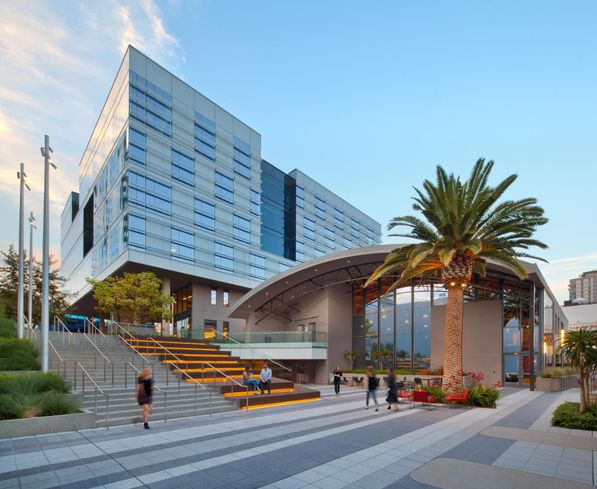
5M San Francisco Brookfield
“A thing that unites [different markets] is the notion that major developments have to be mixed-use,” House & Robertson Architects principal Douglas Robertson said. “That’s not the case in every single instance, but there is a strong tendency in the market to have housing, office, retail, destination dining either in the vertical stack in the classic mixed-use tower or in a campus-type situation.”
Enjoying some of the strongest economic growth in the country, Houston has seen its fair share of mixed-use projects, including one in the works by developer McNair Interests and involving House & Robertson Architects. That project, at 3200 Post Oak Blvd., will include a hotel, rental apartments, condos, a separate office tower, amenity retail and 10 stories of parking, said Robertson, a panelist at Bisnow’s upcoming Bay Area Architecture and Design Summit.
Though projects like McNair’s represent most of what mixed-use developments can offer, a need for so much space for parking, which drains developers’ budgets and represents added congestion, differs from developments in San Francisco and, to a lesser degree, even Los Angeles, he said.
San Francisco and certain neighboring Bay Area cities have seen a rise in transit-oriented, mixed-use projects that has dovetailed with relaxed parking requirements for developments. San Francisco as a whole eliminated parking requirements for developments starting last year, while Oakland has done the same in its downtown, and is allowing developments like Panoramic Interests’ project in West Oakland (which has over 1,000 units and 59 parking spots).
Without the same public transit infrastructure, Los Angeles and its car culture can’t go nearly that far, but the city is finding ways to use less parking in its mixed-use projects, Robertson said. Many developers in the area have started considering automated-garage products like Auto Parkit, which can offer parking capacity with much less space than a normal parking garage.
California Leading Way On Mixed-Use Done Right
Even with lots of parking included, mixed-use developments have still been attractive investments in lots of areas, often based around sprawling, Silicon Valley-style office campuses and all they can offer.
Right down to the open floor plans rampant throughout Silicon Valley, cities like Boston and McLean, Virginia, have followed the Bay Area’s lead, Heller Manus Architects President and Chief Financial Officer Eric Lundquist said.
“Other communities are looking at these tech buildings, understanding how the occupancy works, how their laid out, and they’re borrowing a lot of the attributes,” he said. “You’re starting to see stuff that looks like it could have just walked right out of Silicon Valley.”
On a micro level, a mixing of uses has proliferated out of the Bay Area interior designs as well, according to Studio O+A co-founder and principal Primo Orpilla, whose San Francisco-based interior design firm has worked with Microsoft through various office projects.
A millennial tendency to put in longer work hours is related to a desire to have one’s workplace and home near each other, Orpilla said. Within workplaces, that tendency has manifested in the ubiquity of “resimercial” design, which incorporates living room furniture and other residential trappings into the workplace.
“I’d never done residential projects before until the last five years, until, especially in the Bay Area, they started realizing that millennials like the look and feel of some of the spaces we’re building for these tech campuses,” Orpilla said.
Based out of the firm’s San Francisco office, Mithun partner Anne Torney has seen what would previously be thought of as single-use spaces require design for a mix of uses. Student living is no longer just student housing but also study spaces, dining or other uses, especially on the lower floors, she said. “It feels like every project is in some way mixed-use,” Mithun said.

On a grander scale, having a wide mix of uses within one project or district promises convenience that residents, employers and cities as a whole are increasingly appreciating. San Francisco’s new Transbay District and its medley of office, residential, retail and other uses is one other cities may emulate, Lundquist said.
“The Transbay District is being looked at by other cities,” he said. “The idea of a district that is basically funded by the buildings that got put around it, and that fact that it is so successful, has turned a bunch of people’s heads.”
Heller Manus Architects designed 181 Fremont St., a 55-story tower offering both luxury residences and offices for Facebook-owned Instagram, and one of several mixed-use projects going up or already up in the Transbay area.
Robertson, whose firm worked on Brookfield Properties’ 5M SF mixed-use project in San Francisco and was executive architect on Columbia Square in Hollywood, said there are risks unique to mixed-use projects, including uses potentially negating each other.
“If you stack everything in a building, you need to be really smart about how you deal with each of your stakeholders,” he said. “Getting those minds to meet is how smart developers have made that project type successful.”
Robertson also points to a potential downside of mixed-use sites becoming their own islands, citing an analogy made by architect and OMA partner Shohei Shigematsu of traditional cities as family-style meals and mixed-use-laden ones as bento boxes.
Still, he said good planning and design can combat both issues and result in successful projects, like Columbia Square, and auspicious ones, like 5M.
At any rate, more mixed-use projects are to come, according to Robertson.
“There seems to be a real strong movement in the market that happened in a big way about five years ago,” he said. “And it doesn’t show signs of abating.”
By: BisNow
Click here to view source article

Filed Under: All News

Outlet Centers Continue to Post Healthy Fundamentals, But There May Be Challenges Ahead

February 26, 2020 by CARNM

Outlet center operators are reporting strong NOI growth. But rising tenant bankruptcies are likely to have an impact.
Bricks-and-mortar retail, in general, has been badly bruised over the past several years. The outlet center sector has weathered the storm better than some other retail types as it draws shoppers looking for bargains, but it too faces challenges.
Growing e-commerce competition and off-price players’ increasing strength are impacting the sector. Still, “the outlet industry is a fairly healthy sector,” notes Steve Ferris, vice chairman of national retail tenant services at commercial real estate services firm JLL. While REIT landlords focus a lot of time and energy on maintaining their best-performing regional malls, outlet centers continue to be strong performers within REITs’ overall portfolios.

Outlet stores account for a significant source of profit for many retailers, and are an essential part of many retailers’ business today, according to Ferris.

Big REIT players

“The outlet business had a very good year,” said David Simon, chairman and CEO of Simon Property Group, in the REIT’s last earnings call.
Simon, the nation’s biggest mall landlord, is also the dominant player in the outlet industry, with more than 100 outlets across the U.S. and internationally. Tanger Factory Outlets is the only pure-play outlet REIT with 39 centers.

The year was “affected by certain bankruptcies, but we had significant comp NOI growth [in outlets]. It was higher than the mall business,” Simon noted. “We have no worries or concerns at all about our outlet business.”
One reason outlets remain relatively healthy is they don’t have a lot of competition in their sector, Ferris notes. Typically, outlet centers are in a market where there are only one or two of them, so they are fairly well-insulated, Ferris says.
“As long as the brands provide good value, good product to the consumer, they should maintain their stronghold, and the Simons and the Tangers monitor how they merchandise and price to keep that integrity,” Ferris adds.
The outlet sector remains vibrant in comparison to other forms of bricks-and-mortar retail, says Lisa Wagner, a principal with Outlet Resource Group (TORG), a Chicago-based outlet center consulting company.
“We have seen some closing of chains and stores, but most have been a result of factors other than strictly sales, such as debt load and operating costs,” she notes. “There are certainly some outlet centers performing better than others, but in centers where the fundamentals are strong—they are well-located proximate to population centers or on very busy highways or at tourist destinations, plus good design and a strong tenant mix and well-marketed—they are continuing to perform well.”
If any of those fundamentals is not in place, she notes, the centers could be vulnerable to competitive intrusion. But Wagner says the competition isn’t just other retail centers or online sellers. It could be customer dollars being diverted to other forms of spending, like dining and entertainment.
There was an acceleration of outlet development in the early 2000s, but it never got to the point where the country was statured with outlet projects, Ferris says. In the last five years, there have been one to two projects developed a year.
For example, Simon is developing Tulsa Premium Outlets that’s slated to open in 2021, as well as several international projects. Tanger announced plans for a new outlet in Nashville, Tenn.
There are only about 220 outlet centers in the U.S. vs. roughly 1,000 malls, according to research firm Green Street Advisors. That represents only roughly 1 percent of all U.S. retail properties.
Meanwhile, the outlet centers that are getting developed continue to be developed closer to major population centers and more are being built as part of mixed-use developments.
“As we evolve to more hybrid centers, we have the opportunity to finetune tenant mixes and keep the offering fresh and exciting,” Wagner notes. “That nimbleness will keep us in the game of bricks-and- mortar for the future.”

Higher occupancy than malls

U.S. outlets reported an occupancy rate of 95.7 percent in the third quarter of 2019, according to Green Street.
Tanger reported 97 percent occupancy in the fourth quarter of 2019, while Simon reported 95.1 percent occupancy at year-end across its malls and outlet centers.
Meanwhile, the U.S. regional mall vacancy rate hit a 20-year high of 9.7 percent in the fourth quarter, Reis Moody’s Analytics reported. Mall landlords anticipate more retailers will close, including Pier One Imports, which is the latest to file for bankruptcy.
Outlet centers are also at less risk from large tenants’ closures and bankruptcies since they don’t have anchor tenants. They don’t have to deal with struggling department stores like J.C. Penney, Sears and Macy’s shuttering locations and leaving behind huge chunks of space.
“The tendency toward smaller store units certainly helps make it less risky,” Wagner says.

What about the impact of e-commerce?

Some industry experts says outlet shopping is not easily duplicated online, since it’s about the treasure hunt experience. “Outlet shopping is still a commodity for shoppers,” Ferris says.
However, that’s not to say that outlet landlords aren’t fully aware of Amazon and other big online players’ impact.
In fact, Simon launched an outlet e-commerce site. The REIT is beta testing a website featuring brands and retailers from its Premium Outlet Centers. Dubbed ShopPremiumOutlets.com, it provides outlet retailers and developers another means to generate sales. The beta test includes 2,000 brands and some 300,000 products. Orders are fulfilled directly by retailers and brands, while Simon collects a commission on sales through the website.

Cheaper rents, CAM costs

Another reason for outlets’ success is cheaper rents and fewer common area maintenance (CAM) costs than enclosed malls, which means outlet centers can be more profitable for retailers.
“Fortunately, outlet rents are much more affordable than some of the street rents and mall rents, so the tenants profitably is a much easier formula, even if there’s a push on margins,” Ferris notes. “And of course, the retailers that are made for the outlets don’t suffer much on the margin play and get more reasonable occupancy costs.”
The country’s top 10 or 15 outlet centers command some pretty high rents, but the sales volumes are there to support it, Ferris adds.
He also notes that the build-out costs for outlet stores are less than for stores at regional malls.

That’s not to say there aren’t challenges

Outlet centers have many of the same struggling tenants found in malls, like Payless, Ascena Group, Chico’s and Gymboree. As a result, retailer bankruptcies are having a significant impact on outlet fundamentals, according to Green Street. Occupancy and market rents will be pressured over the near term.
For example, same-center tenant sales across the Tanger portfolio increased by 1.5 percent for the year ending Dec. 31, 2019. At the same time, Tanger centers posted a 0.4 percent drop in same-center net operating income (NOI), primarily due to the “impact of tenant bankruptcies, lease modifications and store closures,” the company said.
Another challenge is that outlets rely heavily on the troubled apparel sector, Green Street researchers note, with 66 percent of their tenant mix devoted to apparel. (Only 5 percent are entertainment tenants).
Green Street doesn’t expect that tenancy to change much, which makes it tougher to diversify with restaurants and entertainment like many class-A regional malls are doing. Additionally, light consumer traffic at outlets during weekdays, due to the distance from city centers, “prohibits a significant shift in the merchandise mix” of many outlets, Green Street researchers write.
It should be noted that some outlets are finding ways to expand their food and entertainment options.
“It’s absolutely a trend in many centers, but it will not work everywhere,” Wagner says. “The centers that are located in close proximity to population centers or tourist destinations have an advantage in that they can more readily diversify their tenant mix to include experiential concepts like entertainment and dining.”
For outlets located further out, it’s a more difficult strategy.
Another indication of a possible slowdown is the increasing competition from off-price players like TJ Maxx, Burlington and Saks Off Fifth, which are reporting rising sales.
However, the two sectors can co-exist, according to Ferris.
“Off-price retailers are obviously the darlings right now, but I think generally good product at a good price is a good formula in today’s shopping environment,” Ferris says. “The outlets continue to do well and that’s why TJX Cos. has continued to thrive, because of great brands at great prices, which is really what the outlets are.”
By: Liz Wolf (NREI)
Click here to view source article

Filed Under: All News

Burgeoning Hemp Industry Takes Root in Southern NM

February 26, 2020 by CARNM

A southern New Mexico hemp company has announced a significant expansion in Las Cruces, a sign the region’s small but growing hemp industry is starting to blossom.
The state Economic Development Department announced this week that Natural ReLeaf, a group that began growing hemp in Berino last year, is planning to bring on more than 50 new employees, and add capacity to extract CBD, the compound most associated with the hemp industry’s rapid growth.
A southern New Mexico hemp company has announced a significant expansion in Las Cruces, a sign the region’s small but growing hemp industry is starting to blossom.
The state Economic Development Department announced this week that Natural ReLeaf, a group that began growing hemp in Berino last year, is planning to bring on more than 50 new employees, and add capacity to extract CBD, the compound most associated with the hemp industry’s rapid growth.
Expansion-minded
Natural ReLeaf was one of those companies. Fuchs said the company converted three chicken coops in Berino into grow houses for its endeavor and ultimately harvested nearly 10,000 pounds of hemp in its first year of operation.
In addition to scaling up its growing operations, Fuchs said the company wanted to expand into other areas of the hemp industry. She said Natural ReLeaf is opening a new manufacturing facility and dispensary at 3497 Bataan Memorial West on Thursday. The new location will be Natural ReLeaf’s second dispensary in Las Cruces, while giving the company a CBD extraction facility. Fuchs said the company intends to have a food-grade lab and commercial kitchen, and plans to produce CBD-infused products ranging from lotions to bath bombs.
“We’ve been hearing a lot of requests for pet products,” she said.
The company also plans to extract hemp grown by other farmers, which could help solve a persistent problem in New Mexico’s hemp industry. Fuchs said she knows of just 12 extractors currently operating in the state, which contributed to a glut of hemp with no end market during the state’s first harvest.
“We do have farmers in the state, and they’re not quite sure what to do with (their hemp),” Fuchs said.
Lopez said the dropping price of CBD oil means adding extractors will provide a valuable service to the region’s existing hemp growers and could help southern New Mexico develop a full-fledged industry ecosystem.
By: Stephen  Hamway (ABQ Journal)
Click here to view source article

Filed Under: All News

  • Page 1
  • Page 2
  • Page 3
  • Interim pages omitted …
  • Page 8
  • Go to Next Page »
  • Search Property
  • Join CARNM
  • CARNM Login
  • NMAR Forms
  • All News
  • All Events
  • Education
  • Contact Us
  • About Us
  • FAQ
  • Issues/Concerns
6739 Academy Road NE, Ste 310
Albuquerque, NM 87109
admin@carnm.realtor(505) 503-7807

© 2026, Content: © 2021 Commercial Association of REALTORS® New Mexico. All rights reserved. Website by CARRISTO