• Skip to primary navigation
  • Skip to main content

CARNM

Commercial Association of REALTORS® - CARNM New Mexico

  • Property Search
    • Search Properties
      • For Sale
      • For Lease
      • For Sale or Lease
      • Start Your Search
    • Location & Type
      • Albuquerque
      • Rio Rancho
      • Las Cruces
      • Santa Fe
      • Industry Types
  • Members
    • New Member
      • About Us
      • Getting Started in Commercial
      • Join CARNM
      • Orientation
    • Resources
      • Find A Broker
      • Code of Ethics
      • Governing Documents
      • NMAR Forms
      • CARNM Forms
      • RPAC
      • Needs & Wants
      • CARNM Directory
      • REALTOR® Benefits
      • Foreign Broker Violation
    • Designations
      • CCIM
      • IREM
      • SIOR
    • Issues/Concerns
      • FAQ
      • Ombuds Process
      • Professional Standards
      • Issues/Concerns
      • Foreign Broker Violation
  • About
    • About
      • About Us
      • Join CARNM
      • Sponsors
      • Contact Us
    • People
      • 2026 Board Members
      • Past Presidents
      • REALTORS® of the Year
      • President’s Award Recipients
      • Founder’s Award Recipients
    • Issues/Concerns
      • FAQ
      • Ombuds Process
      • Professional Standards
      • Issues/Concerns
      • Foreign Broker Violation
  • Education
    • Courses
      • Register
      • All Education
    • Resources
      • NMREC Licensing
      • Code of Ethics
      • NAR Educational Opportunities
      • CCIM Education
      • IREM Education
      • SIOR Educuation
  • News & Events
    • News
      • All News
      • Market Trends
    • Events
      • All Events Calendar
      • Education
      • CCIM Events
      • LIN Marketing Meeting
      • Thank Yous
  • CARNM Login
  • Show Search
Hide Search

Archives for April 2020

1031 Investors Begging For Relief From Tight Deadlines Amid Pandemic

April 8, 2020 by CARNM

The IRS is looking at delaying deadlines for like-kind exchanges for real estate sales as the industry struggles to function during the coronavirus pandemic.
1031 Investors Begging For Relief From Tight Deadlines Amid Pandemic
Like-kind exchanges, also called 1031 exchanges, allow real estate investors to sell one asset — assets like condominiums to warehouses to office buildings — and buy a similar asset within 180 days. In doing so, those investors can avoid paying capital gains taxes to the IRS.
“The IRS is considering a wide range of COVID-19 relief, but nothing has been released at this time,” IRS spokesperson Eric Smith said. When asked if the IRS was considering changes to 1031 exchange deadlines, Smith said, “That could be addressed.”
More than a third of all property sales use 1031 exchanges, which means potentially thousands of investors who sold properties in late 2019 are under the gun to buy something soon to avoid capital gains taxes, unless the IRS extends the deadline.
As of press time, neither the Treasury Department nor the IRS has issued any new guidance on like-kind real estate exchanges.
“It’s a real stressful situation because the clock is ticking. These are the holes in the dike that need to be plugged,” CCIM Institute Chief Economist Kiernan “KC” Conway said. “It’s hope and faith right now. It’s nothing else.”
Shelter-in-place orders have shuttered businesses and governmental entities critical to real estate transactions. At the same time, determining real estate values has become nearly impossible in the near-term as landlords face a slew of commercial tenants seeking rent abatements or not paying rent at all.
Lenders have waited to go forward with deals until the uncertainty abates, but 1031 buyers can’t afford to wait.
“We’re going to our sellers and saying, ‘Guess what? We need more time.’ That’s what’s happening all over real estate. Everybody’s asking for more time,” said Steve Rothschild, a partner with The Strategic Group, which operates 1031 exchanges and opportunity zone funds. “But if you’re up against your deadline, you got to make your decision.” Bisnow The Strategic Group partner Steve Rothschild.
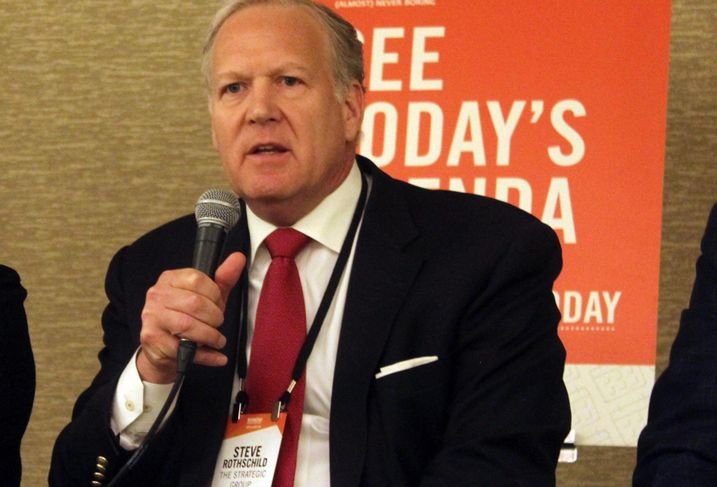
The Strategic Group
This quagmire has led some of CRE’s leading organizations — including the Associated General Contractors of America, The Real Estate Roundtable, the Building Owners and Managers Association, the National Multifamily Housing Council, the International Council of Shopping Centers, NAIOP and NAREIT — to petition U.S. Treasury Secretary Steven Mnuchin to extend the deadlines by which investors can purchase replacement properties for recent sales.
The move could add 120 days to sellers’ 45-day deadline to identify a 1031 acquisition target and the last day to close on that property. The IRS has allowed similar delays in the past through disaster declarations in certain geographic locations that have experienced natural disasters or emergencies.
“Unfortunately, current circumstances make compliance with like-kind exchange reinvestment rules impossible,” the parties wrote in the March 23 letter to Mnuchin. “Identifying properties for trade purposes requires travel and a confidence in both the expected cash-flow stream and the value of potentially acquired property. Closing on an identified property requires these same conditions plus extensive due diligence by the buyer, lender, and other third-party contractors. All of these necessary steps are currently unfeasible due to travel restrictions, quarantine, properties being locked down, and office closures of title/escrow companies and governmental recording offices.” Unsplash/Erik Mclean The coronavirus has forced the closure of many retailers.
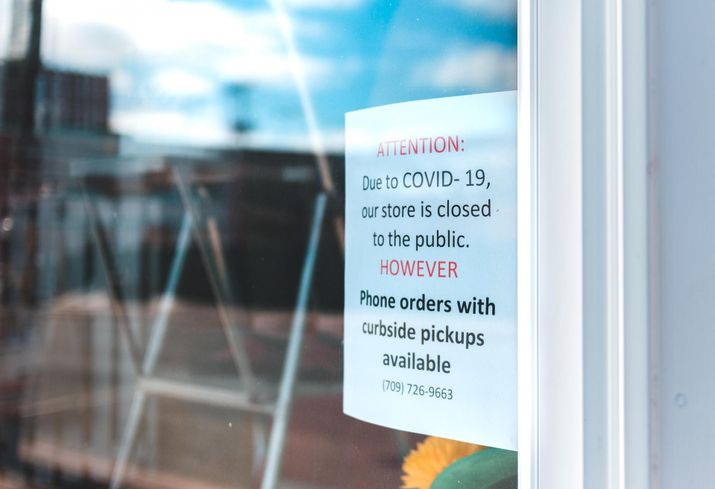
Photo by Erik Mclean on Unsplash
The pandemic has upended the values of commercial real estate, impairing lenders’ ability to underwrite deals, Investment Property Exchange Services Inc. General Counsel Suzanne Goldstein Baker said. Baker is also the co-chair of the government relations committee of the Federation of Exchange Accommodators.
“The coronavirus … really complicated every kind of business in the United States and everyone’s lives,” Baker said. “That’s sort of the understatement of the year.”
The hangover from uncertain real estate values will likely drag on beyond when the pandemic has abated and public spaces reopen, Avison Young principal Casey Keitchen said. And some investors will be reluctant to buy real estate and instead hold on to capital until the market bottoms.
“Cash is back to being king,” he said. “It’s not how much debt you can get and what the terms are. It’s kind of wait-and-see. Everybody’s hoarding cash right now … hoping for an opportunity here.”
In the realm of commercial real estate investments, like-kind exchange investors tend to be smaller investors rather than institutional firms with millions and millions in capital behind them, experts say. Current data is difficult to come by, but a 2015 National Association of Realtors survey found that 39% of all real estate sales volume involved like-kind exchanges.
But unlike with trophy building sales or major distribution center trades, the average fair market value for properties sold in 1031 exchanges was $7M, according to NAR. NAR officials did not have any updated data. Courtesy of Michael Levin Professional motivational speaker Michael Levin, who also invests in 1031 exchanges.

Baker echoed those findings, saying the median value of properties traded by exchanges in the country was $500K or less. For well-heeled investors or institutional firms, the capital gains tax penalty is nominal. Not so for others.
“If it’s your tax bill and you’re a smaller investor … and you have a couple hundred thousand dollar gain … that’s a big bill,” Baker said. “The beauty of Section 1031 is that it’s available and used by a broad spectrum of taxpayers. For every trophy building in a major city, think of how many small rental homes, rental condominiums, flats and small auto body shops there are across the country at such a lower value. Those kinds of properties are very frequently the subject of 1031 exchanges.”
The real estate organization’s letter to Mnuchin echoed that sentiment.
“Taxpayers, many of whom are small and medium-sized businesses and middle-class investors, should not have to be concerned about the possibility of having to pay significant capital gains taxes because like-kind exchange transactions cannot be completed due to the disruption caused by the coronavirus pandemic,” the letter says. “The funds they would have to utilize to meet such tax obligations would only further reduce liquidity in real estate markets.”
Michael Levin is one of those investors. A motivational speaker by trade, Levin invests in residential and small multifamily properties to buffer his future retirement, he said. Levin is now racing to close on small apartment buildings in Syracuse, New York, after selling rental homes in suburban Atlanta and Charlotte, North Carolina, at the start of the year.
Levin negotiated the purchase of a duplex in Syracuse for $133K as the coronavirus was a blip on the news radar. He plans to close his purchase on April 15, despite all the difficulties in the process and concerns that investors buying real estate today may be overpaying. Levin said he already closed the purchases on the rest of his small Syracuse portfolio.
“Candidly, the purchase price is not that material. What’s my ROI on the property,” said Levin, who is buying the duplex in cash. “If I was trying to deal with loans at the same time now, I don’t know how that would be — considering it was difficult under normal circumstances.”
Levin may be one of the lucky ones to actually execute a 1031 exchange on a property during this time.
New guidance by the IRS and the Treasury Department may likely be the only fix for real estate investors, especially with politics clouding Congress’ ability to get much done, Conway said. Conway said he does not expect the like-kind exchange issue to be addressed in any follow-up stimulus bill.
“Unfortunately, here’s the reality: When you look at the scheme and sequence of things that need attention, my fear is that there’s a lot of people in Congress who see this and, well, [they believe] that’s just a lot of rich people who want to get out of taxes,” he said. “[But] it isn’t a bunch of rich Americans with a lot of cash sitting around.”
Keitchen said, for one of his exchange clients, the partnership decided to just pay the capital gains tax instead of buying a property by the deadline, which could wind up being an overpay.
Baker said her firm is advising clients to go ahead and hold out on deals under the belief that the IRS will eventually extend those deadlines.
“Hang in there because if guidance comes, they could find themselves in a good position,” she said. “It could be a buyer’s market. I don’t have a crystal ball, but that’s certainly possible with what’s going on.”
Source: “1031 Investors Begging For Relief From Tight Deadlines Amid Pandemic“


Filed Under: COVID-19

CRE’s Recovery Will Take At Least a Year, Trailing the Economic Rebound, CBRE Says

April 8, 2020 by CARNM

“It will take several years for vacancy rates to fall back to their pre-crisis levels.”

In the space of just a few weeks the outlook for the US commercial real estate sector, to say nothing of the overall economy, has been utterly upended. Research firms are adjusting their initial expectations that the coronavirus would leave just a glancing blow on the industry.
A new report from CBRE finds that the US is in recession with GDP declines expected in the first and second quarter. It forecasts that the economy will stabilize in the third quarter, start to recover in the fourth, and grow at more than 5% in 2021 due to pent-up demand and major government stimulus.
The US commercial real estate recovery will trail the economic rebound and span 12 to 30 months, depending on the sector, it said, with categories like industrial and logistics recovering within the year, and multifamily over 18 months. Retail, food and beverage and the hotel sector are facing a longer recovery of up to 30 months.
There will be no quick fix in the real estate industry, says Richard Barkham, global chief economist and head of Americas Research. “It will take several years for vacancy rates to fall back to their pre-crisis levels.”
The experiences in China do provide some hope for the industry, Barkham adds. “We already are seeing signs of recovery in China’s real estate market. Office-leasing inquiries in China are on the uptick, site-inspection volumes in Shanghai are back to 70% of pre-outbreak levels, and demand from tech companies for office space has been resilient.”
The short-term, though, will not be pretty. CBRE foresees unemployment rising to above 11% by mid-year, registering a net loss of as many as 14 million jobs. The capital markets are still functioning but transaction volumes have declined materially. Repricing asks and transactions falling out of contract have both increased, CBRE reports. Here is what it thinks will play out on a sector-by-sector basis.

Office

Office leasing has slowed, vacancy is rising, and sublease space is expected to come back to the market quickly, according to CBRE. The good news is that office properties and office-using employment remain relatively insulated compared to other property types. More severe impacts will come in markets with a high concentration of oil and gas and travel and leisure jobs. Also, there is less new office construction in this cycle, which will help limit rental falls.

Hotels

CBRE projects that hotel revenue will decline by an average of 46% for 2020, with a modest recovery beginning in the second half of 2020. All hotels will feel the pain, but the greatest impact will be in gateway cities with substantial tourism and convention business. Thousands of hotels are closing, and many may be converted to uses as medical and quarantine facilities.

Retail

The retail industry has taken particularly hard hits from COVID-19 containment efforts, which have resulted in thousands of nonessential store closures, CBRE said. Grocery and pharmacy, and by extension the retail centers that house them, are the most resilient categories as customers shift spending almost entirely to essential goods and core basics both online and in-store. Many retailers are seeking rent relief, but each situation is unique to the specific terms of each retailer’s lease. Missed rent payments will continue through May.

Industrial and Logistics

This category will see a short-term slowdown in leasing and a moderate increase in vacancies because of a large amount of new construction, CBRE said. The sector will be a net, long-term beneficiary due to strong e-commerce growth and retailers focusing more on inventory control in a post-COVID-19 consumption environment.

Multifamily

Multifamily housing is experiencing moderate deterioration of property fundamentals. Renters need a place to live, but job losses and resulting economic hardship is challenging the ability of many households to pay rent.
Source: “CRE’s Recovery Will Take At Least a Year, Trailing the Economic Rebound, CBRE Says“

Filed Under: COVID-19

ZOOM: New Safety Tips to Protect Your Meetings

April 8, 2020 by CARNM

To ensure you are protected when using ZOOM, new security measures were implemented on April 4th.

Default Security Enhancements to Protect your Privacy

Meeting Passwords Enabled “On”
Going forward, all meetings will have the password enabled. If your attendees are joining by clicking a meeting link with a password embedded, there will be no change to their joining experience. For attendees who join meetings by manually entering a Meeting ID, they will need to enter a password to access the meeting.
To locate your meeting password, log in to your account, visit your Meetings tab, select your upcoming meeting by name, and copy the new meeting invitation to share with your attendees.
For instant meetings, the password will be displayed in the Zoom client and the password is also embedded in the meeting join URL by default.
For step-by-step instructions:

Virtual Waiting Room Turned on by Default
Going forward, the virtual waiting room feature will be automatically turned on by default. The Waiting Room is just like it sounds: It’s a virtual staging area that prevents people from joining a meeting until the host is ready.
How do I admit participants into my meeting? 
It’s simple. As the host, once you’ve joined, you’ll begin to see the number of participants in your waiting room within the Manage Participants icon. Select Manage Participants to view the full list of participants, then you’ll have the option to admit individually by selecting the blue Admit button or all at once with the Admit All option on the top right-hand side of your screen.
For step-by-step instructions:

Zoom Resources for Protecting Your Meetings:
  • Zoom Help Center
  • support@zoom.us

Source:  “Zoom“

Filed Under: All News

Three Things Will Determine If There’s an Economic Depression: Tim Duy

April 7, 2020 by CARNM

A successful recovery depends on controlling the virus and more fiscal support.
(Bloomberg Opinion)—The U.S unemployment report for March foreshadowed the ugly numbers to come as the economy’s sudden stop sidelines entire sectors. The prospect of double-digit unemployment rates raises the possibility that what is now the “Great Suppression” will become the next Great Depression. This raises an important question for market participants: What separates a depression from a recession? A starting place is to consider the three “Ds” of a depression: Depth, duration, and deflation.
To be sure, the depth of the downturn during the second quarter will check one depression box. The lights were literally turned off in large parts of the economy. Output may fall by as much as 33% and unemployment may climb above 30%, according to estimates by the Federal Reserve Bank of St. Louis. While the exact numbers will only be revealed in hindsight, that there has been a collapse in economic activity is without doubt.

Depth, however, is only one part of the depression story. Duration is another. We don’t categorize local level shutdowns resulting from natural disasters as depressions, or even recessions, because activity can rebound fairly quickly. We shouldn’t at the national level, either. We can’t accurately forecast the duration of the downturn because it depends on the course of the virus. Let’s say, optimistically, that we gain enough control over the virus and its spread to begin lifting restrictions on activity. In that case, we can expect a rebound of activity beginning in the third quarter.

Still, any rebound will not be akin to simply flipping a light switch back to the “on” position. It will be more like turning the dial on a dimmer switch, maybe quickly at first but more slowly thereafter. How much we can turn the dial at first, and how quickly thereafter, will determine the recovery’s duration. Certain parts of the economy may come back quickly. Inventory rebuilding might provide a boost to manufacturers, for instance. And pent-up demand might help clear the shelves at retailers. We should expect a bounce when restrictions are lifted.
That bounce, however, won’t be a full recovery. There are two broad obstacles to a V-shaped recovery. First, expect some persistent damage to the economy as the result of firms going bankrupt and the severing of employer-employee relationships. The CARES Act, with its enhanced unemployment benefits and aid to business, helps minimize this damage, but it remains insufficient to stem all the bleeding.
Second, until there is a cure or vaccine for the virus, some segments of the economy will be impaired long into the future. Gatherings of more than 50 people – conferences, sporting events, arts performances, etc. – will remain limited for an extended time. Leisure and hospitality industries will struggle in a world that suddenly grows smaller for everyone. Even after developing a vaccine, the widespread use of video-conferencing will have long-lasting implications for business travel.
Finally, a depression likely requires deflation to generate a self-sustaining collapse in demand as existing debt becomes harder to support with falling nominal incomes. The ability of deflation to take hold depends on the success of fiscal and monetary support for the economy. To its credit, the Federal Reserve quickly adopted a “whatever it takes” strategy to keep the financial sector intact, thereby already avoiding one disaster that contributed to the Great Depression. Hopefully we continue to avoid that pitfall.
Likewise, fiscal policy has swooped into action to support demand with enhanced unemployment benefits, which in some cases will provide more than 100% replacement income for workers. An unintended positive consequence of such high benefits is to prevent wage deflation and hopefully reinforce positive wage-setting expectations during the recovery phase.

A successful recovery still requires more fiscal support. For example, unemployment insurance programs at the state level are unable to handle the volume of claims, delaying aid. Congress needs to make states whole with a massive fiscal package to prevent another round of layoffs.One bad quarter does not make a depression. In reality, the long-run health of the economy depends on controlling the virus. Whether or not this economic collapse turns into a depression still depends on the actions of policy makers in coming months.
Source: “Three Things Will Determine If There’s an Economic Depression: Tim Duy”

Filed Under: COVID-19

  • « Go to Previous Page
  • Page 1
  • Interim pages omitted …
  • Page 7
  • Page 8
  • Page 9
  • Page 10
  • Page 11
  • Interim pages omitted …
  • Page 14
  • Go to Next Page »
  • Search Property
  • Join CARNM
  • CARNM Login
  • NMAR Forms
  • All News
  • All Events
  • Education
  • Contact Us
  • About Us
  • FAQ
  • Issues/Concerns
6739 Academy Road NE, Ste 310
Albuquerque, NM 87109
admin@carnm.realtor(505) 503-7807

© 2026, Content: © 2021 Commercial Association of REALTORS® New Mexico. All rights reserved. Website by CARRISTO