While the flexible office space market known as coworking had already started to slow prior to the pandemic, concerns over the spread of germs and related issues leave some housing analysts concerned whether coworking spaces can survive.
But commercial giant JLL is still bullish on the sector. In a new report, The Impact of COVID-19 on Flexible Space, JLL notes that coworking space may be the alternative that companies seek in the post-COVID-19 world to shrink their office footprints for a more flexible option.
“Despite the current distress within the coworking sector, we’re reiterating our position that office space will be fundamentally different in the future, as companies shift away from the long-term leased and owned space to more agile solutions,” Scott Homa, JLL’s senior director of office research, told Commercial Property Executive. “COVID-19 will accelerate a movement toward asset-light workplaces, where work-from-home and remote work blends seamlessly with the corporate office. Even with some coworking operators shrinking their footprints, we still believe 30 percent of office space will be consumed flexibly by 2030.”
The coworking market can include on-demand workspaces, memberships for some locations, short-term flexible spaces, and more traditional spaces with flexible arrangements.
JLL believes that flex-space operators that offer a hybrid model including long-term leases, private office space, and coworking options will be the most likely to weather any downturn. Also, flex-space operators will need to be prepared to adjust their workspaces. Tenants may be drawn to flex spaces as options to serve as smaller satellite offices.
Still, the sector likely will face headwinds. “Owners will have a growing challenge on their hands in the months ahead, as venture-funded coworking companies continue to default on rent payments in some locations,” Homa told Commercial Property Executive. “This will force important decisions among landlords about how to respond and spur continued evolution of the flexible space sector, most notably in the financial structure of deals—fewer long-term leases and more revenue-share/management agreements.”
Archives for July 2020
Office Markets Are Preparing for the “New Normal”
The prospect of falling occupancies and rent reductions will cause cap rates to rise.
COVID-19 has been a shock to public health and the economy. As the toll of new cases starts to subside in some states, it is becoming clear that “normal life” in the future will be different from our pre-COVID days. Changes to our work routines have been so significant that some will be permanently adopted. What does this mean for the office market in the near term, and in the long term?
Short-term impacts
Federal regulations provided tenants with an opportunity to defer rent payments. This imposed cash flow burdens on many owners. Those with federally-backed loans may be able to obtain deferral of their mortgage payments, but those with outside commercial financing are being squeezed. For tenants who remain solvent, deferred rent will be repaid over time, but a looming concern regarding owners’ cash flow focuses on the potential for tenant bankruptcies and business failures.
Judging from Integra’s national COVID-19 Impact Market Survey, conducted in April and May, 84 percent of property managers reported some increase in office rent delinquencies for April rent, with almost half reporting increases of more than 10 percent.
“Stay at home” guidelines are now easing, allowing more tenants to return to the office. During the last few months, many in the technical and professional workforce worked effectively from a home-office environment. With tools such as Zoom, BlueJeans, and Microsoft Teams, communication was maintained, and cloud-based file systems enhanced productivity. As a result, returning to the office is occurring as a measured and phased process. Many companies are offering employees the option of working from home through the end of the year.
As offices re-populate, companies and building owners are examining issues of social distancing, amenity packages, and interior design. Technology companies that relied on closely spaced open work areas with coffee bars, buffet food service, and other social amenities will face significant changes, while the stodgy, traditional configurations (think major law firms) will benefit from the social distancing that was designed into their current layouts. There will still be challenges related to conference room activities of staff meetings and depositions; these may become hybrid experiences with some participants present in person and others making a virtual appearance.
Landlords will be challenged in how they address the amenity needs of their tenants, especially on-site restaurants and retail shops. The focus in the short term will shift to providing visible expressions of personal hygiene: hand sanitizing stations; plexiglass barriers at security stations; controlling the number of people in elevators; and enforcing masks in common areas.
Long-term impacts
The respondents to Integra’s survey cited office as the third hardest hit property category from the pandemic, behind hospitality and retail. It is also third from the bottom with regard to recovery from the recession.
Reduced demand for space will come from: (1) less growth in the employment categories that generate office demand; (2) companies having fewer employees, especially if staff members can be productive working from home; and (3) demand for some common area spaces (like staff lunch rooms) dropping off. Offsetting some of this reduction is a possible need for companies to increase the square footage per employee for social distancing, but the long-term net effect is expected to be reduced overall demand.
Since most office tenants are subject to multi-year leases, impacts to long-term occupancy trends will appear gradually, as tenants use lease expirations to vacate their premises or negotiate to a downsized footprint. Early signs, however, are already appearing. Some of the companies with the biggest growth over the last few years (Facebook, Opendoor, ZipRecruiter and Nationwide), have announced a combination of layoffs, furloughs, and transitioning to a work-from-home culture that will result in a significant decline in office space needs. These shifts are affecting market fundamentals. For example, the Phoenix market reported an increase in the availability of sublease space as some office tenants have started the downsizing process. At the end of April, the amount of sublease space available jumped by 28 percent compared to availability at the end of 2019, according to CoStar.
Concerns about future financial performance is causing challenges for office properties in purchases and other recapitalizations. In Los Angeles, for example, office sales volume during March and April fell to $421 million—a 65 percent drop compared to the $1.1 billion in transactions for the same period last year, according to CoStar. Most potential buyers are staying on the sidelines, waiting for prices to drop. Sellers are sitting tight, hoping that a re-opened economy will make this a “V-shaped” recession. If that doesn’t happen quickly, there will be pressure from lenders and outside investors to force some sales at new, lower price points.
The office investment sector is facing a more segmented future. Buildings with strong credit tenants in growth industries will remain in high demand. Medical office will be fine, but properties with weaker tenant profiles are likely to suffer declines in value and long-term occupancy. The prospect of falling occupancies and rent reductions will cause cap rates to rise, which will magnify any value declines. Higher cap rates have not materialized yet, but that is something the industry is keeping a close eye on as investors evaluate the position of office properties in their portfolios.
Source: “Office Markets Are Preparing for the “New Normal””
Elder Care Updates to Counter Viral Spread

Industry professionals are working on new architectural and design methods for reducing the spread of COVID-19 and other pathogens in senior communities.
Among the most vulnerable in the pandemic have been the elderly who reside in assisted living or skilled “lifecare” communities. These senior facilities have been designed to eliminate isolation and loneliness. However, residents in these group settings have proven highly susceptible to contracting the novel coronavirus, as it’s able to rapidly spread among people in close quarters.
But changes are in the works—some already being implemented and others requiring more time and money.
The U.S. Green Building Council recently released new LEED guidelines for best sustainable practices for the COVID-19 era. The changes focus on cleaning and disinfecting, indoor air quality, water systems, and reoccupancy practices and human behavior within spaces. And the American Institute of Architects just published a report, Reopening America: Strategies for Safer Buildings, with a section dedicated to senior living communities.
At some point, the safety of a facility may be measured by a health care–associated infection score, which is currently used in hospitals, says Sarah Simmons, epidemiologist and senior director of science at San Antonio-based Xenex, a manufacturer of germ-zapping robotic solutions.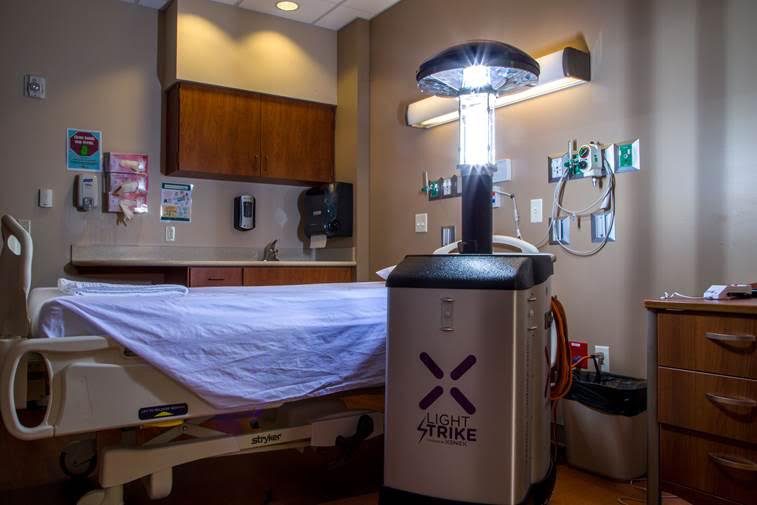
“A lot of diseases we worry about in elder care settings are spread through coughing, but a substantial proportion are from a dirty environment and cause recurrent infections,” she says.
For the most part, the suggested changes fall into five categories that aid physical and emotional health while making infection control a priority. Real estate professionals should take note of these recommendations and share them with clients who are weighing elder care for themselves or family members.
1. Layouts
Facilities that have adequate space and available funds may decide to renovate to create more single-occupancy rooms. Some buildings may want to reorganize so there are fewer rooms in a single wing and residents are better isolated in the event of an outbreak, says Nick Steele, senior interior project manager at AECOM—San Jose, an architecture, engineering, and design firm. He is also vice president of advocacy for the International Interior Design Association’s Northern California chapter, which works to help make better decisions for elder care facilities.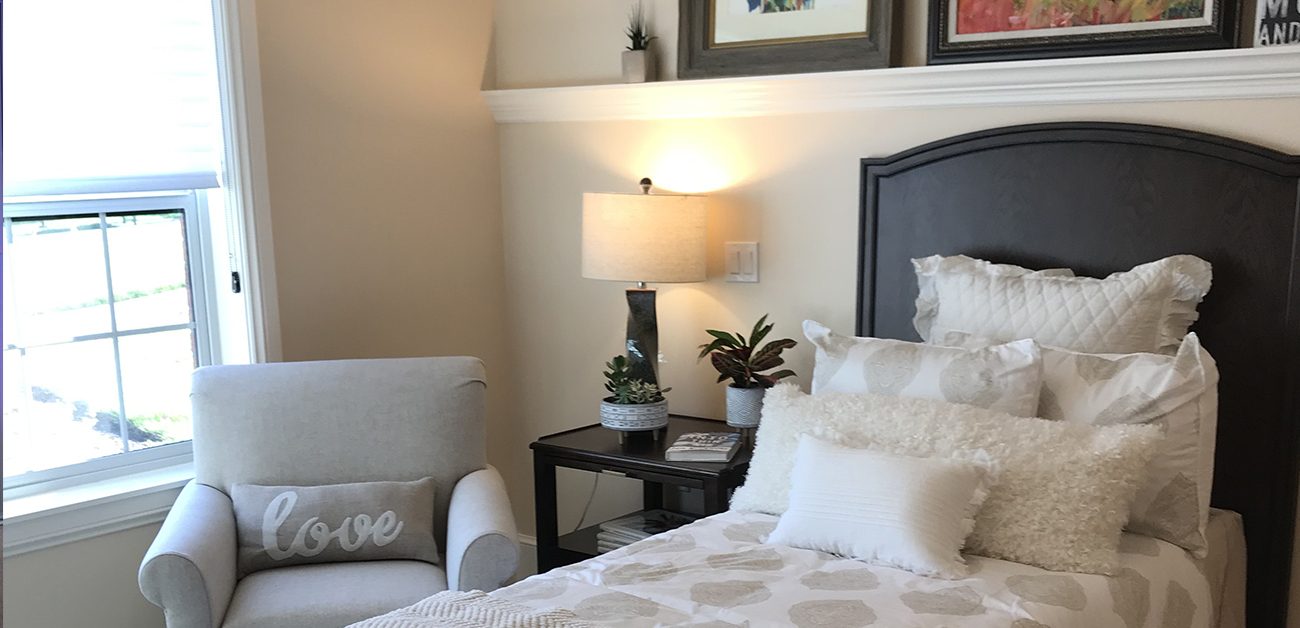
At the same time, there must be a balance between health safety and the negative effects of isolation among the elderly. “Flexible layouts can address these challenges holistically without adding square footage,” says Patrick McCurdy, a principal and leader of the health care practice at Hoefer Wysocki, in Leawood, Kan. “Future facilities should be designed for maximum flexibility and adaptation to the unknown—this includes infrastructure for minimizing cross-contamination and technology for contactless care, such as telehealth.”
Drew Roskos, housing studio leader at HED, an architecture, planning, and design firm in Chicago, says that using movable furnishings can help make adjustments. Having access to the outdoors for fresh air and natural light will also benefit everyone, including the patients themselves and visitors (when permitted). Outdoor space can also be used for dining when the weather is good, the AIA report recommends. However, Simmons offers the caveat of excluding outdoor water features that can transmit bacteria and the potential for Legionnaires’ disease.
Steele recommends having multipurpose rooms where staff could stay overnight if an outbreak occurs, which would help them avoid traveling home and spreading pathogens.
Bathrooms should also be reworked. Poor ventilation systems can pose risks because bacteria can harbor on surfaces and in the air unless a toilet is used quickly and the lid closed, Simmons says. Communal and private bathrooms could be outfitted with touchless faucets and valves, say Joseph G. Allen and John D. Macomber, authors of Healthy Buildings: How Indoor Spaces Drive Performance and Productivity (Harvard University Press, 2020), which cites nine ways to improve buildings without expensive technology and capital improvements.
2. Materials
To reduce the spread of bacteria, viruses, and fungi, design professionals are using materials that have a natural ability to kill harmful microbes relatively quickly. A favorite is copper alloys for doorknobs, drawer pulls, IV poles, bed rails, and other surfaces, because it has a higher antimicrobial factor, McCurdy says. Steele advises leaving off the clear coating that covers the alloys since it makes the copper ineffective at killing bacteria. When well-maintained and regularly cleaned, this choice can kill more than 99% of bacteria that come into contact.
Switching from curtain partitions to glass or plexiglass panels will protect against the spread of germs and ease sanitizing. The use of antimicrobial fabrics can also hinder or eradicate the growth of unwanted bacteria, McCurdy says. For disinfection purposes, hard surfaces are best constructed from nonporous materials, like quartz and Corian, rather than more porous marble and laminates, Simmons says. For flooring, she recommends porcelain tiles, vinyl, and wood rather than carpet for similar reasons. For walls, paint has advantages over wallpaper. Roskos recommends avoiding upholstery with folds, seams, piping, and buttons that impede fast cleaning.
3. Air Quality
Clean air is the most emphasized factor in the WELL Building Standard, a certification for buildings that measures the impact on human health, says Steele. One key to meet the WELL standard is to keep the interior of the HVAC system clean, particularly in older buildings where ductwork can be hard to reach, Steele says.
The U.S. Green Building Council guidelines suggest adjusting ventilation and air filtration. Other options are to use UV lights that sterilize surfaces and kill viruses and bacteria or to add portable air purifiers.
While there’s no way yet to stop the coronavirus completely, its spread can be hindered by adding bipolar ionization indoor air quality devices into HVAC systems, says Tony Abate, vice president and chief technical officer at Fairfield, Conn.–based AtmosAir Solutions, who’s an expert on the airborne transmission of viruses. “Bipolar ionization is a proactive technology similar in concept to the Pac-Man game. It attacks, mitigates, and curtails the spread of deadly viruses,” he says.
Macomber warns against the potential for facilities looking to cut costs by using cheap products or not changing a dirty filter. “If people get sick, they are less productive, and that is worth a lot of money,” he says. “We need to look at the whole picture, not just the energy budget.”
4. Smart Technology
Buildings may incorporate more smart technology, such as automatic doors, touchless hand-washing stations, disinfectant chambers at entrances, and voice-activated systems that control lights and the temperature, says Steele.
The AIA report suggests implementing regular temperature checks on residents, workers, and visitors by using infrared scanners. Mark Francis, vice president of special projects, team, and family experience for Schonberg Care, a long-term care company headquartered in New Orleans, anticipates the possibility of a room equipped for virtual doctor visits so staff can perform exams and relay results to off-site medical personnel. “This is already happening around the country, but it’s not as prevalent as it could be with situations like COVID-19,” he says.
Xenex’s portable disinfection machines can move through spaces, rapidly pulsing UV light to deactivate pathogens that are frequently left on surfaces, Simmons says. Pulsed xenon UV light does not damage surfaces, which some UV mercury vapors do, she adds.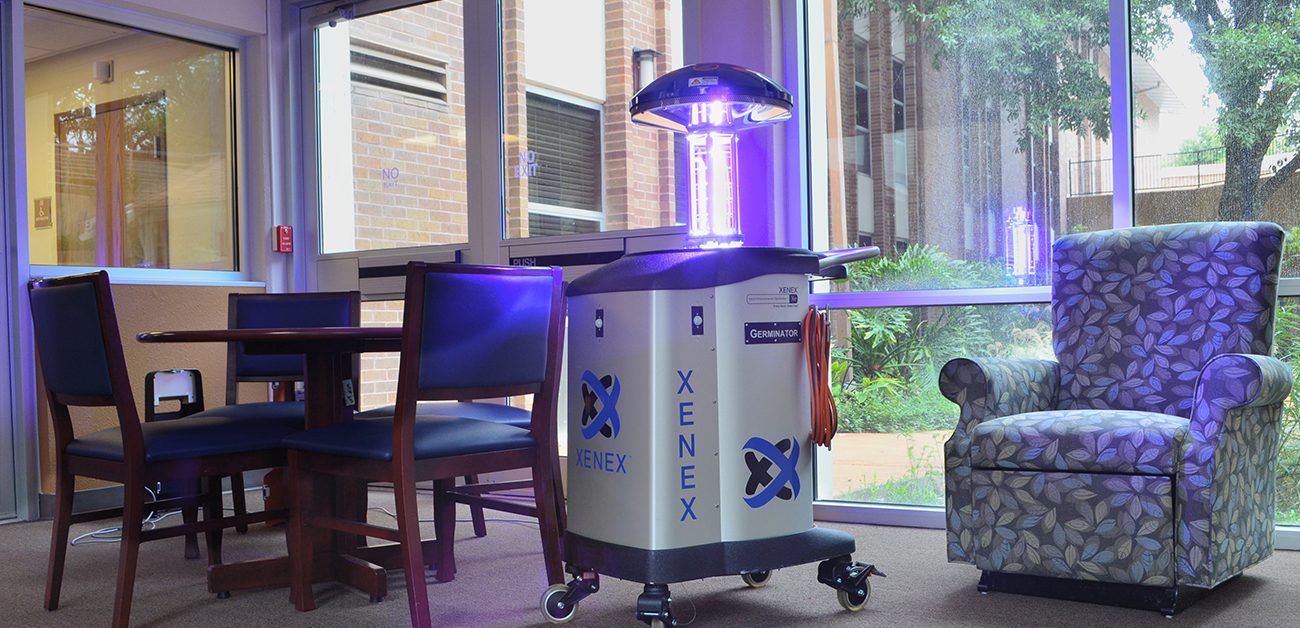
Real-time locating systems embedded into badges or other devices, can track interactions as people move throughout a facility, says Peter O’Connor, principal, clinical technology solutions at Hoefer Wyosocki. “This can help encourage crucial functions such as hand-washing or facilitate locating medical equipment and care team members,” he says. “Technology will also offer patients greater control over tasks, from raising and lowering shades to ordering food and controlling temperatures.”
There should also be a good supply of laptops and smartphones that are cleaned regularly so residents can maintain relationships virtually if in-person visits aren’t possible, the AIA report advises.
Also on the horizon could be 3D-printed food that can repurpose food waste and mix ingredients in new ways to compensate for food shortages, Roskos says.
5. Design
While health and safety are the motivating factor for elder care facility updates, architects at Denver-based OZ Architecture also believe that design can uplift residents’ spirits. One method is to reduce the scale of a community into smaller hubs. That also makes it easier to minimize residents’ contact in an emergency and curtail the circulation of poor air or pathogens throughout a building. “It may cost more to incorporate more mechanical units on a roof, but there would be advantages in case of a pandemic,” says OZ principal Jami S. Mohlenkamp.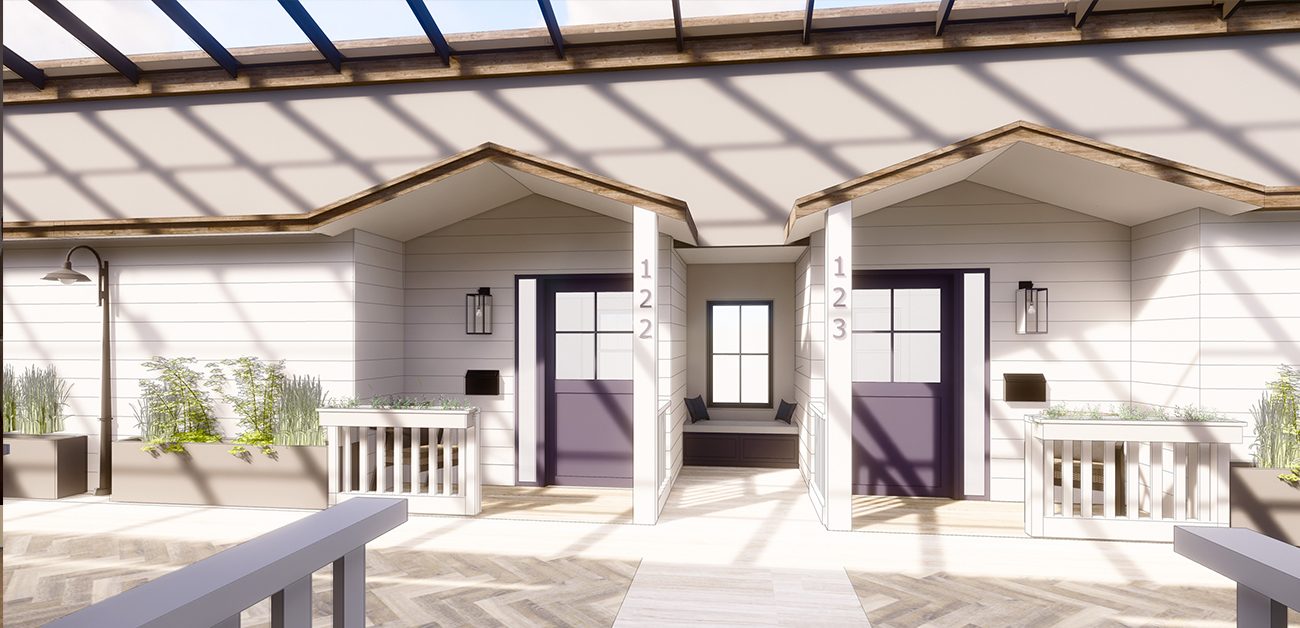
Natural light and views are key, too, he says, and artwork, residential-style window treatments, and accessories can enhance the look.
Some of his ideas stem from working with Dr. William H. Thomas, a geriatrician and co-founder of the Green House Project, a Baltimore-based nonprofit organization focused on designing alternatives to institutional-style nursing homes. The concept places 10 to 12 residents per home, with private bedrooms and bathrooms and an abundance of natural light.
“In a skilled nursing or memory care environment, that’s important since residents don’t tend to go outside,” Mohlenkamp says. “We wanted everyone to see clouds in the sky and stars at night.”
The Green House Project’s model offers the benefit of “human connectedness with social distancing,” says Senior Director Susan Ryan, which works well during the pandemic. While many updates may increase the cost of construction, prices should eventually decrease once these design methods become more widespread, Steele says. And the anticipated benefit is priceless: healthier living.
Two Emerging COVID-19–Era Trends
Evaluate first. Engineers John Bilotta and Tony Gonzalez of New York City–based Syska Hennessy Group advise owners, managers, and designers of elder care facilities on what diseases and viruses pose risks and how to evaluate buildings’ existing systems. They consider what kind of HVAC system each building has, whether it has independent temperature controls, how much fresh air comes into each building, and, if there’s an outbreak, whether the system can be adjusted, says Gonzalez.
In the case of COVID-19, the question is whether to increase the outside air supply to dilute what’s inside, he says. And if that’s the recommendation, does the system have the heating and cooling capacity to maintain the space’s temperature? “We also have to design according to the facility’s budget and state and local codes,” he adds.
To weigh all the possibilities and be able to provide the best solutions, time is required to make the best designs, says Bilotta. “Yet, nobody wants to hear in a crisis that you need time. They need a solution quickly,” he says. “We must rely on our best design practices, which includes different types of air handling systems and air distribution or different types of air filtration.”
Rethink location. While it’s often been less costly to build in suburban and rural areas versus denser urban sites, Chicago architect Drew Roskos thinks the denser areas offer the advantage of connecting residents to a larger public community outside their limits, which presents greater chance of success and good health.
“The most significant attribute of placing communities in denser areas is the greater access to people and activities, which can improve mental and physical health. A weak social life can lead to depression and amplify the impacts of chronic disease,” he says. “It’s my opinion that multigenerational neighborhoods also reduce the negative effects of ageism.”
Source: “Elder Care Updates to Counter Viral Spread“
More Industrial Space Needed to Meet E-Commerce Demand
Demand for industrial real estate could require an extra 1 billion square feet by 2025, predicts JLL, a commercial real estate firm. A call for more fulfillment centers is rising as e-commerce continues to grow even bigger since the pandemic. Businesses are finding they need more warehouses to store boxes and keep up with the pace of demand from online shoppers.
U.S. e-commerce sales could comprise about 14.5% of total retail sales, or $709.78 billion this year, according to the firm eMarketer. By the end of 2024, that could jump to 18.1%, with online sales surpassing $1 trillion for the first time, eMarketer predicts. Craig Meyer, president of JLL’s Americas industrial division, calls the industrial sector the “darling” of the commercial real estate industry.
Before the COVID-19 pandemic, about 35% of JLL’s industrial leasing activity was related to e-commerce. Now JLL reports that as much as 50% of its leasing activity is connected to the online retail industry. “The first quarter was our largest leasing quarter in three years,” Meyer told CNBC. “We’re seeing more pressure on [e-commerce companies] than the typical holiday season to meet consumer demand.”
Transactions for warehouse space are occurring at a quicker pace due to the demand. Meyer told CNBC that a retail-related company leased a 1.2 million-square-foot warehouse space in Delaware and moved in immediately to start fulfilling orders for fresh items. “That is unheard of,” Meyer says. “The lease was signed, and they moved in in less than 30 days.” Deals like this typically occur over a nine-month period, from signing a lease to moving in, Meyers says.
JLL predicts that the U.S. needs another 100 million square feet in cold-storage facilities to keep up with sales trends.
As retailers hunt for more space, some are using now-defunct stores to transform them into warehouse centers to help meet customer demand. For example, in Memphis, Tenn., a shuttered Sam’s Club store has become a Sam’s Club e-commerce fulfillment center. But vacant big-box retail stores or even vacant malls can’t always be easily converted. “There are things like zoning laws; these are residential areas,” Meyer told CNBC. “There’s going to be a lot more involved with imagining these things.”
Source:


